A partial interest appraisal takes as long as the agreed scope requires; the delivery date depends on the ownership rights, property complexity, valuation date and available records. For a 2026 estate assignment, request a written completion schedule after the appraiser reviews those materials, and distinguish report delivery from any later attorney or CPA review.
- Confirm your partial interest appraisal timeline after the appraiser reviews ownership documents, property records and the intended use.
- Estate valuation requires a clearly identified ownership interest and effective date of value.
- A retrospective appraisal needs evidence relevant to the historical valuation date, not just current property information.
- REIS Group provides partial-interest appraisals for estate professionals; discuss scope and timing before committing to a deadline.
How long does a partial interest appraisal take?
The reliable timeline is an assignment-specific schedule, not a standard turnaround attached to an ownership percentage. An estate attorney or executor should obtain that schedule before relying on a report delivery date for a filing or distribution decision.
For estate-tax work, identify the reporting purpose at the outset. The date-of-death appraisal to Form 706 workflow connects the valuation assignment with the adviser’s reporting process.
A workable schedule follows these steps:
- Define the assignment. Identify the client, intended users, intended use, property rights appraised and effective date of value.
- Review the records. Establish what ownership, legal and property information is available and what remains outstanding.
- Investigate the property. Arrange access where required and develop the underlying real estate analysis.
- Analyze the interest. Examine the rights and restrictions attached to the specific interest being valued.
- Complete the report. Document the analysis, resolve material factual questions and deliver the agreed report.
Ask which activities can proceed together and which depend on information from you. A target delivery date is useful only when the engagement also identifies the assumptions supporting it.
Why this matters for an estate assignment
An estate’s calendar and an appraiser’s production schedule are different things. Your attorney or CPA coordinates the applicable filing requirements; the appraiser determines the work needed to support the identified valuation purpose.
For a 2026 engagement, communicate the adviser’s required delivery date before accepting the proposal. Explain whether that date is for an initial professional review or the completed report, because those are different milestones.
REIS Group is suited to estate attorneys, CPAs and fiduciaries who need a partial-interest real estate appraisal scoped to a specific ownership interest, effective date and intended use. Its Manhattan and greater New York City focus is relevant when the assignment involves local residential or commercial property.
The limitation is equally important: an appraisal does not resolve a disputed legal interpretation or guarantee acceptance by a taxing authority. Counsel should clarify ownership questions that affect the property rights being appraised.
Ownership structure changes the work required
The phrase partial interest does not identify the complete assignment. A directly held fractional interest in real estate differs from an ownership interest in an entity that holds real estate, even when both ultimately relate to the same building.
| Assignment structure | What the analysis addresses | Useful distinction | Scheduling constraint |
|---|---|---|---|
| Direct fractional real estate interest | The identified owner’s rights in the property | Keeps attention on the real property interest | Ownership documents and relevant restrictions need review |
| Interest in a property-owning entity | The entity interest and its relationship to underlying assets | Separates entity ownership from direct property ownership | Entity agreements, financial records and professional scope need clarification |
| Retrospective partial-interest appraisal | The specified interest as of an earlier effective date | Aligns the analysis with the historical assignment purpose | Historical property and ownership evidence must be assembled |
Best for defining scope: start with the actual ownership documents, not the label used in an email. Each structure answers a different question, and retrospective analysis can apply to either direct or entity ownership.
Do not treat an appraisal of business-owned real estate as an operating-business valuation. The engagement should distinguish the real estate analysis from any separate entity or business valuation work and identify who is responsible for each component.
Why the partial interest appraisal timeline varies
These factors determine the work required and belong in the initial scheduling discussion:
- Property complexity. A leased commercial building requires different property information from an owner-occupied residence. The scope must address the asset actually being appraised.
- Ownership rights. Transfer provisions, decision-making rights and other relevant restrictions require examination rather than assumptions based on the ownership percentage alone.
- Effective date. A historical valuation requires evidence relevant to that date, including the property’s condition and ownership arrangements then in effect.
- Records availability. Missing agreements, incomplete operating information or inconsistent ownership records leave questions that must be resolved.
- Assignment scope. Intended use, report requirements, access arrangements and coordination with other professionals affect the schedule.
For a 2026 request, send the deadline with these facts rather than asking only whether the appraiser can work quickly. That allows the response to address your assignment instead of a generic service category.
Prepare the records before confirming delivery
Use this checklist to organize the opening discussion. It is a preparation aid, not a universal list of requirements; the appraiser should identify the documents needed for your property and purpose.
Ownership records
Provide available deeds, ownership schedules and relevant agreements. Identify the interest to be valued and flag any disagreement about the documents rather than presenting an unresolved interpretation as settled fact.
If an entity owns the property, include the available organizational and ownership materials. Ask counsel to explain provisions whose legal effect is material to the valuation.
Property records
Gather the property address, property description and available information about its use and condition. For income-producing property, identify available leases, rent rolls and operating records relevant to the assignment.
Explain known gaps. An appraiser can address a clearly identified information problem more directly than an unexplained inconsistency discovered during analysis.
Historical evidence
For a date-of-death or other retrospective assignment, locate records that describe the property at the effective date of value. Current photographs and current financial statements do not, by themselves, establish historical conditions.
Separate later improvements from conditions that existed on the valuation date. This helps prevent present-day information from being mistaken for evidence about the earlier property.
Adviser instructions
Identify the attorney or CPA coordinating the work, the intended use and the requested report delivery date. Confirm who can answer ownership questions and authorize changes to the assignment.
Send a consolidated document package where practical. Keep a list of outstanding items so the appraiser and adviser share the same understanding of what remains unresolved.
The preparation sequence is straightforward: establish ownership, assemble property information, identify historical evidence and confirm adviser instructions. Finish with a scope review before relying on a delivery commitment.
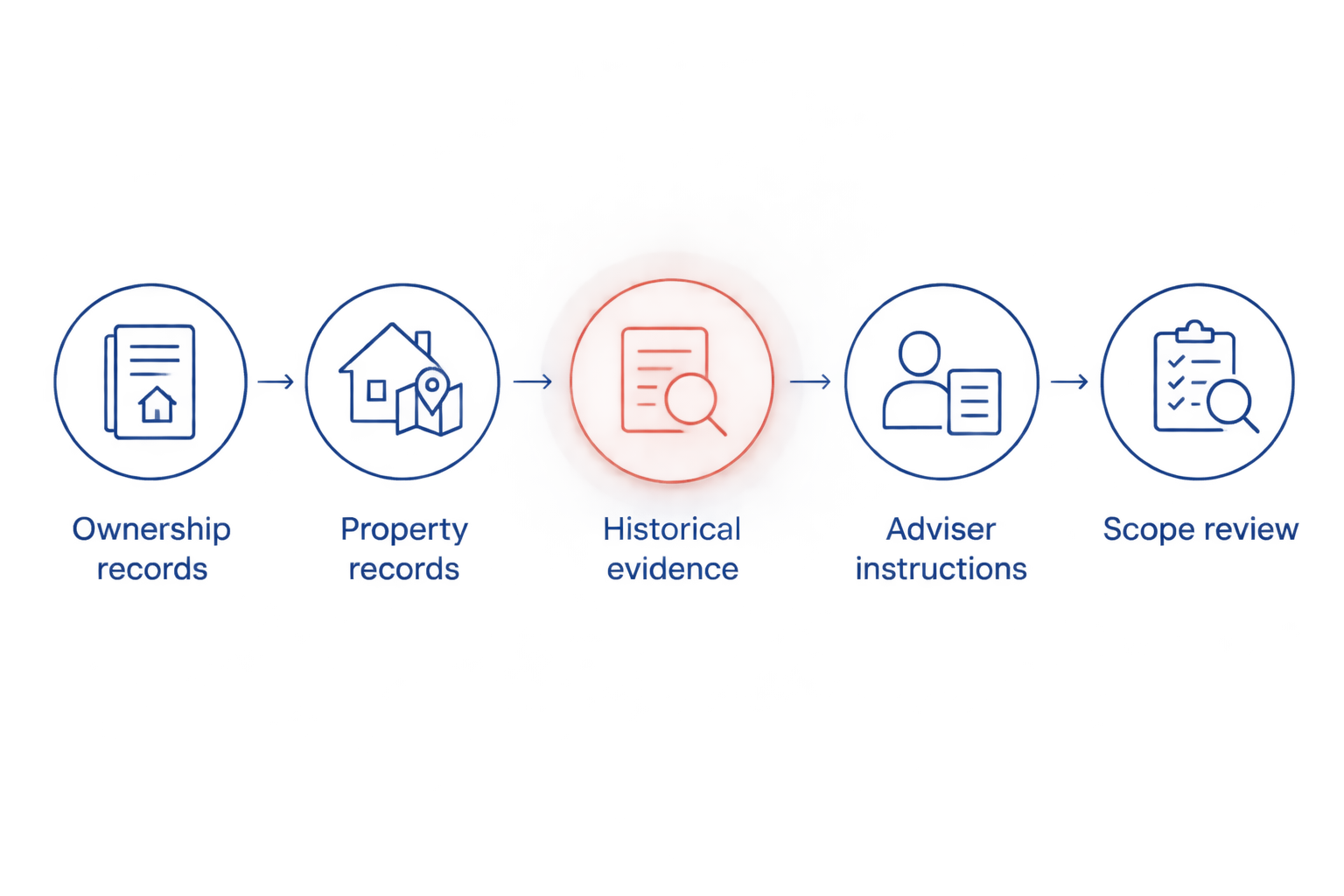
What should the engagement say about timing?
Ask for a delivery commitment tied to defined scope and document assumptions. A proposal should make clear what the appraiser has agreed to deliver, for which purpose and on what basis the schedule has been set.
Before accepting a 2026 proposal, clarify:
- What event starts the agreed schedule?
- Which documents are required before substantive analysis proceeds?
- What access or inspection arrangements are included?
- Who will resolve factual and ownership questions?
- Does the delivery date refer to a completed report or another agreed milestone?
- How will a material scope change affect the schedule?
Also distinguish factual corrections from a request to appraise a different interest or effective date. Changing a name or correcting a supplied record is not the same as changing the assignment’s central question.
REIS Group scopes partial-interest appraisal services to the property, ownership interest, valuation date, intended users and intended use. Share those details when requesting a proposal so the timing discussion addresses the work you need.
Discuss Your Appraisal Assignment
Share the ownership interest, valuation date, available records and requested delivery date.
Can a partial interest appraisal be expedited?
Expedited availability requires individual confirmation. Present the required delivery date and the supporting records together; an urgent deadline does not remove the need to identify the interest and support the conclusion.
Best for a time-sensitive assignment: resolve scope and access questions before requesting a compressed schedule. Ask which outstanding items prevent a firm commitment and who must supply them.
The trade-off is practical, not promotional. A shorter requested schedule leaves less flexibility for delayed records, unresolved legal questions or changes in scope, and the appraiser must still determine whether the assignment is feasible.
Does a retrospective effective date change the schedule?
A retrospective effective date changes the evidence needed for the assignment. The appraiser must analyze the specified interest as of that date rather than substitute today’s conditions.
For an appraisal ordered in 2026, distinguish the report date from the effective date of value. The report date identifies when the report is issued; the effective date identifies when the value opinion applies.
Historical leases, operating information, ownership agreements and evidence of property condition help define that earlier position. Ask the appraiser which historical records are necessary before treating the completion schedule as settled.
Does the ownership percentage determine turnaround?
The ownership percentage alone does not determine turnaround. The analysis also depends on the rights attached to that percentage, the underlying real estate and the assignment’s intended use.
Do not assume that a fractional-interest conclusion is simply the whole-property value multiplied by the ownership share. Whether an adjustment is appropriate requires assignment-specific analysis; a discount is not automatic.
If you are also comparing engagement scope, the partial-interest appraisal cost guide addresses a separate planning question. Keep scope, delivery expectations and the required valuation purpose together when reviewing proposals.
FAQ
When does the partial interest appraisal timeline start?
The partial interest appraisal timeline starts under the terms agreed in the engagement. Confirm whether the schedule depends on receipt of ownership records, property information, access or other required materials.
Can I request a proposal before all estate records are available?
You can begin the scoping discussion before every record is assembled. Identify the missing materials so the appraiser can explain their effect on scope and scheduling.
Does a property inspection complete the appraisal?
A property inspection does not complete the appraisal. Market research, ownership-interest analysis and report preparation remain separate parts of the assignment.
Can an existing whole-property appraisal shorten the process?
An existing whole-property appraisal requires review before its usefulness can be determined. Its effective date, property rights, intended use and supporting analysis must be considered for the new assignment.
Who should coordinate an estate partial-interest appraisal?
The executor or trustee should coordinate with the estate attorney or CPA on the assignment purpose and required delivery date. Designating a records contact helps the appraiser direct questions to the appropriate person.
Will a partial-interest appraisal guarantee acceptance by the IRS?
A partial-interest appraisal does not guarantee IRS acceptance. The report should support the identified valuation purpose, and the estate’s tax advisers remain responsible for their reporting advice.
What should I send REIS Group to discuss timing?
Send REIS Group the property address, ownership interest, intended use, effective date of value and requested delivery date. Identify the available ownership and property records and the adviser coordinating the assignment.
One last thing
The percentage on an ownership schedule is not a complete description of the asset being appraised. Before asking for a completion date, ask your adviser to confirm exactly what interest the estate owns and what the report must address.
That clarification gives the appraiser a sound starting point and gives you a meaningful basis for discussing delivery. Request an appraisal proposal with the ownership documents, valuation date and required delivery date together.
Related guides
- How to appraise a partial ownership interest in real estate
- How long a retrospective appraisal takes
- Trust property appraisal guidance for trustees