A retrospective appraisal is worth commissioning for an amended filing in 2026 when your tax adviser identifies a real estate value that needs stronger support as of a past date. It does not establish whether an amendment is permitted or beneficial, so confirm the filing issue, relevant valuation date, and property interest before ordering the report.
- For a retrospective appraisal amended tax filing decision, confirm the tax issue before commissioning historical real estate valuation.
- REIS Group serves New York estate advisers who need retrospective appraisals for identified tax-reporting purposes.
- A historical value requires evidence about the property and market at the effective date, not today’s conditions.
- An appraisal supports a value conclusion; it does not guarantee an amendment, refund, or taxing authority’s acceptance.
Why this matters
For an executor working with an estate attorney and CPA, the question is not simply whether an inherited property was worth more or less than reported. The question is whether a well-supported historical value addresses an issue the advisers can act on. Establish that connection before commissioning another valuation.
For estate-tax assignments, start with the relationship between the effective date and the filing purpose, explained in the date-of-death appraisal to IRS Form 706 workflow. Form 706 is the federal estate tax return; deciding how to address a previously filed return belongs with the estate's tax and legal advisers.
Is a retrospective appraisal worth it for amended filings in 2026?
Yes, when an actionable filing issue depends on a historical real estate value that existing evidence does not adequately support. Commissioning an appraisal before identifying that issue reverses the decision process. Start with the filing question, then determine what valuation work answers it.
The appropriate next step depends on what the estate already has. A missing historical appraisal, an apparent error in an existing report, and a purely procedural filing question call for different responses.
| Next step | Best for | Practical advantage | Limitation |
|---|---|---|---|
| New retrospective appraisal | An estate needing an independently supported value at a past date | Addresses the identified property interest, date, and intended use | Requires historical evidence and does not determine the filing treatment |
| Discussion with the original appraiser | An existing report with a specific factual discrepancy or scope question | Establishes whether clarification, correction, or a new assignment is appropriate | The original report's scope might not address the current need |
| Tax-adviser assessment first | An estate uncertain whether property value is the actual filing issue | Separates valuation questions from tax procedure | Does not supply an independent real estate value |
Do not select an approach because it promises a preferred conclusion. An independent appraisal can support a value above, below, or consistent with the previously reported amount. The assignment must remain useful even when the result does not support the anticipated amendment.
When a new retrospective appraisal answers the question
A retrospective appraisal develops a value opinion for an effective date in the past. The report is prepared now, but its analysis addresses the property rights, physical condition, and market circumstances relevant to that earlier date.
For an estate reviewing a filing in 2026, the current condition of a Manhattan apartment or commercial building is not automatically its historical condition. Renovations, lease changes, vacancies, and alterations require a dated record. The appraiser needs to distinguish what existed then from what happened afterward.
Best for: an estate with a defined historical valuation need and insufficient existing support. The benefit is an analysis directed to the actual reporting question. The limitation is that an appraisal cannot replace missing facts with certainty or decide the estate's tax position.
REIS Group provides retrospective and estate real estate appraisal services, with over 30 years of experience. Assignments are scoped to the property, ownership interest, effective date, intended users, and intended use—not to a requested tax result.
When the existing appraisal deserves attention first
A previously prepared report is not automatically unsuitable because the estate is reconsidering its filing. Start by identifying the exact concern: an incorrect property fact, an unexplained assumption, a different ownership interest, or an effective date that does not match the current question.
Give that concern to the original appraiser and your advisers. Ask whether the issue calls for clarification, a correction, additional analysis, or a separate assignment. Do not assume that changing the report date changes the effective date of value.
Best for: an estate with an existing report and a specific, identifiable concern. This approach keeps the discussion focused on the actual deficiency. Its limitation is that an explanation cannot make an unsuitable assignment fit a different intended use without appropriate additional work.
Why the value of a retrospective appraisal varies
The usefulness of a retrospective appraisal depends on its connection to the filing issue, not merely the existence of a signed report. For a 2026 engagement, assess these factors before authorizing the work:
- Filing relevance. Your adviser should explain which reported value is under review and why a different or better-supported value matters.
- Historical records. Dated photographs, leases, operating statements, plans, and transaction documents help establish the property's circumstances at the effective date.
- Property complexity. A cooperative apartment, mixed-use building, and fractional ownership interest present different valuation questions.
- Property rights. The real estate interest being valued must match the interest relevant to the filing.
- Existing evidence. Prior appraisals and transaction records help identify what is already supported and what still requires analysis.
- Scope and timing. Property type, complexity, records availability, and assignment scope affect the work required and the proposed schedule.
A retrospective appraisal is not stronger simply because it contains more pages. Its reasoning must connect the historical evidence to the particular value conclusion your advisers need to evaluate.
How should an executor decide before ordering the report?
Use this sequence to keep the appraisal assignment separate from the filing decision. The executor supplies records and coordinates access; the tax and legal advisers identify the reporting issue; the appraiser develops the real estate value opinion.
Confirm purpose
Ask the CPA or estate attorney to identify the return, the reported real estate item, and the reason it is being reconsidered. Clarify whether the concern is valuation evidence, a factual error, or a tax treatment question. An appraisal addresses valuation; it does not resolve every reporting problem.
Confirm date
Obtain the exact effective date from the advisers responsible for the filing. A date-of-death assignment addresses value at death, while another reporting purpose can require a different date. Do not instruct the appraiser to use today's date merely because the engagement begins in 2026.
Identify rights
Provide the ownership documents and explain what the estate held. An entire property and an interest in an entity that owns property are not interchangeable subjects. Ask the advisers and appraiser to resolve the subject of the assignment before analysis begins.
Assemble evidence
Organize the historical records by date and identify gaps. Include existing reports even when you disagree with their conclusions. The appraiser needs to understand the earlier analysis, not simply replace its final number.
Agree scope
Confirm the intended use, intended users, property interest, effective date, and required report scope in the engagement. Discuss access and document availability before agreeing on timing. Expedited availability requires individual confirmation.
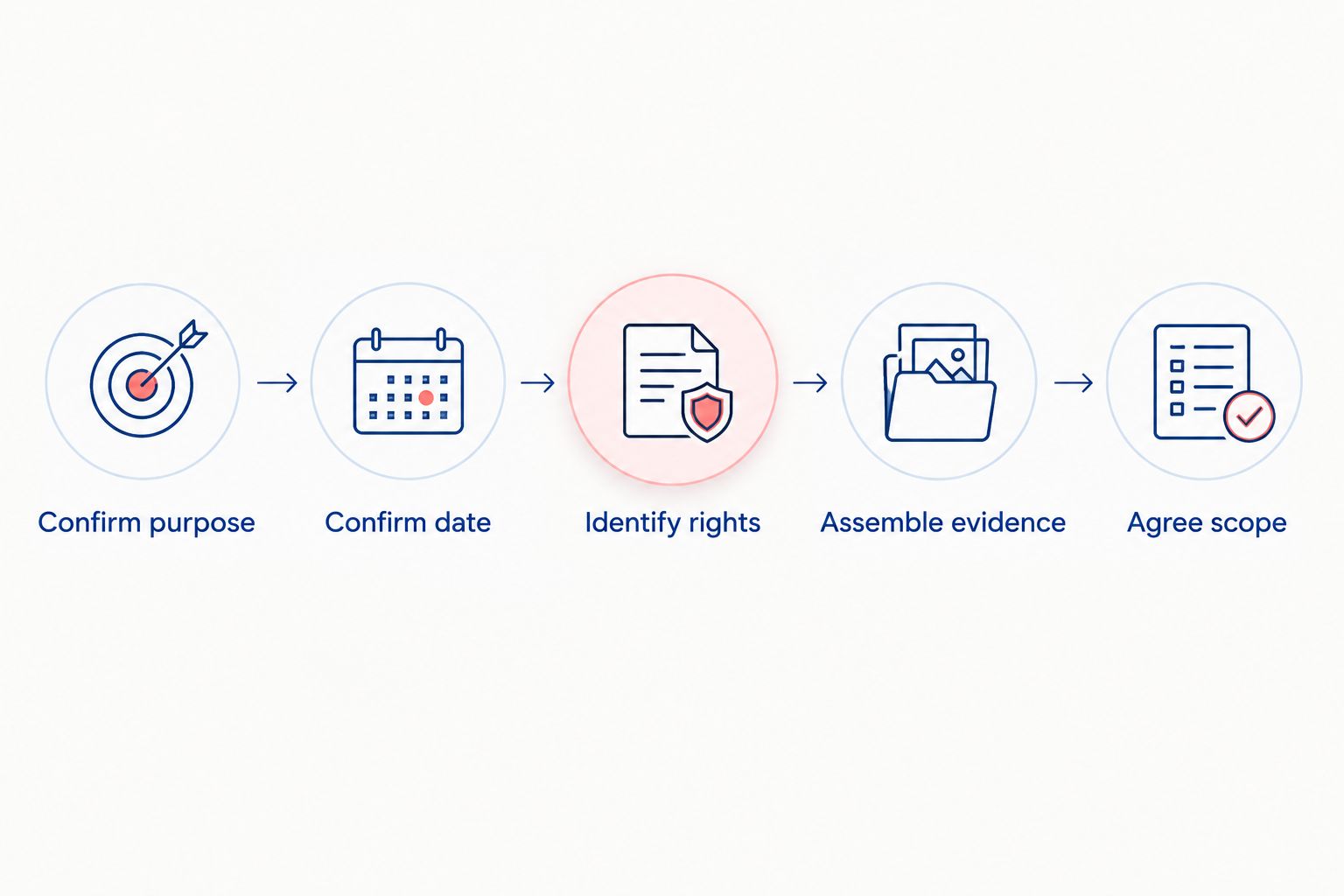
The retrospective appraisal to amended estate tax return workflow connects these assignment decisions to the estate's broader adviser-led process. Keep responsibility for the filing decision with the professionals handling the return.
What historical documents should you gather?
Build a dated evidence file rather than sending an unorganized collection of current documents. Mark which records describe conditions at the effective date and which show later changes. This distinction helps the appraiser avoid treating subsequent improvements as historical features.
For a New York estate property, gather the records that apply:
- Ownership records: deeds, ownership schedules, entity documents, and relevant agreements.
- Prior valuation materials: earlier appraisal reports, schedules, and supporting property descriptions.
- Condition evidence: dated photographs, inspection records, renovation documents, and descriptions of known defects.
- Income records: historical leases, rent rolls, operating statements, and information about vacancies or concessions.
- Property records: floor plans, building information, and documents identifying restrictions or permitted uses.
- Transaction evidence: contracts, closing documents, listings, and offers, with their relevant dates and circumstances.
A later sale is evidence to evaluate, not an automatic substitute for the historical value. The appraiser must consider differences in timing, condition, rights transferred, and transaction circumstances. Likewise, a current inspection does not by itself establish what the property looked like at the earlier effective date.
Is the problem historical value or depreciation treatment?
Not every real estate-related correction requires a new fair market value opinion. Fair market value concerns the price under the applicable market-value framework; depreciation concerns tax treatment of property and its components. Those questions can involve the same building without requiring the same professional work.
For an income-producing estate property, have the CPA distinguish the choice between amended returns versus Form 3115 from the separate need to establish a historical real estate value. Form 3115 concerns an application for a change in accounting method; it is not a substitute appraisal report.
Do not order a fair market value appraisal solely because a depreciation question involves real estate. Ask the CPA to identify the required analysis and supporting documentation first. If the issue also requires historical property valuation, define that component separately rather than expecting one report to resolve every tax question.
Can a new appraisal guarantee a better amended filing outcome?
A new appraisal cannot guarantee a refund, a favorable tax result, or acceptance by a taxing authority. It supplies an independent value opinion and its supporting analysis for the stated assignment. Your advisers determine how that evidence relates to the filing position.
An appraisal that confirms the original value can still answer the estate's question. An appraisal that identifies a different value does not automatically establish that an amendment is available or appropriate. Keep those conclusions separate.
REIS Group prepares real estate appraisal reports tailored to the identified valuation purpose. The practical benefit is a defined valuation analysis; the boundary is equally important: the report does not decide tax procedure or eliminate the possibility of challenge.
What should you send with a proposal request?
For an initial inquiry in 2026, summarize the property location and type, ownership interest, proposed effective date, and filing purpose. Identify the executor, attorney, or CPA coordinating the assignment. Explain what existing valuation evidence is available and what specific issue needs attention.
Also identify any known deadline, but distinguish a filing deadline from your preferred report date. Ask what records and access the appraiser needs to confirm scope and timing. A defined request produces a more relevant engagement discussion than asking for an appraisal without explaining its intended use.
Discuss Your Appraisal Assignment
Define the property interest, historical valuation date, and estate-reporting purpose with REIS Group.
FAQ
Is a retrospective appraisal worth it if the estate already filed its return?
A retrospective appraisal is worth considering when the estate’s advisers identify an actionable filing issue that requires better historical valuation support. Filing a return does not by itself establish whether another appraisal is necessary or whether an amendment is appropriate.
Can an appraisal prepared in 2026 value property as of an earlier date?
An appraisal prepared in 2026 can address an earlier effective date. The appraiser analyzes the property and market circumstances relevant to that date and explains the evidence and limitations supporting the conclusion.
Does a retrospective appraisal guarantee that the IRS will accept an amended value?
A retrospective appraisal does not guarantee IRS acceptance of an amended value. It supports a valuation conclusion; the filing position and any response to questions require coordination with the estate’s tax and legal advisers.
Should an executor ask the CPA before hiring a retrospective appraiser?
An executor should ask the CPA or estate attorney to identify the filing issue before commissioning the appraisal. Confirm the effective date, property interest, and intended use so the assignment addresses the right question.
Can the original appraiser simply change the value in an earlier report?
A value conclusion cannot properly be changed merely to support a preferred filing result. Give the original appraiser the specific factual concern or new evidence and ask what clarification, correction, or additional assignment is appropriate.
Is a retrospective appraisal the same as a cost segregation study?
A retrospective real estate appraisal is not the same as a cost segregation study. Historical market valuation and the classification of property components for depreciation address different questions; the CPA should identify which analysis the filing issue requires.
One last thing
Write the assignment question before requesting the report. A useful starting sentence is: establish the value of the identified property interest as of the specified effective date for the estate's stated reporting purpose. If the estate team cannot complete that sentence, resolve the uncertainty before commissioning valuation work.
Discuss the proposed assignment with the appraiser and the advisers handling the return. Bring the prior report, historical records, and the specific concern—not a target value.
Related guides
- Can a date-of-death appraisal be completed years after the death?
- Partial-interest appraisal scope and cost considerations