A commercial building appraisal takes as long as the agreed scope, property complexity, records review, inspection, analysis, and report preparation require; the delivery date belongs in the engagement terms, not a generic estimate. For a New York City commercial property owner planning an assignment in 2026, the practical next step is to provide the property details, valuation purpose, available records, and required deadline before requesting a delivery commitment.
- A commercial building appraisal timeline depends on scope, records, property complexity, access, and analysis—not the inspection alone.
- REIS Group serves commercial property owners needing independent real estate appraisals tailored to an identified valuation purpose.
- Confirm the report delivery date separately from the inspection date and effective date of value.
- Expedited availability requires individual confirmation; prepare leases, operating records, and access arrangements before requesting a proposal.
Why this matters
If you need an appraisal for a transaction, ownership decision, or legal matter, a missed planning assumption can disrupt the work surrounding it. Schedule around receipt of the completed report, not the building inspection. An inspection is an information-gathering step, not a finished valuation.
REIS Group provides commercial and other real estate appraisal services scoped to the property, ownership interest, effective date, intended users, and intended use. Its over 30 years of experience provides context for discussing the assignment; it does not replace a property-specific scheduling discussion.
For a 2026 assignment, identify who needs the report and when that person needs to use it. A deadline supplied without the assignment purpose does not tell the appraiser what analysis or reporting the work requires.
How long does a commercial building appraisal take?
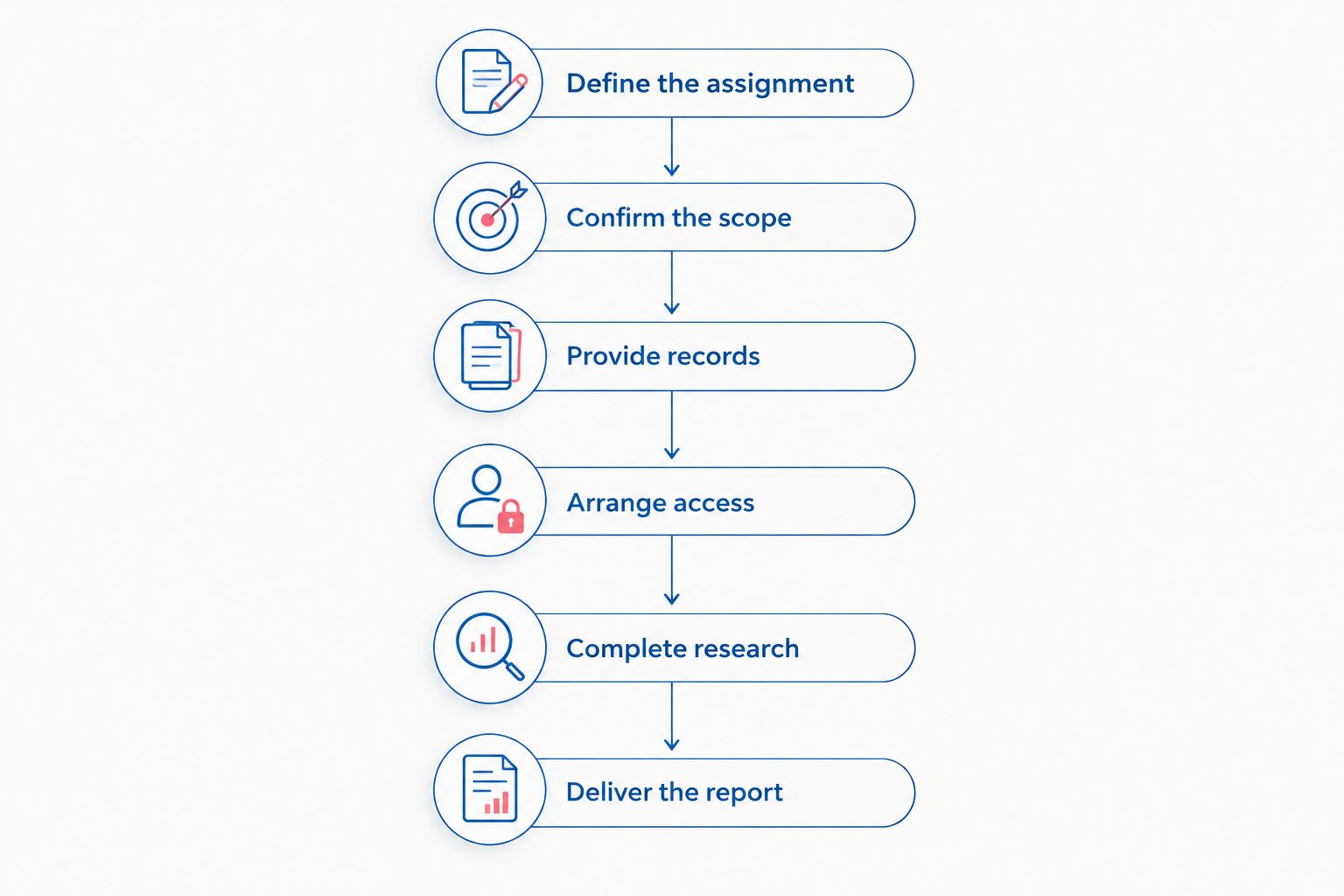
The commercial building appraisal timeline runs from assignment setup through delivery of the agreed report. The sequence below explains what must happen before a delivery commitment becomes useful—and what you can prepare without waiting for an inspection.
- Define the assignment. Identify the property, ownership interest, intended use, intended users, and effective date of value. Tell the appraiser whether the work concerns current market value, a historical date, or another clearly specified question.
- Confirm the scope. Discuss property complexity, available documentation, inspection requirements, and the report needed for the intended use. Obtain confirmation of what the proposed delivery date covers.
- Provide records. Submit the requested leases, rent roll, income and expense information, property descriptions, and relevant ownership documents. Flag gaps rather than leaving the appraiser to discover them later.
- Arrange access. Identify the person who can coordinate the inspection and explain any restrictions affecting tenant spaces, building systems, or other relevant areas.
- Complete research and analysis. The appraiser evaluates the property and relevant market evidence, applies appropriate valuation methods, and reconciles the findings into a supported conclusion.
- Prepare and deliver the report. The appraiser documents the analysis and conclusions for the identified intended use. Clarify how factual corrections or subsequent requests will be handled.
Ask when the proposed schedule begins. A date measured from engagement is different from a date measured from receipt of required records or completion of access arrangements. Put those starting conditions alongside the delivery date.
Which appraisal dates should you put on your calendar?
A commercial appraisal involves dates with different meanings. Confusing them creates avoidable problems, particularly when a property owner requests a current report about an earlier valuation date.
| Date | What it means | What it does not mean |
|---|---|---|
| Effective date of value | The date to which the value conclusion applies | The date the report must be delivered |
| Inspection date | The date the property is observed for the assignment | The date the analysis is complete |
| Report delivery date | The agreed date for providing the report | A change to the effective date of value |
For an appraisal commissioned in 2026, the effective date does not automatically have to be in 2026. A retrospective appraisal addresses value as of an earlier date. The appraiser needs evidence relevant to that date rather than simply treating present conditions as historical facts.
Tell the appraiser which deadline is fixed and why. Also identify whether an attorney, accountant, or another intended user needs time to examine the completed report before using it.
Why the commercial building appraisal timeline varies
The relevant scheduling question is not just how large the building is. The work depends on the assignment's information needs and the analysis required to answer its valuation question.
- Property type and complexity. Multifamily, mixed-use, retail, office, and other income-producing properties present different operating and market questions. Describe the property's actual uses, not just its marketing label.
- Records availability. Missing leases, inconsistent rent rolls, or incomplete operating information require clarification. Tell the appraiser what exists and what still needs to be assembled.
- Inspection access. Access restrictions affect information gathering. Name a coordinator who can communicate with management and occupants where necessary.
- Ownership interest. Valuing the entire property is a different assignment from valuing a partial ownership interest. Supply documents that explain the interest being appraised.
- Effective date. A retrospective assignment requires evidence relevant to the historical valuation date, including information about the property's condition and operations at that time.
- Scope and intended use. The report must address the identified purpose and intended users. A change in the valuation question or requested analysis requires a scope discussion.
These factors explain why a delivery commitment should follow an assignment review. They are also the factors you can address when preparing a useful proposal request.
What should you send before requesting a proposal?
Prepare a concise assignment summary and organize supporting records by subject. You do not need to resolve the valuation yourself; you need to make the property's facts and the assignment's purpose clear.
Assignment information
Provide the property address, property type, ownership contact, valuation purpose, intended users, requested effective date, and required delivery date. Explain whether the appraisal concerns the entire property or a particular ownership interest.
If your deadline relates to another professional's work, identify that relationship. An appraiser needs to understand the assignment without being asked to infer legal or accounting requirements from a calendar date alone.
Property and operating records
For an income-producing building, assemble the current rent roll, leases and amendments, operating statements, and available information about expenses and capital work. Include relevant floor plans, area information, or property descriptions when available.
Identify discrepancies before submitting the package. If different records show different occupancy or area information, explain the discrepancy rather than silently choosing a figure. The appraiser determines what evidence supports the analysis.
Access and known complications
Identify the property manager or other access contact. Describe known restrictions, vacant areas, alterations, or unresolved documentation issues that affect the assignment.
Keep a short list of documents still outstanding. A transparent incomplete package is more useful for scheduling than a package presented as complete when key records are absent.
Can you shorten the timeline without weakening the appraisal?
You can reduce avoidable coordination delays by defining the assignment early, supplying organized records, and arranging access promptly. You cannot substitute urgency for the research and analysis needed to support a value conclusion.
For a 2026 engagement, use the proposal discussion to distinguish your requested deadline from the appraiser's confirmed commitment. Ask whether the commitment assumes complete documentation, unrestricted access, or other stated conditions.
| Scheduling approach | Best for | Benefit | Limitation |
|---|---|---|---|
| Standard assignment scheduling | Owners able to plan around the agreed scope | Aligns records, access, analysis, and reporting | Still depends on the stated scheduling conditions |
| Requested expedited scheduling | Owners facing a specific external deadline | Establishes whether the requested timing is feasible | Availability requires individual confirmation; scope still governs |
Do not assume expedited availability from a general service description. Confirm it for the specific property and assignment, and ask how outstanding records affect the proposed delivery date. No scheduling label guarantees acceptance of the report by a third party.
The commercial appraisal guide for property investors provides related context for defining the valuation need. Keep the immediate scheduling discussion focused on the report you actually need, rather than adding unrelated valuation questions after engagement.
Does a more complicated building automatically take longer?
A complicated building requires a scope that addresses its relevant issues, but complexity alone does not establish a delivery date. Records availability, access, and the precise valuation question also determine the work involved.
A mixed-use property, for example, requires the appraiser to understand its different uses and relevant income information. A partial-interest assignment also requires clarity about the ownership interest; it is not simply a whole-property appraisal with a percentage applied afterward.
Tell the appraiser about these issues when requesting a proposal. Disclosure at the outset supports a schedule based on the actual assignment rather than an incomplete description.
Does the appraisal timeline include follow-up questions?
The agreed delivery date concerns the deliverable described in the engagement. Ask separately how factual corrections, clarification requests, and changes in scope will be addressed.
A request to correct a property fact is different from a request to value another interest or use another effective date. If your intended user changes the assignment requirements, notify the appraiser promptly and confirm whether the scope and schedule need revision.
FAQ
How long does a commercial building appraisal take in New York City?
A New York City commercial building appraisal takes the time required by its agreed scope, property complexity, records, access, analysis, and reporting. Obtain an assignment-specific delivery commitment rather than treating a general estimate as a deadline.
Does the commercial building appraisal timeline start at the inspection?
The commercial building appraisal timeline does not necessarily start at the inspection. Confirm whether the agreed schedule begins at engagement, receipt of required records, or another stated condition.
Can I request an expedited commercial appraisal?
You can request expedited scheduling, but availability must be confirmed for the individual assignment. Provide the property details, intended use, available records, and required deadline before requesting a commitment.
What documents should I prepare for a commercial appraisal?
Prepare the assignment details, rent roll, leases, operating records, and relevant property and ownership documents requested by the appraiser. Flag missing information and identify the person coordinating inspection access.
Is the inspection date the same as the effective date of value?
The inspection date and effective date of value have different purposes and need not be the same. The effective date identifies when the value conclusion applies; the inspection date identifies when the property was observed.
Can REIS Group appraise a commercial property as of a historical date?
REIS Group provides retrospective real estate appraisals tailored to the property’s effective date and intended use. Historical assignments require evidence relevant to the valuation date and a scope appropriate to the property interest.
Will an appraisal of business-owned real estate include the operating business?
An appraisal of business-owned real estate does not automatically include a valuation of the operating business. Specify whether you need the real property, the business, or separately defined assignments so the scope addresses the correct assets.
One last thing
A report delivered in 2026 and a value concluded as of 2026 answer different questions. Put the delivery date and effective date on separate lines in your proposal request. That simple distinction helps prevent an assignment from being scheduled correctly but scoped incorrectly.
Before accepting a proposal, check that the property interest, intended use, intended users, effective date, requested deliverable, and scheduling conditions match your needs. A clear engagement is more useful than an unsupported promise of speed.
Related guides
To discuss a commercial building appraisal timeline with REIS Group, request an appraisal consultation. Include the New York City property address, valuation purpose, ownership interest, effective date, available records, and required delivery date so the discussion starts with your assignment.