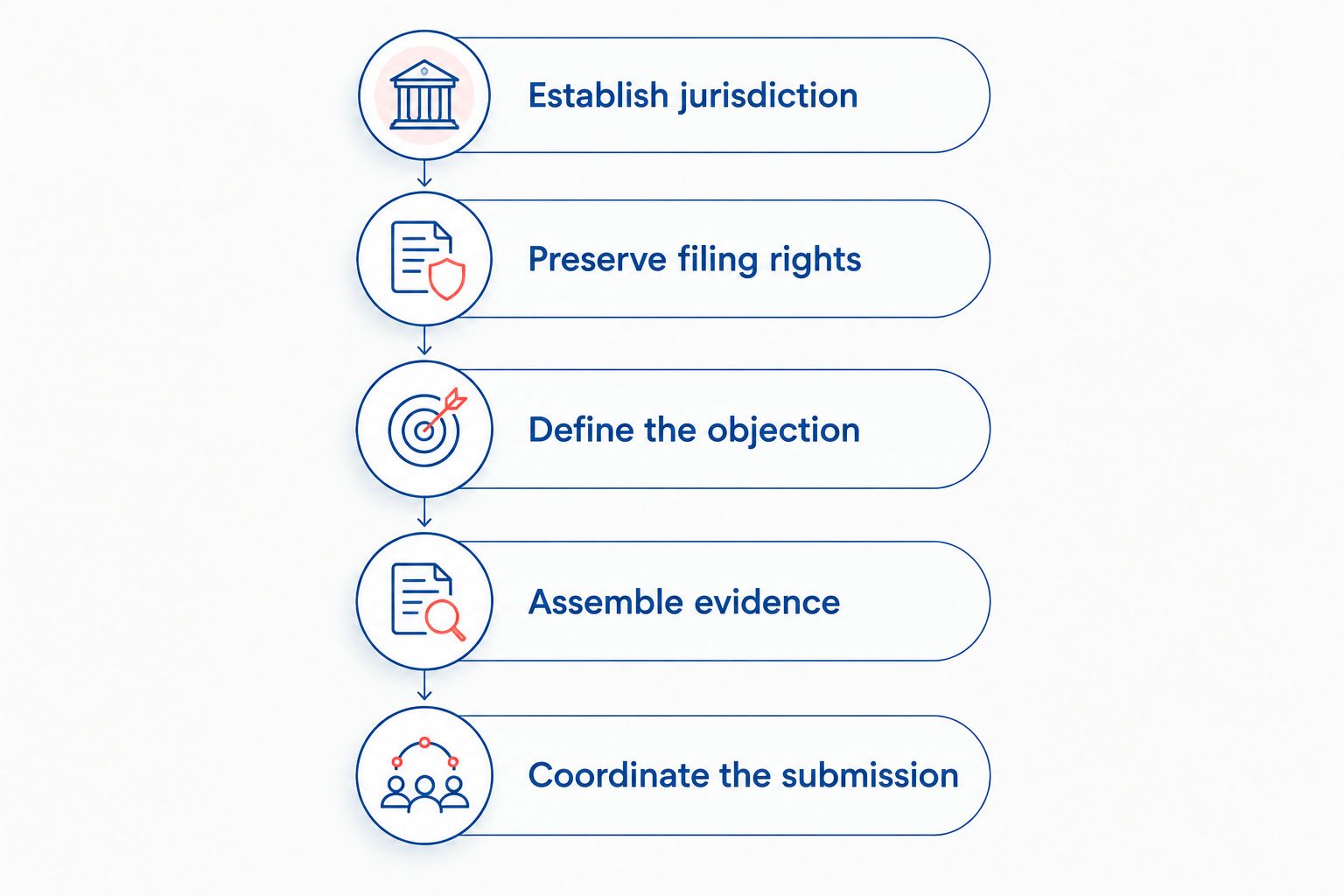
To challenge a commercial property tax assessment in New York, identify the assessing jurisdiction, preserve the administrative filing deadline, and support your objection with evidence tied to the applicable valuation date. For New York City property, review the Department of Finance assessment and Tax Commission requirements; elsewhere in New York, follow the local assessment grievance process before considering judicial review with counsel.
- To challenge commercial property tax assessment, preserve filing rights before preparing the full valuation case.
- New York City Tax Commission procedures differ from assessment grievance procedures elsewhere in New York.
- REIS Group provides independent commercial real estate appraisals for owners and professional advisers.
- An appraisal supports a value conclusion; it does not guarantee an assessment reduction.
Why this matters
A commercial property tax challenge is not simply an argument that the tax bill is too high. You need to identify what is wrong with the assessment and provide evidence that addresses the applicable assessment standard.
For a 2026 challenge, separate the filing requirements from the valuation work immediately. A well-supported appraisal does not cure a missed filing deadline. If you need valuation assistance, discuss the property, ownership interest, and intended use through REIS Group’s appraisal and valuation services.
How do you challenge a commercial property tax assessment in New York?
Start with the assessment notice, not a current listing estimate. The notice and assessment roll identify the property, assessed value, classification, and jurisdiction that determine your next steps.
Establish jurisdiction
Confirm whether the property is assessed by New York City or another municipality. For New York City, the Department of Finance establishes assessments, while the New York City Tax Commission handles administrative assessment review applications.
Outside New York City, identify the local assessor and Board of Assessment Review. New York State’s Department of Taxation and Finance publishes assessment grievance guidance, but you still need the municipality’s applicable calendar and submission instructions.
Preserve filing rights
Obtain the current application, instructions, submission method, and deadline directly from the reviewing authority. Ask counsel whether the ownership structure, property type, or proposed grounds create additional requirements.
For the 2026 assessment cycle, verify deadlines against the official calendar rather than reusing an earlier application package. Do not assume that requesting a correction from an assessor extends a separate administrative or court deadline.
Define the objection
Identify whether the challenge concerns overvaluation, unequal assessment, classification, or another legally recognized ground. Counsel should connect the objection to the correct legal standard; the appraiser should address the valuation questions within the assignment.
A lower asking price for a nearby building is not, by itself, proof that your assessment is excessive. You need evidence that relates to the subject property, relevant rights, valuation date, and assessment framework.
Assemble evidence
Collect leases, rent rolls, operating statements, property records, and information about physical condition. Give the appraiser both favorable and unfavorable information, including vacancy, concessions, deferred maintenance, and unusual lease obligations.
Identify which records describe conditions at the valuation date. A change that occurred later requires explanation; it should not be treated automatically as evidence of an earlier condition.
Coordinate the submission
Align the appraisal scope with counsel’s intended use and the reviewing authority’s requirements. Confirm who prepares the application, who submits supporting materials, and whether the appraiser’s participation beyond report delivery is included.
Keep the filing acknowledgment and a complete copy of the submission. If administrative review does not resolve the dispute, counsel can evaluate whether a judicial proceeding under New York’s Real Property Tax Law Article 7 is appropriate.
New York City assessments require a separate calculation
New York City’s Department of Finance identifies 4 property tax classes. Most commercial property falls within Class 4, while many apartment buildings fall within Class 2; mixed-use and other properties require classification review rather than assumptions based on a building’s appearance.
The Department of Finance’s assessment guidance uses a 45% assessment ratio for Class 2 and Class 4 property. However, assessment limitations, transitional assessments, and exemptions can affect the figures shown on the notice and the amount used for taxation.
Do not compare assessed value directly with a broker’s market value estimate. First identify which figure you are reviewing and how the assessment framework applies to that property.
For a 2026 New York City review, reconcile these items before instructing an appraiser:
- The property identification and tax class.
- The market value and assessed values shown on the notice.
- The applicable valuation date and property condition at that date.
- Any exemption or transitional assessment entries affecting the calculation.
- The ownership interest and the purpose of the proposed appraisal.
A dispute about a calculation or classification is not identical to a disagreement about market value. Your advisers should identify that distinction before deciding what evidence to commission.
What valuation evidence supports a commercial assessment challenge?
An appraisal should explain why the selected evidence applies to your property. A stack of sales listings or an unsupported capitalization rate does not establish a reliable value conclusion.
The appropriate analysis depends on the property and assignment. These are valuation approaches, not separate appeal procedures.
| Valuation approach | Best for | Useful evidence | Main limitation |
|---|---|---|---|
| Income capitalization | Income-producing property with supportable income and expense information | Leases, rent rolls, operating statements, market rents, and capitalization evidence | Unsupported income adjustments or capitalization rates weaken the conclusion |
| Sales comparison | Property with sufficiently comparable transactions | Verified sales, property rights, transaction circumstances, and adjustment support | Differences in tenancy, condition, location, and timing require explanation |
| Cost approach | Assignments where land value, replacement cost, and depreciation provide relevant evidence | Land sales, construction cost information, and depreciation analysis | Accrued depreciation and obsolescence can be difficult to support |
For a leased commercial building, distinguish actual contract rent from market rent and explain the treatment of each. Also distinguish recurring operating expenses from capital expenditures rather than combining them without analysis.
REIS Group provides commercial real estate appraisals for owners and advisers who need independent valuation analysis. The benefit is a documented conclusion tailored to the assignment; the limitation is that valuation evidence does not replace legal advice or guarantee relief. The commercial appraisal guide for property investors provides related context for defining an assignment.
Why the evidence and appraisal scope vary
A tax assessment challenge needs evidence specific to the property and review process. The following factors determine which records, analyses, and specialist input belong in the assignment:
- Jurisdiction. New York City review procedures differ from local grievance procedures elsewhere in the state.
- Property type. An office building, retail property, and multifamily building present different income and comparison questions.
- Effective date. A retrospective assignment requires evidence supporting conditions at the relevant earlier date.
- Ownership interest. The rights being valued must be identified rather than assumed from the property address.
- Records quality. Missing leases, inconsistent expense classifications, and incomplete rent rolls require additional investigation.
- Scope of participation. Report preparation, consultation with counsel, and testimony are distinct tasks that should be addressed in the engagement.
Turnaround depends on property type, complexity, records availability, and scope. Confirm expedited availability individually rather than assuming that an approaching filing deadline changes the work required.
What documents should you give the appraiser?
Provide records that explain both the assessment and the property’s economics. Organize the package by property and reporting period so your advisers can trace each conclusion to its source.
Assessment and ownership records
Include the assessment notice, relevant property record information, ownership documents, and any prior assessment review materials available to you. Flag differences between the recorded building information and the property’s actual characteristics.
Identify the applicant and the party authorized to instruct the appraiser. If ownership or authorization is uncertain, resolve that question with counsel before submission.
Income and expense records
Provide leases and amendments, a dated rent roll, operating statements, and details of concessions, arrears, vacancy, and owner-paid expenses. Explain unusual entries instead of leaving the appraiser to infer what they mean.
Separate facts from projections. A proposed lease or renovation budget is not the same evidence as an executed lease or completed project.
Physical condition and market records
Supply available plans, inspection information, photographs, repair documentation, and relevant transaction records. Note when each condition existed and when each document was prepared.
For a 2026 engagement involving an earlier valuation date, retain dated records showing the property’s earlier condition. Current photographs alone do not establish what existed at that date.
Can you challenge an assessment without an appraisal?
An appraisal is not automatically required for every commercial assessment objection; the required evidence depends on the reviewing authority and the dispute. A factual record correction and a contested market value conclusion present different evidentiary questions.
For a valuation dispute, ask counsel what support the administrative application requires and what a later proceeding would require. Commission an appraisal when the assignment calls for an independent, supported value conclusion—not simply because the tax bill increased.
Does a lower appraisal guarantee a lower tax assessment?
A lower appraisal does not guarantee a lower assessment. The reviewing authority can examine the appraisal’s assumptions, comparable evidence, income analysis, valuation date, and application of the assessment framework.
The report must address the actual dispute. An appraisal prepared for lending, acquisition, or financial reporting should not be repurposed automatically for assessment review without checking its intended use and scope.
Should your tax attorney or appraiser lead the challenge?
Your attorney should direct legal strategy and procedural decisions; your appraiser should address the valuation assignment. The owner supplies records and authorizations, while the engagement should identify responsibility for each submission.
For a 2026 filing, ask both advisers to confirm the valuation date, required evidence, and schedule at the outset. This coordination prevents a report from answering a different question than the application presents.
FAQ
How do I challenge commercial property tax assessment in New York City?
To challenge commercial property tax assessment in New York City, review the Department of Finance assessment and follow the Tax Commission’s current application requirements. Coordinate filing obligations with counsel and support the objection with evidence relevant to the property and valuation date.
What is the deadline to appeal my commercial assessment in 2026?
The applicable 2026 deadline depends on the assessing jurisdiction and review procedure. Check the reviewing authority’s official calendar and confirm with counsel; do not assume that an informal correction request extends another filing deadline.
Can a high property tax bill prove that my assessment is wrong?
A high property tax bill does not by itself prove that the assessment is wrong. Identify the assessment ground and provide evidence addressing value, classification, unequal assessment, or another applicable issue.
What records help support an income-producing property appraisal?
Leases, rent rolls, operating statements, and records of vacancy and concessions help support an income-producing property appraisal. The appraiser must evaluate those records against the valuation date and relevant market evidence.
Can I use an existing commercial appraisal for my tax challenge?
An existing commercial appraisal requires a scope and intended-use review before use in a tax challenge. Its valuation date, property rights, assumptions, and analysis must address the assessment dispute.
Does challenging an assessment replace paying the property tax bill?
Do not treat an assessment challenge as permission to stop paying property taxes. Ask counsel how payment obligations, penalties, and any refund procedure apply to your property.
Does a commercial property appraisal value the business inside the building?
A commercial real estate appraisal values the identified real property interest, not automatically the operating business occupying it. If business assets or business value are also at issue, define those as separate assignment questions.
One last thing
Check the effective date before discussing the final value. A persuasive analysis of today’s market can still fail to answer a dispute about an earlier assessment date.
REIS Group brings over 30 years of experience to real estate appraisal and valuation consulting. To discuss your commercial appraisal assignment, provide the property address, assessment notice, intended use, valuation date, and counsel’s requirements through the appraisal consultation contact page.
Related guides