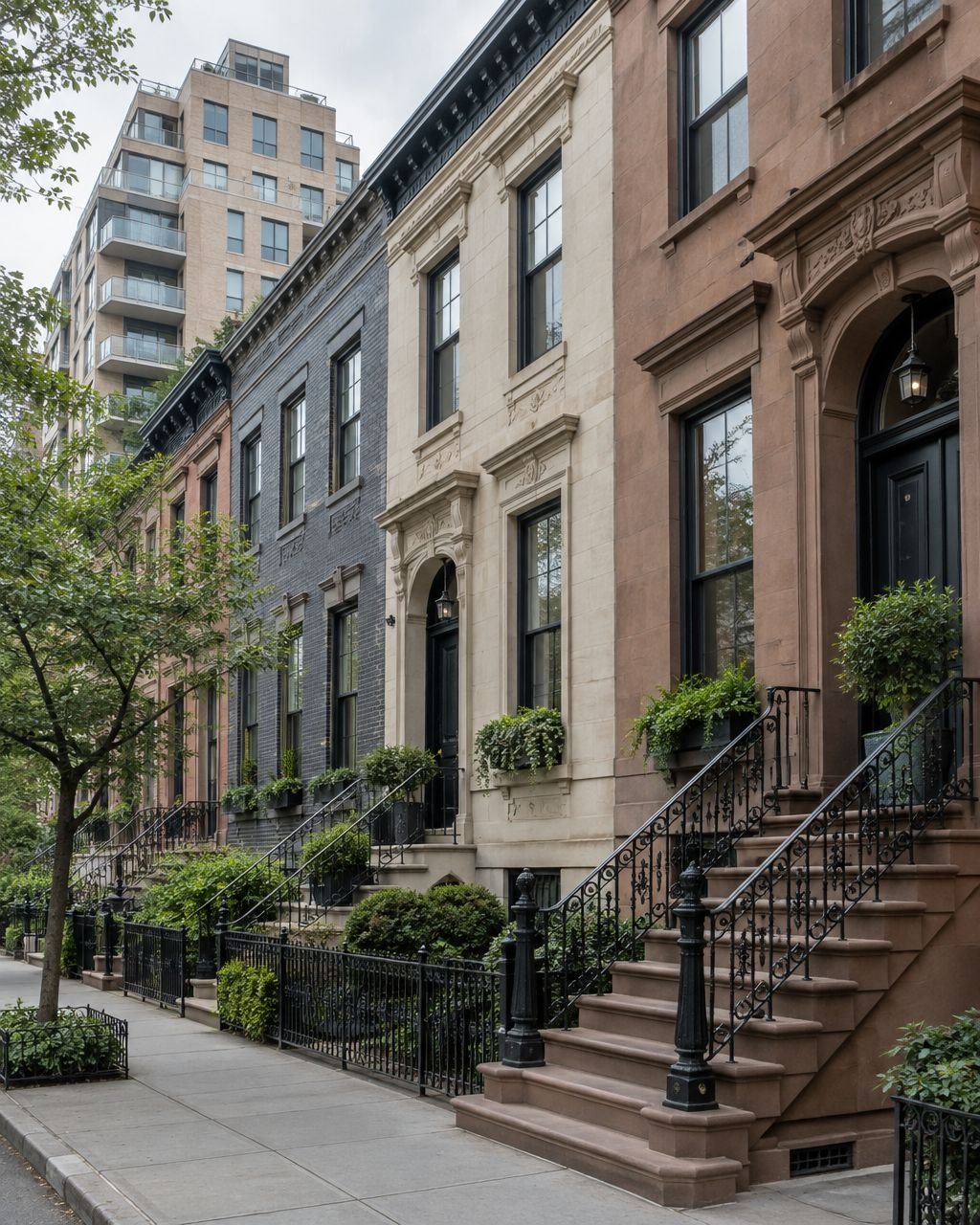
Midtown commercial real estate market trends in Q3 2026 show a divided office market: vacancy declined, but new leasing slowed and higher-quality buildings captured most activity. For commercial property owners, trustees, and professional advisers in Midtown, New York, NY, the practical issue is how those conditions affect a specific property's income, risk, and appraisal—not whether Manhattan is broadly recovering.
- Midtown commercial real estate market trends show falling office vacancy alongside slower new leasing in Q3 2026.
- Cushman & Wakefield reported 17.0% Midtown office vacancy and 3.9 million square feet of quarterly new leasing.
- Class A buildings captured 85.0% of Midtown’s quarterly new office leasing; building quality matters.
- REIS Group connects commercial appraisal analysis to the property’s leases, condition, ownership interest, and valuation date.
For an ownership transfer, estate matter, or other valuation assignment, REIS Group's commercial real estate appraisal service provides a property-specific path beyond headline market statistics.
Midtown office market indicators at a glance
Cushman & Wakefield's Manhattan Office MarketBeat for Q3 2026 reports a Midtown office vacancy rate of 17.0%, following a quarterly decline of 0.7 percentage points. That improvement coexisted with 3.9 million square feet of new leasing, down 22.0% from the preceding quarter.
| Indicator | Midtown result | Comparison or scope |
|---|---|---|
| Overall office vacancy | 17.0% | Lowest since Q1 2021 |
| Quarterly new office leasing | 3.9 million square feet | Down 22.0% quarter over quarter |
| Year-to-date new office leasing | 13.4 million square feet | Down 12.8% from the same period in 2025 |
| Year-to-date new leasing plus renewals | 19.6 million square feet | Up 1.1% from the same period in 2025 |
| Class A share of quarterly new leasing | 85.0% | Midtown office buildings |
| Year-to-date net absorption | Positive 3.6 million square feet | Midtown office market |
Source and method: Cushman & Wakefield, Manhattan Office MarketBeat, Q3 2026, Midtown section. Year-to-date figures cover January through September; quarterly figures cover July through September. These are brokerage market observations, not REIS Group assignment results, and they do not establish the value of an individual property.
The contrast is the main finding: Midtown's occupied office footprint improved while new leasing slowed. New leasing plus renewals increased modestly year to date, even though new leasing alone declined. Treating those measures as interchangeable would produce a misleading market narrative.
Why this matters for a Midtown property appraisal
A market recovery does not distribute evenly across buildings. A fully leased office property with durable tenants presents a different income profile from a building facing lease expirations, significant improvements, or extended vacant space.
For an appraisal, the market report supplies context. The rent roll, executed leases, operating statements, physical condition, and comparable transactions supply the property-level evidence. An appraiser reconciles those sources rather than applying a neighborhood-wide percentage change to every asset.
REIS Group commercial appraisal assignments are scoped to the property, rights appraised, effective date of value, and intended use. That distinction matters when the same building is being considered for an estate valuation, ownership transaction, or dispute: the assignment's question must be clear before the analysis begins.
Trend 1: Lower vacancy does not mean every building is improving
Midtown's 17.0% overall office vacancy rate in Q3 2026 was its lowest since Q1 2021, according to Cushman & Wakefield. The report also recorded positive year-to-date absorption of 3.6 million square feet. Net absorption measures the change in occupied space over a period; it is not the same as the volume of leases signed.
For an owner, these figures support a stronger occupancy backdrop. They do not prove that a particular vacant floor will lease quickly or that every tenant will accept less favorable terms.
A property-level review should distinguish:
- Space that is occupied from space that is merely under negotiation.
- Signed leases from proposals and letters of intent.
- Direct landlord competition from competing sublease space.
- Building-wide occupancy from the performance of individual floors.
- Current income from income projected after improvements and leasing.
The appraisal implication: vacancy assumptions need support from the property's actual competitive set. A Midtown-wide average is a reference point, not an automatic allowance for every building.
Trend 2: Higher-quality offices dominate new leasing
Class A buildings accounted for 85.0% of Midtown's quarterly new leasing and 83.3% of year-to-date new leasing in Cushman & Wakefield's Q3 2026 report. These figures describe the share of leasing activity, not the share of all office inventory.
Newmark's Manhattan Office Market Report for the same quarter offers another indication of market segmentation: direct availability in its Midtown trophy-building set fell to 2.4%. That narrowly defined measure should not be compared directly with Cushman & Wakefield's 17.0% overall vacancy rate. The providers are describing different building populations and different measures.
The distinction helps explain why broad recovery headlines are insufficient for valuation. A premium tower's leasing evidence is not automatically applicable to an older property with different systems, floor layouts, amenities, or renovation needs.
When reviewing comparables, examine:
- Location and access relative to the subject property.
- Building condition and recent capital improvements.
- Floor efficiency, light, and usable layout.
- Tenant requirements and the size of available blocks.
- The costs needed to make the subject space competitive.
Compare the buildings tenants actually consider substitutes. A shared Midtown address does not make two properties economically equivalent.
Trend 3: Renewals change the meaning of leasing headlines
Midtown year-to-date new leasing totaled 13.4 million square feet, down 12.8% from the comparable 2025 period. Yet combined new leasing and renewals reached 19.6 million square feet, up 1.1%, according to Cushman & Wakefield.
Both findings are true. They answer different questions.
Renewals can preserve building occupancy and income without representing a tenant's move into newly occupied space. New leases can reflect relocations within the market as well as additional demand. Neither measure, viewed alone, captures every change in occupancy or landlord cash flow.
For a property's appraisal, review the economics behind the transaction:
- Remaining lease term and scheduled expirations.
- Renewal, termination, and expansion options.
- Tenant improvement obligations and leasing commissions.
- Rent abatements and other negotiated concessions.
- Tenant credit and concentration within the building.
A signed renewal is meaningful evidence, but its contribution to value depends on its terms. Stable occupancy can still require substantial landlord spending. Likewise, an attractive face rent can overstate the economic benefit if the owner must fund significant concessions.
Trend 4: Conversion activity deserves analysis, not an assumed premium
Newmark's Q3 2026 Manhattan report identified 17.6 million square feet of active and planned office-to-residential conversions across Manhattan. That is a borough-wide pipeline measure—not a count of completed Midtown conversions and not proof that a particular office building is suitable for residential use.
For an older Midtown property, conversion belongs in a highest-and-best-use review when the assignment and property characteristics warrant it. Highest and best use considers a use's legal permissibility, physical possibility, financial feasibility, and productivity. A conceptual alternative is not the same as a supported conclusion.
The analysis should address:
- Applicable zoning and the approvals required for the proposed use.
- Floor depth, light, access, and building configuration.
- Existing tenants and the cost of obtaining possession.
- Construction scope, timing, and carrying costs.
- Supportable demand and the economics of the completed property.
Do not add a conversion premium simply because nearby projects exist. A feasible alternative use requires property-specific evidence, including costs and constraints. Legal, architectural, and construction input may be needed alongside valuation work.
Offices, storefronts, and mixed-use buildings need separate evidence
The quantified trends in this article concern offices. They should not be applied unchanged to Midtown retail, hotels, or other commercial uses.
For a mixed-use building, separate the income streams before drawing conclusions. Ground-floor retail has a different tenant market from upper-floor offices, and a strong office leasing report does not establish storefront demand on a particular block.
| Property component | Evidence to examine | Limitation of office-market headlines |
|---|---|---|
| Office space | Comparable leases, concessions, tenant requirements, and competing buildings | A market average conceals differences in quality and location |
| Street-level retail | Corridor-specific leasing, frontage, visibility, permitted use, and tenant obligations | Office vacancy does not measure storefront demand |
| Mixed-use property | Separate rent and expense analysis for each component | A blended average can obscure different leasing risks |
| Potential alternative use | Legal review, physical suitability, costs, timing, and demand | Conversion announcements do not establish feasibility |
This is an evidence checklist, not a claim that every property requires the same scope. The assignment determines which analyses are necessary and how much detail the report needs.
Turn market context into a property-specific valuation
For owners and fiduciaries reviewing Midtown commercial property in 2026, start with the decision the appraisal must support. Then organize the evidence around the property and valuation date.
Define the interest and effective date
Identify whether the assignment concerns the underlying real estate, a leased ownership interest, or a partial interest requiring additional analysis. The effective date of value is the date to which the appraisal conclusion applies; it is not necessarily the inspection or report date.
For retrospective work, current market reports do not replace evidence relevant to the historical date. An estate matter involving an earlier valuation date needs the conditions, leases, and information appropriate to that assignment, not an unadjusted application of Q3 2026 trends.
Reconcile income with obligations
Provide the rent roll together with leases, amendments, and expense records. Explain discrepancies between billed rent, collections, concessions, and the income shown in operating statements.
Capital spending also needs context. Identify deferred maintenance separately from proposed improvements, and distinguish documented obligations from preliminary plans. An income projection is stronger when the costs required to achieve it are explicit.
Assemble the supporting records
Before discussing the assignment with REIS Group, gather:
- Property address, building description, and ownership information.
- Current rent roll and relevant historical versions.
- Executed leases, amendments, and concession schedules.
- Operating statements and available capital expenditure records.
- Information about vacancies, improvements, and known building issues.
- The appraisal purpose, intended users, effective date, and required timing.
Missing records do not always prevent an assignment, but they affect the scope and information needed. Confirm requirements at the outset rather than assuming a market summary can substitute for property documentation.
FAQ
What are the main Midtown commercial real estate market trends in 2026?
Midtown’s Q3 2026 office market combined falling vacancy with slower new leasing and a concentration of activity in Class A buildings. Cushman & Wakefield reported 17.0% overall vacancy and 3.9 million square feet of quarterly new leasing; these figures do not describe every commercial property type.
Is Midtown office leasing increasing or decreasing?
Midtown new office leasing declined, while combined new leasing and renewals increased modestly year to date in Q3 2026. Cushman & Wakefield reported a 12.8% year-over-year decline in year-to-date new leasing and a 1.1% increase when renewals were included.
Does lower Midtown vacancy mean my building is worth more?
Lower market vacancy does not establish that an individual building is worth more. Property value also depends on income, lease terms, expenses, condition, capital needs, risk, and comparable market evidence.
Can I use office market data to value a Midtown storefront?
Office market data alone is not an adequate basis for valuing a Midtown storefront. Retail analysis needs evidence relevant to the corridor, space, lease terms, tenant use, and competitive properties.
Does a planned residential conversion increase an office building’s value?
A proposed conversion does not automatically increase an office building’s value. Legal permissibility, physical suitability, costs, timing, tenant obligations, and financial feasibility must be evaluated for the property.
What should I provide for a Midtown commercial appraisal?
Provide the property address, ownership information, rent roll, leases, operating statements, and available capital expenditure records. Also identify the appraisal purpose, intended users, effective date of value, and required timing so the scope can be confirmed.
One last thing: match the market to the valuation date
The most useful market statistic is not necessarily the newest one. It is the statistic that describes the appropriate property segment and helps explain conditions at the appraisal's effective date.
REIS Group provides independent commercial real estate appraisals for owners, fiduciaries, and professional advisers who need property-specific valuation conclusions. Bring the assignment purpose and available records to the initial discussion so the scope addresses the decision your report must support.
Discuss Your Appraisal Assignment with REIS Group to confirm the property, interest, valuation date, and intended use before requesting a proposal.
Sources and scope
- Cushman & Wakefield, Manhattan Office MarketBeat, Q3 2026: Midtown leasing, renewals, vacancy, building-class shares, and absorption.
- Newmark, Manhattan Office Market Report, 3Q26: Midtown trophy direct availability and Manhattan office-to-residential conversion pipeline.
Market information reviewed October 29, 2026. Provider definitions and property coverage differ; figures are attributed rather than combined into a single market estimate. This article provides market context, not an appraisal of a specific property or legal or tax advice.
Related guides
- Commercial appraisal for property investors
- Partial-interest appraisals
- Estate-tax appraisals and date-of-death valuation