A New York property tax appeal has no single statewide turnaround: completion depends on the assessing jurisdiction, the review procedure, and whether the dispute proceeds to court. For a 2026 appeal, treat filing, valuation evidence, a determination, and any resulting tax adjustment as separate milestones—not one promised completion date.
- The property tax appeal timeline in New York depends on local assessment procedures and the chosen review route.
- Filing deadlines are not decision deadlines; appraisal preparation and tax adjustments follow separate schedules.
- REIS Group provides real estate appraisal and valuation consulting for New York property owners and professional advisers.
- Confirm the assessment year, valuation date, filing requirements, and evidence schedule before commissioning an appraisal.
Why this matters
For a New York City commercial property owner, the practical question is not simply when an appeal ends. You need to know when counsel needs valuation evidence, which assessment the challenge concerns, and whether an eventual adjustment affects your ownership or transaction plans.
An appraisal supports a valuation position; it does not itself file the appeal or control the reviewing body's calendar. The distinction is central to choosing ad valorem tax appeal appraisal support and coordinating that work with your attorney.
Plan around the next enforceable deadline, not an assumed resolution date. A report delivered after an evidence deadline does not solve a filing problem.
How long does a property tax appeal take in New York?
The timeline follows the applicable review process, not a standard service-delivery period. Administrative review and court proceedings have different requirements, and an appraisal assignment has its own scope and schedule within that process.
| Stage or route | Best for | What determines timing | Main limitation |
|---|---|---|---|
| Administrative review | Presenting an assessment challenge through the applicable local process | Filing calendar, evidence requirements, review procedures, and determination schedule | A timely filing does not establish when relief will be granted |
| Small Claims Assessment Review | Qualifying residential property owners seeking judicial review | Eligibility, petition requirements, hearing scheduling, and determination | Not a general route for commercial property owners |
| Article 7 proceedings | Owners pursuing judicial review of an assessment under the applicable statute | Counsel's filings, appraisal evidence, negotiations, and court procedure | Requires a separate litigation strategy and schedule |
| Appraisal preparation | Developing support for the property's value at the relevant date | Property complexity, inspection needs, records, and agreed scope | Does not replace the administrative or judicial proceeding |
For statewide procedure, the New York State Department of Taxation and Finance explains assessment grievances and judicial review. For New York City property, consult the New York City Tax Commission's application instructions for the relevant assessment year. These are different procedural settings; do not substitute a town's grievance calendar for the city's process.
Start with the assessment being challenged
Identify the property, assessment roll, tax year, and determination you want reviewed. A current tax bill alone does not establish the correct filing calendar or valuation assignment.
For your 2026 planning, ask counsel to distinguish the application deadline from any later evidence submission, hearing, or court deadline. Record each separately, along with the person responsible for meeting it.
Separate the result from its implementation
A determination, settlement, or judgment is not necessarily the same event as an adjusted bill or completed refund. The applicable tax authority must implement whatever relief is authorized.
Ask counsel what the result changes, which assessment years it covers, and how implementation will be tracked. Do not budget around a refund date that has not been confirmed.
Administrative review: follow the jurisdiction's calendar
Administrative review gives the appropriate reviewing body an opportunity to consider an assessment challenge. In New York City, that means understanding the Tax Commission's requirements rather than assuming that procedures used elsewhere in New York apply.
The benefit is a defined opportunity to present the challenge and its supporting evidence. The limitation is that filing an application does not guarantee a reduction, a hearing on your preferred date, or a particular completion schedule.
Before instructing an appraiser, clarify:
- Assessment identification: Which assessment and property record are under review?
- Application requirements: What must be filed, by whom, and by what deadline?
- Evidence requirements: What valuation material and supporting records are required?
- Representation: Who communicates with the reviewing authority?
- Next action: What happens if the assessment remains unchanged?
Your attorney should establish the procedural requirements. Your appraiser should establish what analysis is needed to address the identified valuation issue.
For a 2026 challenge, use the instructions applicable to that assessment year. An old application or a prior owner's calendar is not a reliable substitute.
Judicial review: distinguish commercial and residential routes
Judicial review is not a single procedure for every New York property. Small Claims Assessment Review and Real Property Tax Law Article 7 proceedings differ in eligibility and process.
Commercial owners should not assume that residential small-claims guidance applies to their property. Have counsel identify the appropriate route before relying on a filing deadline or anticipated hearing schedule.
Small Claims Assessment Review
Small Claims Assessment Review, often called SCAR, is a judicial review procedure for qualifying residential properties. New York's court guidance explains its eligibility and filing requirements.
Its practical benefit is a review procedure designed for eligible owners. Its limitation is scope: it is not a substitute for commercial tax assessment litigation, and eligibility must be established before using it.
Article 7 proceedings
Article 7 of New York's Real Property Tax Law governs judicial assessment review proceedings. The procedural work and valuation evidence must fit the challenge counsel is pursuing.
Article 7 offers a judicial route to contest an assessment, but it adds litigation requirements and scheduling considerations. Neither the commencement of a proceeding nor completion of an appraisal supplies a guaranteed resolution date.
Filing periods are not completion estimates
Real Property Tax Law sections 702 and 730 contain 30-day filing periods, subject to their respective triggering events and statutory requirements. That number describes a filing window—not a promise that a court will resolve the matter within 30 days.
Ask counsel to calculate the applicable period using the relevant assessment-roll filing, notice, and procedural facts. A general article cannot establish the deadline for your particular property.
How do you prepare the appraisal without delaying the appeal?
Start with the legal and valuation questions together. An appraiser needs more than the instruction to show that the tax bill is too high.
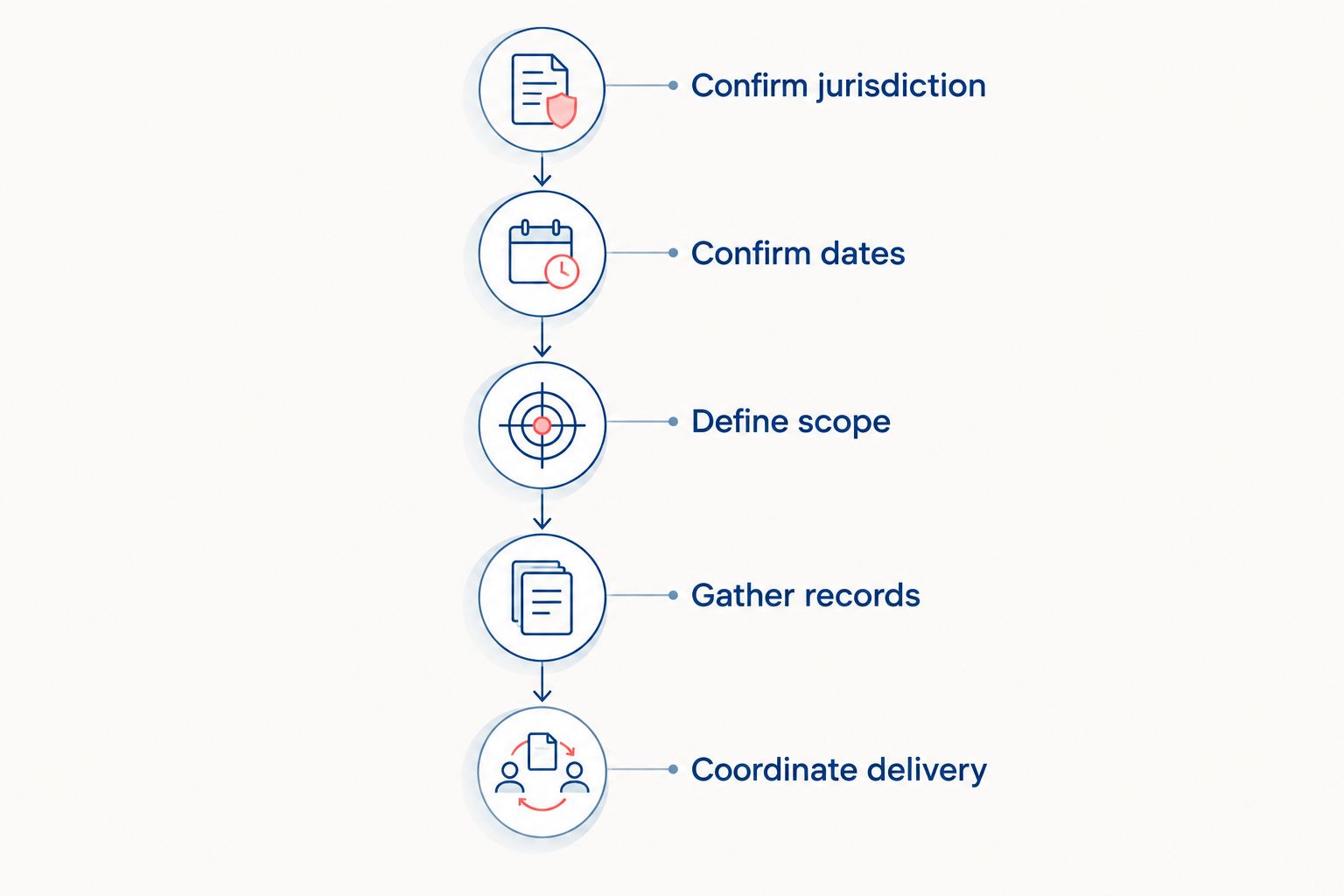
Use this sequence to organize the assignment:
- Confirm jurisdiction. Identify the assessing authority and the review procedure counsel intends to use.
- Confirm dates. Establish the assessment year, effective date of value, filing deadline, and evidence deadline.
- Define scope. Identify the property rights appraised, intended users, intended use, and required reporting format.
- Gather records. Assemble the assessment information, property documents, and relevant operating records.
- Coordinate delivery. Agree on a report schedule that fits the proceeding and allows questions to be addressed.
The effective date of value is the date for which the appraiser develops the value conclusion. It is not necessarily the inspection date or report date, and it should not be selected simply because it is convenient.
REIS Group's real estate appraisal services are relevant to New York owners and attorneys who need an independent valuation tied to a defined property interest, date, and intended use. Discuss those requirements through the firm's appraisal and valuation services before agreeing on the assignment.
Prepare a useful commercial-property document package
For an income-producing property, organize the records that explain its physical characteristics and financial performance. Relevant materials can include leases, rent rolls, income and expense statements, floor plans, property-condition information, and records of significant work.
Distinguish records describing the relevant valuation period from later developments. A lease signed after that date should not silently become evidence of conditions that existed earlier.
Also identify gaps. Telling the appraiser that a lease amendment is unavailable is more useful than supplying an apparently complete lease file that omits it.
Why the property tax appeal timeline varies
The following factors affect the work and procedural schedule; none supports a universal turnaround promise:
- Jurisdiction and review route. New York City procedures differ from those used by other assessing jurisdictions, and court review adds separate requirements.
- Property type and complexity. An income-producing building presents different valuation questions from an owner-occupied residence.
- Records availability. Missing leases, incomplete operating statements, and uncertain property details require clarification before analysis can be completed.
- Valuation scope. The effective date, property rights, intended use, and reporting requirements determine the assignment's work.
- Procedural developments. Evidence requests, negotiations, hearing arrangements, and court requirements affect the sequence of events.
- Implementation requirements. A valuation outcome and the tax authority's processing of that outcome are separate milestones.
For 2026 assignment planning, request an appraisal schedule based on the actual property and available records. REIS Group confirms turnaround according to property type, complexity, records availability, and scope; expedited availability requires individual confirmation.
Does ordering an appraisal start the appeal?
Ordering an appraisal does not start a property tax appeal. The applicable application or petition must be filed through the required procedure, with legal requirements confirmed by counsel.
Commission the appraisal in coordination with that procedure. Do not wait for a completed report if doing so would conflict with a filing deadline; ask counsel how the filing and evidence schedules fit together.
Can you use a current appraisal for an earlier assessment?
A current appraisal does not automatically answer a valuation question for an earlier effective date. The assignment must address the relevant date, property rights, and intended use.
Ask the appraiser whether the existing work addresses those requirements or whether a retrospective appraisal is needed. A retrospective appraisal develops a value opinion as of a past date using an appropriately defined scope.
Should you stop paying property taxes during an appeal?
Do not treat an appeal as permission to stop paying property taxes. Ask counsel and the collecting authority how payment obligations apply while the challenge is pending.
Keep payment decisions separate from your estimate of the appeal's outcome. An anticipated assessment reduction is not an approved adjustment.
FAQ
How long does a property tax appeal take in New York in 2026?
New York has no single statewide completion period for a property tax appeal. Timing depends on the assessing jurisdiction, administrative review, any judicial proceedings, and implementation of the result.
Does a 30-day appeal deadline mean I get a decision within 30 days?
A 30-day filing period is not a 30-day decision deadline. Counsel must identify the applicable statutory trigger and distinguish filing requirements from the review schedule.
Is the New York City property tax appeal process the same as elsewhere in New York?
New York City uses its own Tax Commission procedures and application requirements. Do not apply another municipality’s grievance calendar to a New York City property.
Can I use Small Claims Assessment Review for a commercial building?
SCAR is a procedure for qualifying residential properties, not a general commercial-property review route. Commercial owners should ask counsel which administrative and judicial procedures apply.
Will an appraisal guarantee a lower property assessment?
An appraisal does not guarantee an assessment reduction. It supplies valuation evidence for the identified purpose; the reviewing authority or court determines the result.
What should I give an appraiser for a commercial tax assessment challenge?
Provide the assessment information, relevant dates, property details, and available leases and operating records. Counsel and the appraiser should also agree on the property rights, intended use, and evidence schedule.
Can REIS Group promise an expedited appraisal for my appeal?
REIS Group confirms expedited availability individually rather than promising a fixed delivery date. Timing depends on property type, complexity, records availability, and the agreed scope.
One last thing
The newest appraisal is not automatically the right appraisal. For a 2026 assessment challenge, a report must answer the valuation question relevant to that proceeding—not merely describe what the property is worth when someone inspects it.
Before requesting a proposal, send the property address, assessment information, relevant valuation date, available records, and counsel's evidence deadline. Discuss your appraisal assignment with REIS Group so the scope and delivery expectations match the identified valuation purpose.
Discuss Your Appraisal Assignment
Share the property, valuation date, intended use, and evidence deadline to define the appraisal scope.
Related guides
- Property tax appeal services for owners
- Commercial appraisal for property investors
- Commercial building appraisers in Manhattan