Yes. A commercial appraisal can support a challenge to a lender’s valuation when it identifies relevant evidence, factual errors, or unsupported assumptions, but it does not require the lender to change its conclusion. Before ordering another report, ask the lender what review process applies and whether it will consider a borrower-commissioned appraisal.
- To challenge lender valuation, commercial appraisal evidence must address specific assumptions, errors, or overlooked market information.
- Ask the lender about its commercial valuation review process before commissioning another appraisal.
- Compare the same property rights, effective date, and valuation premise—not just the final values.
- REIS Group provides commercial appraisal analysis for New York City owners with a defined valuation purpose.
Why this matters
A valuation dispute can affect your commercial refinancing or acquisition, but a higher appraisal alone does not resolve the disagreement. Your submission needs to explain why the lender’s underlying analysis deserves another look.
For a commercial property financing assignment in 2026, start by separating the appraisal conclusion from the credit decision. A lender can accept a property value yet still decline the requested financing because of its underwriting requirements.
REIS Group’s appraisal and valuation services include commercial property assignments scoped to the ownership interest, effective date, and intended use. Those details belong in the engagement discussion before you commission work to support a lender valuation challenge.
Can a commercial appraisal be used to challenge a lender’s valuation?
Yes, but supporting a challenge and replacing the lender’s appraisal are different things. An independently commissioned report can provide evidence for review without becoming the report the lender relies on for its credit decision.
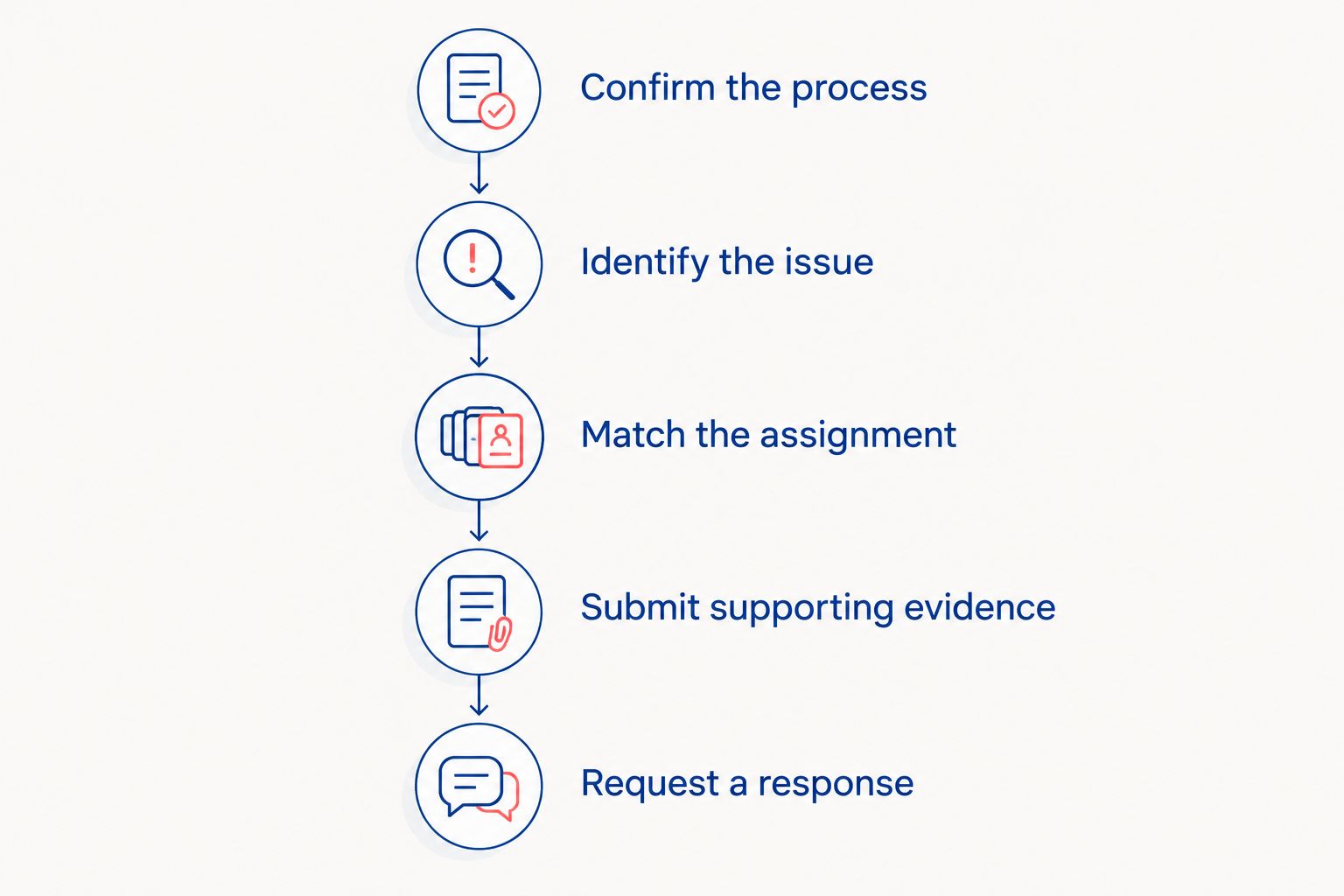
Use this sequence before commissioning additional work:
- Confirm the process. Ask your lender which department receives commercial valuation questions, what materials it accepts, and whether submission deadlines apply.
- Identify the issue. Separate factual errors, disputed assumptions, and market evidence from general dissatisfaction with the value.
- Match the assignment. Confirm the property rights, effective date, condition assumptions, and intended use needed for a meaningful comparison.
- Submit supporting evidence. Organize each disputed item with its source document and explain its valuation relevance.
- Request a response. Ask whether the lender will seek clarification, commission an appraisal review, or consider another appraisal under its procedures.
Keep communications within the lender’s designated process. Request an independent examination of the evidence, not a predetermined value or a report written to reach the loan amount.
Which type of valuation response fits your concern?
Choose the response that addresses the actual problem. A missing lease document calls for a different response than a broader concern about valuation methodology.
| Response | Best for | Strength | Limitation |
|---|---|---|---|
| Documented correction request | Identifiable factual errors or omitted records | Directs attention to a specific, verifiable issue | Does not independently establish the property’s value |
| Appraisal review | Questions about the quality or support of an existing appraisal | Examines the analysis and reasoning within an agreed scope | Does not necessarily include a separate opinion of value |
| Independent commercial appraisal | A separate value opinion for a defined purpose | Develops an independent analysis of the property interest | The lender determines whether it will consider or rely on it |
Start with a documented correction request when the disagreement concerns a clear factual error. Consider appraisal review or a separate appraisal when resolving the concern requires professional valuation analysis.
Do not assume that a report prepared for ownership planning, litigation, or tax purposes automatically fits a lending assignment. Its intended use and assumptions need examination first.
Why lender valuation challenges vary
The strength and scope of your challenge depend on the underlying assignment, not simply the size of the value difference.
- Property rights: Valuing ownership subject to existing leases differs from valuing an unencumbered ownership interest.
- Effective date: Market evidence must relate to the date being valued, rather than automatically reflecting today’s conditions.
- Property condition: Deferred maintenance, renovations, and completion assumptions affect the analysis.
- Income evidence: Lease terms, concessions, vacancy, expenses, and collection history need accurate treatment.
- Market support: Comparable transactions and capitalization-rate evidence require analysis of relevant differences.
- Lender procedures: The lender’s submission and engagement requirements determine how additional evidence enters its review.
These factors also shape the scope of any additional professional work. A focused review of a disputed assumption is not the same assignment as developing a new appraisal of a complex mixed-use building.
What evidence should you include?
Build an issue-by-issue submission rather than sending an unorganized collection of records. For every concern, identify the report passage, explain the discrepancy, and attach the supporting document.
Property facts
Check the address, property description, building area, unit configuration, use, and ownership interest. Distinguish a verified error from a difference in measurement convention or source reliability.
If you dispute building area, identify what the measurement includes. Comparing gross building area with rentable area without explaining the distinction does not establish an appraisal error.
Income and expenses
Provide executed leases, amendments, a current rent roll, historical operating statements, and supporting expense records. Identify whether a figure represents contractual rent, collected income, or an owner’s projection.
For a 2026 effective date, explain which records reflect conditions at that date. A lease signed afterward requires context; it does not automatically establish what the property was worth earlier.
Comparable transactions
Identify the sale or lease, transaction date, property characteristics, and source of the information. Explain why the transaction is relevant despite differences in location, tenancy, condition, or property rights.
An asking price is not a closed transaction. Likewise, a nearby building is not necessarily comparable merely because it occupies the same neighborhood.
Condition and legal records
Provide relevant inspection findings, repair documentation, zoning information, and records affecting lawful use. Separate documented conditions from proposed improvements or unverified assumptions.
Organize the evidence around the disputed valuation input, not the value you want to achieve. That gives the reviewer a specific question to evaluate.
Are both reports valuing the same thing?
Before treating different conclusions as contradictory, compare their assignment definitions. Two competently prepared reports can reach different conclusions because they answer different valuation questions.
Effective date
The effective date is the date to which the value opinion applies. It is not necessarily the inspection date or the date the report was delivered.
A report delivered in 2026 can address an earlier effective date. A current 2026 appraisal does not, by itself, rebut a valuation of the same property at a different date.
Property rights
A leased-fee interest generally describes ownership subject to leases. A fee-simple interest generally describes ownership unencumbered by another interest, subject to governmental limitations.
Existing lease terms can matter substantially. Confirm which interest each report values before comparing income assumptions or conclusions.
Valuation premise
An as-is value addresses the property in its existing condition under the stated assumptions. An as-complete or stabilized analysis addresses a different premise, such as completed construction or an assumed stabilized operating position.
Do not compare these conclusions as though they were interchangeable. Identify the work, leasing activity, or other conditions separating the premises.
Intended use
Intended use means the purpose the appraisal is prepared to support. A report prepared to help an owner evaluate a dispute is not automatically suitable for a lender’s reliance.
Tell the appraiser how you expect to submit the analysis. Ask the lender separately whether its procedures permit that use of a borrower-commissioned report.
How do condition reports support a valuation challenge?
A property condition assessment, or PCA, documents physical-condition findings within its scope. It is not an appraisal, and a repair estimate is not automatically a corresponding reduction in market value.
Understanding how PCA reports inform appraisals helps you separate evidence about building condition from the valuation judgment about its market effect. The appraiser evaluates how documented conditions relate to buyer expectations, income, expenses, and the relevant market.
For example, if your concern involves deferred maintenance, identify whether the lender’s appraisal recognized the condition and how it treated the issue. Then provide the inspection findings and supporting repair information rather than simply subtracting a contractor’s estimate from the value conclusion.
The reverse also matters: a repair completed after the effective date does not establish that the property had that improved condition on the valuation date. Keep the chronology explicit and provide records showing when the condition existed and when the work occurred.
What if the lender keeps the original value?
An unchanged conclusion does not necessarily mean the evidence was ignored. The reviewer might find that the new material does not alter the analysis, that adjustments already address the issue, or that the competing report uses a different premise.
Ask for clarification through the lender’s designated channel. Focus your follow-up on unresolved factual questions or analytical differences rather than repeating the requested value.
Also confirm whether valuation remains the financing obstacle. Loan sizing can involve cash flow, debt coverage, borrower qualifications, and other credit considerations beyond the appraised value.
If the dispute raises contractual or legal questions, involve your attorney. An appraisal addresses valuation; it does not determine your rights under the financing documents.
What should you agree with an independent appraiser?
REIS Group is suited to New York City commercial owners seeking independent appraisal analysis for a defined valuation purpose. Discuss the financing issue, the property interest, the effective date, and the lender’s requirements before agreeing on the scope.
For a 2026 assignment, provide available records and explain any access restrictions at the outset. Turnaround depends on property type, complexity, records availability, and scope; expedited availability requires individual confirmation.
The benefit of independent analysis is a separately supported examination of the property. Its limitation is equally important: no appraiser can promise a higher conclusion, lender acceptance, or a financing outcome.
Discuss Your Appraisal Assignment
Define the property interest, valuation date, and purpose before commissioning additional analysis.
Can I submit an appraisal I already have?
An existing appraisal can provide relevant evidence, but confirm its effective date, property rights, intended use, and disclosure restrictions before submitting it. Ask the lender whether it accepts that type of material through its commercial valuation review process.
A report prepared for another purpose needs more than a new cover letter to become a different assignment. Discuss any proposed reuse with the appraiser.
Does a higher appraisal prove the lender is wrong?
A higher appraisal does not prove the lender’s valuation is wrong. The difference requires analysis of the evidence, methods, assumptions, and assignment definitions behind both conclusions.
Your strongest submission explains a material discrepancy. A competing number without that explanation leaves the central issue unresolved.
Is challenging a lender valuation the same as appealing property taxes?
Challenging a lender valuation is not the same as appealing a property tax assessment. The decision-maker, applicable process, valuation purpose, and relevant dates differ.
Do not submit a tax-oriented report as though its suitability for a lending dispute were established. Confirm the assignment requirements separately.
FAQ
Can I challenge a commercial lender’s appraisal?
You can ask the lender to review documented valuation concerns through its designated process. Confirm its commercial-property requirements before ordering a separate appraisal or submitting additional material.
Does my bank have to accept an appraisal I ordered?
A borrower-commissioned appraisal does not automatically become acceptable for the bank’s reliance. Ask the lender about its engagement, review, and submission requirements.
What is the strongest evidence for a valuation challenge?
Verifiable evidence tied to a specific material issue provides the clearest basis for review. Relevant records include executed leases, operating statements, property documents, and supported comparable transactions.
Is an appraisal review better than a new commercial appraisal?
An appraisal review fits concerns about an existing report’s analysis, while a new appraisal develops a separate value opinion. Select the scope after identifying the disputed issue and confirming the lender’s process.
Can a valuation challenge reduce my property’s appraised value?
A valuation challenge does not guarantee an increase. Independent analysis can support a higher, unchanged, or lower conclusion depending on the evidence and assignment.
Can REIS Group help with a New York City commercial valuation dispute?
REIS Group provides commercial appraisal and valuation consulting for defined assignment purposes. Discuss the property, effective date, disputed issues, and lender requirements to determine an appropriate scope.
One last thing
A higher property value does not automatically produce a larger loan. Before commissioning another appraisal, ask whether valuation is the remaining constraint or whether another underwriting requirement controls the financing decision.
Bring that answer, the disputed report if available, and your supporting records to the engagement discussion. Discuss your appraisal assignment with REIS Group so the proposed work addresses a defined valuation question—not simply a preferred number.
Related guides
- How to vet a commercial appraiser before hiring in New York
- How long does a commercial appraisal take?
- Commercial appraisal for property investors