A business valuation before selling a company is worth commissioning when you need a supported basis for sale planning, ownership discussions, or evaluating an offer. It does not guarantee a transaction price, and a company that owns real estate needs a clear distinction between the operating business, the property, and the interests actually being sold.
- Business valuation before selling company interests helps establish a supported negotiating position, not a guaranteed sale price.
- Separate operating-business value from business-owned real estate before defining the assignment.
- REIS Group provides real estate appraisal services for owners coordinating property valuation with a company sale.
- Confirm the ownership interest, effective date, intended users, and intended use before requesting a proposal.
Why this matters
For a New York business owner considering a sale in 2026, the first question is not simply what the company is worth. It is what the proposed transaction includes. Selling operations while retaining a Manhattan building presents a different valuation problem from selling both together.
Your attorney, CPA, transaction adviser, and appraiser need a consistent description of that transaction. The business valuation guide for owners planning a sale addresses the broader planning context; this page focuses on deciding whether an independent assignment serves your sale purpose.
Is a business valuation worth it before selling a company in 2026?
Yes—when the valuation answers a defined decision rather than merely producing a number. A supported conclusion gives you a basis for examining an offer, discussing expectations among owners, or deciding whether to resolve valuation questions before approaching buyers.
The benefit depends on scope. An appraisal of the building does not establish the value of the operating company, and an operating-business valuation does not automatically provide a separately supported real estate conclusion.
| Assignment | Best suited to | Principal benefit | Important limitation |
|---|---|---|---|
| Operating-business valuation | Owners evaluating the business or an ownership interest | Examines the defined business interest and its economic characteristics | Does not automatically establish a separate real estate value |
| Real estate appraisal | Owners selling, retaining, or leasing business-owned property | Establishes a supported value conclusion for specified property rights | Does not establish the operating company's value |
| Coordinated assignments | Owners whose proposed sale involves both operations and property | Makes the relationship between the business and property explicit | Requires consistent assumptions and careful treatment of overlapping assets |
A valuation is less useful when the intended transaction remains undefined. If the owners have not decided whether the building is included, clarify that question before commissioning an assignment built around an assumption they might reject.
What does a pre-sale valuation actually help you decide?
A valuation supports decisions; it does not make them for you. Before engaging a professional in 2026, identify the decision that requires independent analysis.
Whether an offer matches the interest being sold
An offer for selected business assets is not the same as an offer for an ownership interest in the entity. The treatment of property, liabilities, retained assets, and transaction conditions affects what the offer represents.
Ask your transaction advisers to describe the proposed deal before comparing its terms with a valuation conclusion. Compare the same interest on the same basis. Otherwise, an apparent disagreement about value can be a disagreement about what is included.
Whether to include or retain the property
If your company owns its premises, you need to consider the property separately even when a buyer discusses a combined transaction. Retaining the real estate and leasing it to the buyer changes the relationship between the business and the building.
A real estate appraisal addresses the specified property rights. Your business valuation professional then needs to understand how occupancy arrangements enter the operating analysis. Neither assignment should silently substitute for the other.
Whether owners share the same expectations
Co-owners can agree to sell without agreeing on the interest to be valued or the assumptions behind their expectations. A defined assignment makes those issues explicit before a buyer introduces another perspective.
The conclusion remains open to scrutiny. Independent analysis provides a supported position, not a promise that every owner or prospective buyer will accept it.
How should you scope a business valuation before a sale?
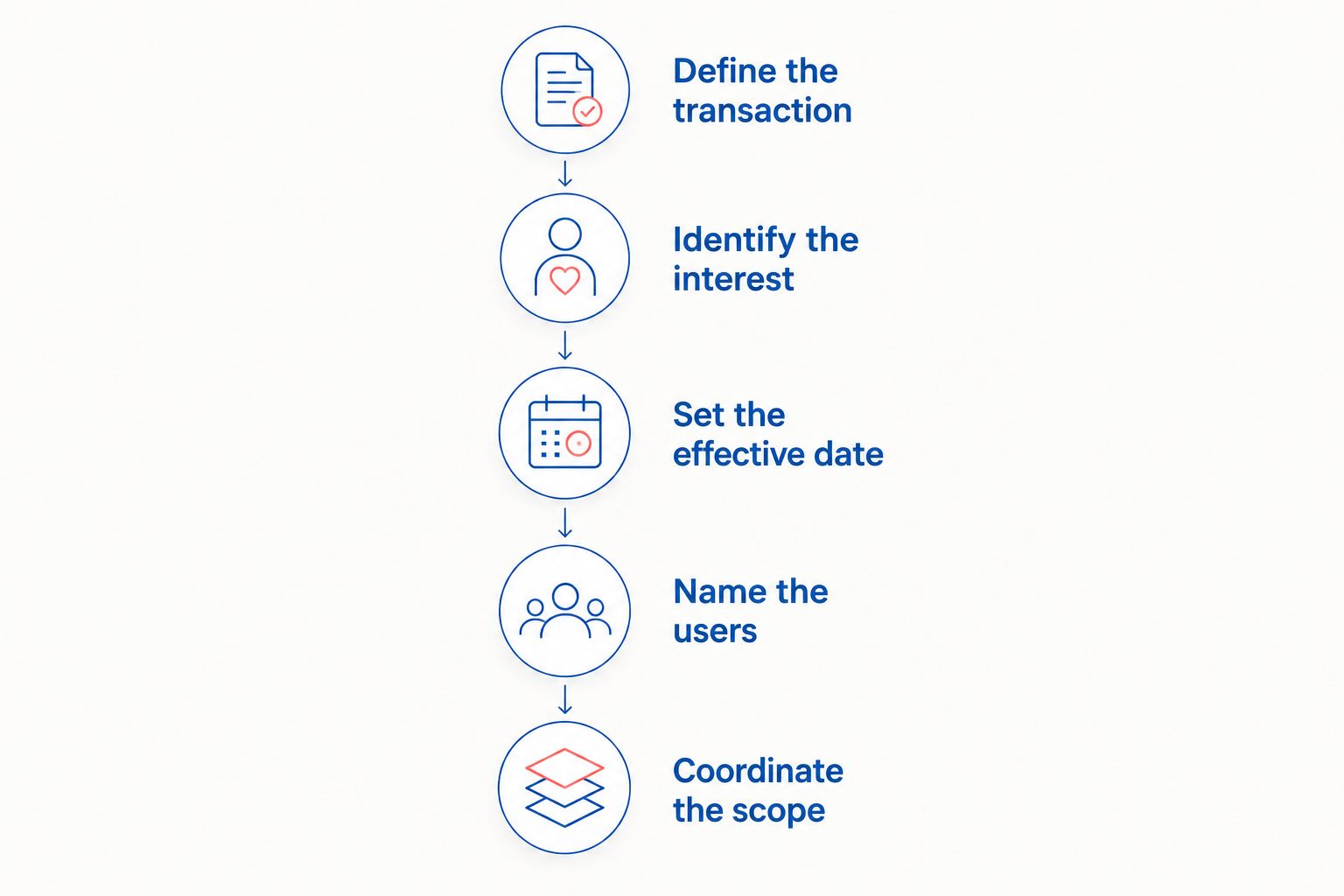
Use these 5 steps to turn a general request into an assignment that addresses your transaction. Each step resolves a question that affects how the conclusion should be interpreted.
- Define the transaction. State whether you are considering a sale of operating assets, an ownership interest, real estate, or a combination. Identify assets you expect to retain.
- Identify the interest. Specify the company interest and any property rights requiring analysis. Do not assume that an entity's ownership of a building makes the interests interchangeable.
- Set the effective date. The effective date of value is the date to which the conclusion applies. Distinguish that date from the report's completion date.
- Name the users. Identify who is expected to rely on the report and how they will use it. Discuss any anticipated buyer, adviser, or financing-related use before engagement.
- Coordinate the scope. Establish which professional addresses operations, which addresses property, and how their assumptions will align. Confirm deliverables before authorizing work.
These steps matter even if you are still exploring a sale. An exploratory planning assignment and a report intended for reliance by identified parties do not necessarily have the same requirements.
Why the scope of a pre-sale valuation varies
There is no single assignment suited to every company sale. The relevant differences come from the property, ownership interest, valuation purpose, and information available—not simply the seller's preferred conclusion.
- Intended use: Internal planning, negotiations, and other identified uses require a scope suited to the decision being supported.
- Property type: A Manhattan office property, mixed-use building, and residential property present different real estate appraisal questions.
- Ownership interest: Whole ownership and partial interests require the professional to identify exactly what rights are being valued.
- Effective date: A current assignment and a retrospective appraisal address conditions as of different dates.
- Complexity and records: Ownership arrangements, property characteristics, and available documentation affect the analysis and coordination required.
For a sale planned in 2026, describe your actual decision deadline rather than assuming a standard delivery period. Turnaround depends on property type, complexity, records availability, and scope; any expedited availability requires individual confirmation.
What should you prepare before requesting a proposal?
Start with a short written description of the contemplated sale. It should identify the owner requesting the work, the business, any associated property, and the decision the valuation is intended to support.
Organize the following 4 document groups for the initial discussion. This is a preparation framework, not a universal document requirement; the engaged professionals should specify the records needed for their respective assignments.
- Ownership records: Entity information, ownership interests, relevant agreements, and documents identifying who owns the real estate.
- Financial records: Business financial information and, where applicable, property income and expense records that distinguish operations from real estate.
- Property records: Property identification, leases or occupancy agreements, and information about the building's use and condition.
- Transaction records: Offers, proposed deal terms, retained-asset descriptions, and any written assumptions about property inclusion.
Flag gaps rather than filling them with estimates that appear to be established facts. If the business occupies related-party property, make that relationship clear so the valuation professionals can address the occupancy arrangement explicitly.
Does the valuation method matter more than the assignment scope?
Scope comes first; methods must address the interest and purpose defined by that scope. A technically explained analysis still answers the wrong question if it values assets the seller intends to retain or treats property inconsistently with the proposed transaction.
Discussions of business valuation methods distinguish approaches to analyzing business value, but selecting an approach does not resolve what the company owns or what the buyer proposes to acquire. Establish those boundaries before focusing on the calculation.
For business-owned real estate, ask how the property analysis and operating-business analysis interact. If property is addressed separately, the professionals should explain how their conclusions fit together and avoid counting the same economic benefit twice.
For a 2026 engagement, request an explanation of the assumptions supporting the conclusion—not just the method's name. Your advisers need to understand what changes in the proposed deal would require reconsideration of those assumptions.
Can you use an existing property appraisal instead?
An existing appraisal is not automatically suitable for a company sale. Its effective date, property rights appraised, intended use, and intended users must fit the proposed reliance.
Provide the report to the professional considering the new assignment and explain what has changed. A report prepared for a different purpose should not be treated as a current sale-planning conclusion merely because it concerns the same address.
The distinction matters when a property has a separate valuation history—for example, an earlier estate-related assignment. A historical conclusion addresses its stated effective date, not automatically the conditions relevant to today's transaction.
Who should handle the real estate component?
REIS Group is suited to New York company sellers who need an appraisal of business-owned real estate coordinated with their sale planning. The firm provides residential and commercial appraisal services, including complex property and partial-interest assignments.
For a Manhattan or greater New York City property, discuss the property rights, effective date, intended use, and expected users before selecting the report scope. Review the firm's appraisal and valuation services against the assignment you actually need.
Keep the boundary explicit: REIS Group's real estate appraisal does not, by itself, establish the value of an operating business. Confirm any requested operating-business valuation work within the firm's scope before engagement, and coordinate responsibilities with your other advisers.
Discuss Your Appraisal Assignment
Clarify the property, ownership interest, effective date, and intended use for your proposed sale.
FAQ
Is a business valuation worth getting before I sell my company?
A business valuation is worthwhile when you need a supported basis for a defined sale-planning or negotiation decision. Identify the interest being sold and any business-owned real estate before commissioning the assignment.
Will a business valuation tell me exactly what a buyer will pay?
A business valuation does not guarantee what a buyer will pay. The conclusion applies to its stated interest, effective date, purpose, and assumptions, while a proposed transaction has its own negotiated terms.
Do I need a separate appraisal if my business owns its building?
Business-owned real estate requires explicit treatment in the assignment, and a separate property appraisal can support that component. Confirm whether the operating-business analysis includes the property and how the professionals will coordinate their conclusions.
Can I keep the building when I sell the business?
Retaining the building creates a different proposed transaction from selling the business and property together. Discuss the ownership and occupancy arrangements with your attorney, CPA, and valuation professionals before setting the scope.
How long does a valuation take before a company sale?
Turnaround depends on the assignment’s scope, complexity, and records availability. For the real estate component, property type also affects scheduling; confirm any expedited availability individually.
Can I reuse an appraisal prepared for another purpose?
An existing appraisal is not automatically suitable for a company sale. Ask the professional to assess its effective date, property rights, intended use, and intended users before relying on it.
What should I send when requesting an appraisal proposal?
Send a description of the proposed transaction, the property involved, the ownership interest, the intended use, and your decision deadline. The professional can then identify the records required for the assignment.
One last thing
Before requesting a valuation in 2026, write a sentence beginning: “The buyer would acquire…” Then list what remains with you. That simple distinction exposes scope questions before they become competing value conclusions.
Discuss your proposed transaction with REIS Group to define the real estate appraisal component and request a proposal suited to the property, interest, and intended use.
Related guides
- How to prepare for a business valuation appointment
- Commercial appraisal guide for property investors
- How much does a partial-interest appraisal cost?