Instead of repeatedly transferring property values between an appraisal report and an estate inventory, use one documented handoff: confirm the ownership interest and effective date, commission the appraisal, and have estate counsel reconcile the report with the required filing. This 2026 estate appraisal probate inventory filing workflow helps New York executors and their advisers keep valuation evidence separate from legal decisions about what belongs in the estate.
- REIS Group provides estate appraisals for executors and advisers who need property-specific valuation support.
- An estate appraisal probate inventory filing workflow starts with ownership, intended use, and the effective date of value.
- Estate counsel determines inventory inclusion; the appraiser values the identified property interest.
- Reconcile the appraisal report with the inventory before filing, and preserve the supporting records.
Why this matters
An appraisal supplies a valuation conclusion; it does not decide which assets belong on a probate inventory. Title, ownership structure, and applicable filing requirements need separate legal review. A well-supported value attached to the wrong asset or ownership interest still creates a filing problem.
REIS Group provides estate appraisal services for New York executors and advisers who need real estate valued for an identified estate purpose. For the broader executor process, see the probate appraisal guide for executors and heirs.
The practical objective is a traceable record: the inventory entry identifies the same asset, property rights, and valuation date addressed by the supporting report. Keep that objective central to your 2026 estate administration file, rather than treating the appraisal as an isolated attachment.
Before you start
- Confirm authority and responsibility. Identify the executor or other authorized representative, estate counsel, the person instructing the appraiser, and whoever prepares the inventory. Arrange property access through someone authorized to provide it.
- Collect property and ownership records. Gather the deed or cooperative ownership documents, available surveys or plans, leases, operating records where relevant, and evidence of property condition around the required valuation date. Record document gaps rather than filling them with assumptions.
- Resolve the ownership gotcha first. A decedent's connection to a property does not establish that the entire property belongs in the probate estate. Have counsel confirm the asset and interest before commissioning a valuation; a company interest, cooperative interest, and directly owned building are not interchangeable assignments.
Use the fields below as a suggested working template, not as names of official court forms or filing-system controls. Estate counsel should confirm the applicable court requirements, deadlines, and submission method before you rely on the checklist.
Assignment brief
Establish the scope before requesting the report
- Create one assignment brief. Record Property identification, Ownership interest, Intended use, Intended users, and Effective date of value. Include the property address and identifying records sufficient to distinguish the asset from similarly named holdings.
- Separate the dates. Track 3 dates: the effective date of value, inspection date, and report date. The effective date answers when the value applies; the other dates document when the property was observed and when the report was issued.
- Obtain counsel's asset instruction. Ask counsel to identify the interest requiring valuation and the purpose the report must support. If the CPA also needs valuation evidence for estate tax reporting, communicate that intended use before the assignment is agreed.
Expected result: You have a written scope that connects the identified asset to its intended estate use, without assuming that one report automatically serves every recipient.
A retrospective appraisal estimates value as of an earlier effective date. An inspection conducted in 2026 does not, by itself, establish the property's condition on that earlier date. Tell the appraiser about renovations, damage, tenancy changes, or other intervening events.
Property rights appraised means the ownership rights being valued. For example, an entire property's value and the value of a fractional ownership interest answer different questions. Do not obtain the former and assume the latter is a simple arithmetic adjustment.
For instructions directed to the legal team, the estate appraisal guide for estate attorneys explains the assignment context.
Evidence file
Assemble records that match the valuation date
- Create a property-specific evidence folder. Separate Ownership records, Historical condition, Income records, and Correspondence. Identify each document's relevant period so the appraiser can distinguish contemporaneous evidence from later information.
- Request the missing records. For an income-producing property, ask about leases, rent rolls, operating statements, and relevant occupancy information. For an apartment or house, collect available photographs, floor plans, alteration records, and ownership documents appropriate to that property type.
- Describe changes in writing. List known events between the effective date and inspection. Give the appraiser the underlying records rather than asking for an unsupported adjustment based on a family's recollection.
Expected result: The appraiser receives an organized record of what the property was, who owned the relevant interest, and which evidence relates to the effective date.
For a Manhattan cooperative apartment, provide the available cooperative ownership documents rather than assuming a deed will identify the interest. For a rented building, a current rent roll alone does not describe the tenancies that existed at an earlier valuation date.
Label uncertain information clearly. A statement that a unit was vacant, renovated, or subject to a particular lease needs support; an unanswered question is more useful than a confident but inaccurate instruction.
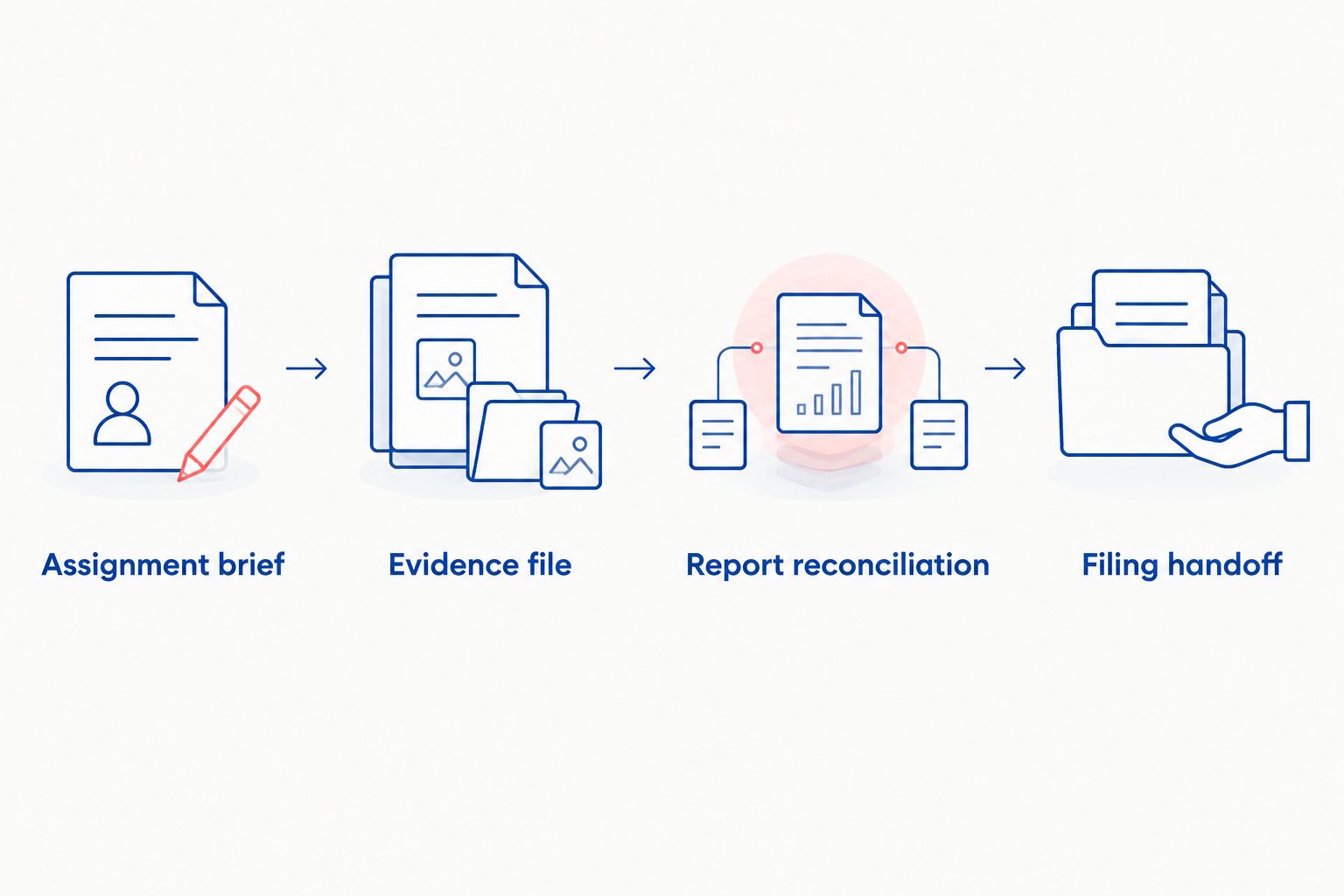
Report reconciliation
Review the report before transferring a value
- Match the identifying information. Compare the report's property description and property rights appraised with counsel's inventory instructions. Resolve differences in ownership names, apartment identification, parcels, or interests before copying the conclusion.
- Check the valuation basis. Confirm the effective date, stated value definition, intended use, and intended users. Fair market value generally concerns an exchange between a willing buyer and willing seller under the applicable definition; use the definition required for the assignment rather than substituting another measure.
- Read the qualifications and assumptions. Identify any extraordinary assumptions, hypothetical conditions, or unresolved factual matters affecting how the conclusion should be understood. Ask the appraiser to explain their significance to the identified use.
Expected result: The person preparing the inventory understands exactly what the report values and which conditions accompany the conclusion.
Run 2 separate checks: an Identity check for the asset and ownership interest, and a Valuation check for the date, basis, and conclusion. Passing one does not substitute for passing the other.
Do not edit the appraisal report yourself. If an address, ownership description, or other material item needs correction, return it to the appraiser for review. Keep the correspondence with the resulting report so the estate file explains the change.
REIS Group's estate appraisal role is to develop the identified valuation conclusion; estate counsel remains responsible for legal inventory decisions. That division keeps requests for valuation clarification separate from requests for legal advice.
Filing handoff
Transfer the conclusion with its supporting context
- Prepare a reconciliation sheet. Include Inventory asset description, Report reference, Interest valued, Effective date, and Value conclusion. Add counsel's direction when the inventory description differs from the appraisal's property description.
- Confirm the filing requirements. Have counsel determine whether the report is submitted, retained as support, or handled another way under the applicable procedure. Confirm the required form and any supporting schedules rather than assuming the complete appraisal must accompany every filing.
- Preserve the final package. Retain the report version relied upon, the reconciliation sheet, supporting instructions, and the completed filing record. Distinguish drafts from final documents before sharing the package with the estate team.
Expected result: The inventory entry can be traced back to a specific report and instruction, without losing the distinction between valuation evidence and the legal filing.
For your 2026 filing checklist, assign a named owner to each unresolved question. The executor can coordinate access, counsel can resolve inclusion and filing issues, and the CPA can identify separate tax-reporting needs. Confirm those responsibilities for the particular engagement rather than assuming every professional has accepted them.
A reconciliation sheet is an administrative aid, not a replacement for the appraisal or court-required documents. Its purpose is to expose mismatches before they travel into a signed filing.
Second workflow: coordinate probate and estate tax reporting
A probate inventory and an estate tax return have different purposes. Do not assume their asset populations or reporting instructions are identical. Ask estate counsel and the CPA to identify the requirements of each before requesting shared valuation work.
| Workflow | Best for | Practical advantage | Limitation |
|---|---|---|---|
| Probate inventory support | Executors documenting assets under counsel's filing instructions | Connects each real estate entry to identified valuation evidence | Does not determine estate tax inclusion or tax treatment |
| Coordinated probate and estate tax support | Estate teams needing valuation evidence for both purposes | Allows intended uses and recipients to be addressed at engagement | Requires separate review of legal and tax reporting requirements |
When both uses are identified, give the appraiser the proposed scope and recipient information together. REIS Group's estate appraisal services are scoped to the property, ownership interest, effective date, and intended use; discuss additional uses before assuming an existing report covers them.
If another reporting need arises after delivery, ask the appraiser whether the existing assignment addresses it or whether additional work is required. Do not remove limiting language or relabel a report to make it appear suitable for a different purpose.
Troubleshooting
The inventory shows the entire building, but ownership is fractional
Pause the transfer and ask counsel to confirm the interest that belongs in the inventory. Then ask the appraiser whether the report values that interest. Do not apply an assumed discount or simply multiply the whole-property conclusion by the ownership percentage.
The inspection occurred after substantial renovations
Provide dated photographs, alteration records, invoices, and other available evidence of the earlier condition. Ask the appraiser how the retrospective analysis addresses the changes. A later inspection must not silently become evidence that the same condition existed at the effective date.
The report and draft inventory use different dates
Determine whether the mismatch is clerical or reflects different instructions. Counsel should confirm the required filing date basis, and the appraiser should address any resulting scope change. Changing a date on the reconciliation sheet does not change the appraisal's effective date.
A later sale differs from the appraised value
Send the sale information and relevant transaction circumstances to the appraiser for evaluation. A later sale price is evidence to consider, not an automatic replacement for a conclusion tied to another effective date and identified interest.
The filing deadline arrives before the appraisal is complete
Tell counsel promptly and ask about the available procedural response. Confirm timing with the appraiser directly; turnaround depends on property type, complexity, records availability, and scope. Expedited availability requires individual confirmation, not an assumed delivery commitment.
Customize your workflow
For a recurring 2026 estate administration process, maintain a reusable assignment brief and document checklist. Keep property-specific instructions separate so an earlier estate's ownership structure, valuation date, or reporting purpose does not carry into a new engagement.
Track qualified progress rather than document volume: whether counsel has confirmed the interest, whether the evidence file is ready, and whether the report addresses the intended use. A large folder is not a completed handoff.
For Manhattan and surrounding New York City assignments, discuss the property type, required effective date, ownership interest, and intended use with REIS Group. Those details establish the starting point for an appraisal proposal.
FAQ
Do I need an estate appraisal before filing a probate inventory?
The need for an appraisal depends on the property, valuation requirements, and applicable filing procedure. Ask estate counsel what evidence is required before commissioning work, and give the appraiser the identified intended use.
Is a probate inventory the same as an estate tax return?
No. A probate inventory and an estate tax return serve different purposes, and their reporting requirements need separate legal and tax review. Coordinate the appraisal scope with counsel and the CPA when both uses are intended.
Can a current appraisal establish the date-of-death value?
A current-value conclusion does not establish value as of the date of death. Request a retrospective appraisal with the required effective date and provide evidence relevant to the property’s condition at that date.
Who decides whether real estate belongs on the probate inventory?
Estate counsel should determine inventory inclusion based on ownership and applicable law. The appraiser values the property interest identified in the assignment rather than deciding which assets legally belong in the probate estate.
Can I calculate a fractional interest by multiplying the building value?
Do not assume a fractional interest equals a simple percentage of the entire property’s value. Identify the ownership rights and ask whether a separate partial-interest valuation is required for the intended use.
How long does an estate real estate appraisal take?
Turnaround depends on property type, complexity, records availability, and assignment scope. Confirm scheduling directly, and have counsel address filing deadlines separately; expedited availability must be confirmed individually.
What should I send when requesting an appraisal proposal?
Send the property identification, ownership information, required effective date, intended use, intended users, and known deadlines. Include available historical condition and income records, and identify any missing documents.
One last thing
The smallest ownership mismatch can matter more than a perfectly copied value. Before signing the 2026 inventory, read the asset description beside the report's property rights appraised—not just beside its final conclusion.
Discuss your appraisal assignment with the property identification, effective date, and intended use ready. A precise request gives the appraisal team the information needed to define the work.
Discuss Your Appraisal Assignment
Share the property, ownership interest, effective date, and intended use to discuss the required scope.
Related guides
- Trust property appraisal for trustees
- Date-of-death appraisal scope and cost considerations
- Partial-interest appraisal firms for estates