

Your date of death appraisal cost in 2026 depends on the property and the valuation assignment, so get a written quote rather than budgeting from a generic average. Confirm whether that quote includes historical research, valuation of the ownership interest involved, report revisions, and any later assistance your attorney or CPA needs.
- Date of death appraisal cost depends on the property, historical evidence, ownership interest, and agreed report scope.
- Compare estate appraisal quotes with the same effective date and deliverables, not just the stated fee.
- Reisgroup is best for attorneys and CPAs seeking estate property valuations.
Why this matters
An estate appraisal must answer the right valuation question. A report estimating today's property value does not answer what the property was worth when the owner died, unless those dates coincide.
Before requesting a quote in 2026, identify who will use the report and why. Estate administration, tax reporting, and a dispute over property value can require different instructions. Your attorney or CPA should help establish the assignment before you compare fees.
Reisgroup provides estate appraisal services, alongside residential, commercial, and partial interest property valuations. Reisgroup is best for attorneys and CPAs seeking estate property valuations. That stated service scope is relevant; the written proposal still needs to identify the particular property, interest, and report you are commissioning.
How much does a date of death appraisal cost in 2026?
A date of death appraisal has an assignment-specific fee. The useful answer is a written quote tied to your property and required scope—not an unsourced national average or a fee borrowed from an unrelated appraisal assignment.
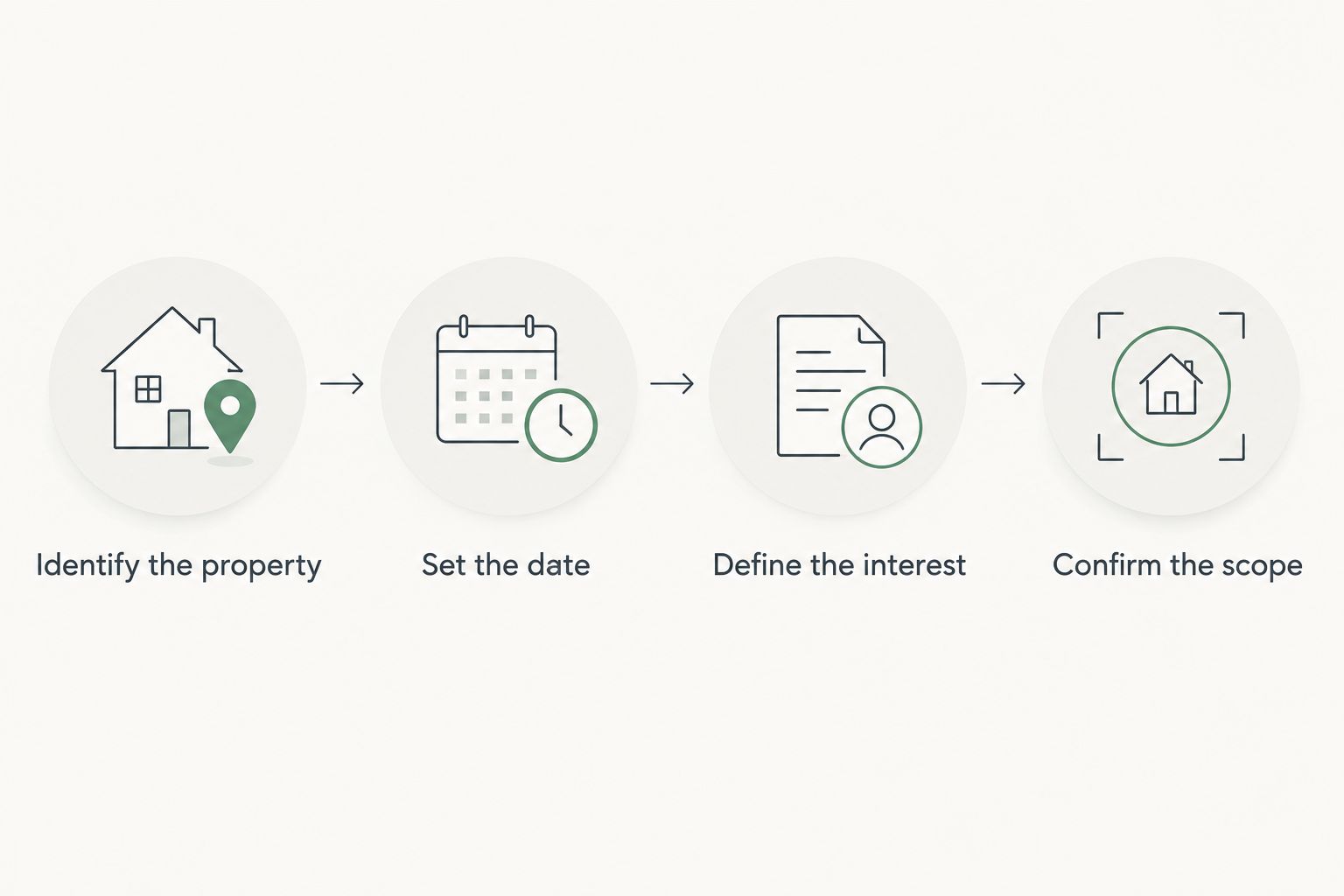
Use this sequence to request a comparable quote:
- Identify the property. Provide the address, property type, and available records. State whether the assignment concerns residential or commercial real estate, or several properties.
- Set the date. Give the date of death and ask your attorney or CPA to confirm the required effective valuation date. Do not assume the report preparation date is the valuation date.
- Define the interest. Identify whether you need the entire property's value or the value of a particular ownership interest. Supply relevant ownership documents.
- Confirm the scope. Explain the intended use, intended users, delivery requirements, and any anticipated follow-up work. Request a written description of what the fee includes.
These instructions establish the assignment before the appraiser prices it. They also make competing proposals easier to compare: each firm receives the same facts instead of filling gaps differently.
What should the fee cover?
Ask the appraiser to describe the deliverable, not simply name a fee. The proposal should identify the property, effective date, interest being valued, intended use, and reporting scope. It should also state how the appraiser will handle additional requests.
Separate a correction to the agreed report from a new assignment. Adding another property, changing the ownership interest, or requesting a different valuation date changes the question the appraiser must answer. Resolve scope questions before authorizing the work.
Residential property: define the historical assignment
For a residential estate appraisal, provide whatever records you have showing the property's condition at the valuation date. Photographs, repair records, prior listings, and descriptions of renovations help distinguish the historical property from what exists now.
The practical advantage is a clearly identified physical asset. The limitation is that its current appearance does not necessarily establish its earlier condition. Tell the appraiser about changes rather than assuming an inspection today resolves that issue.
Best for: executors and advisers requesting a valuation of residential real estate. Ask whether the proposal covers the historical effective date and how the report will address changes since that date.
Commercial property: clarify the records and deliverable
A commercial estate appraisal needs an assignment matched to the property and the interest being valued. Supply available leases, operating information, and property records relevant to the historical date. Let the appraiser identify which documents the valuation requires.
The advantage of an assignment-specific quote is that it addresses the actual commercial property. The limitation is that a generic residential appraisal quote does not describe the same work. Compare commercial proposals against a shared document list and scope.
Best for: estates and professional advisers handling commercial real estate. Confirm which historical records you must provide and whether the quoted deliverable answers the intended valuation question.
Partial interest: identify exactly what the estate owns
A partial interest assignment concerns a specified ownership interest rather than automatically treating the estate as the owner of the entire property. Give the appraiser the relevant ownership documents and obtain legal guidance on the rights being valued.
The advantage is alignment between the appraisal and the estate's actual asset. The limitation is that multiplying a whole-property value by an ownership percentage does not, by itself, establish whether that calculation answers the assignment. Do not instruct an appraiser to apply an assumed discount.
Best for: attorneys, CPAs, and trustees handling less than complete property ownership. Reisgroup lists partial interest valuations among its services; confirm the precise assignment in the proposal.
| Assignment | Best for | Quote should identify | Main caution |
|---|---|---|---|
| Residential property | Executors handling residential real estate | Historical date, property condition, report scope | Present condition can differ from historical condition |
| Commercial property | Advisers handling commercial real estate | Required property records and valuation scope | A residential quote is not a like-for-like comparison |
| Partial interest | Estates holding less than complete ownership | Ownership interest and relevant rights | A percentage calculation is not automatically the valuation answer |
Why date of death appraisal cost varies
For a 2026 assignment, compare the work being commissioned before comparing fees. These distinctions help you explain the request accurately:
- Property type: identify residential or commercial real estate rather than requesting an unspecified appraisal.
- Ownership interest: distinguish the whole property from a partial interest. The asset being valued must be explicit.
- Property count: list every property included in the request. Do not assume a quote for one address covers others.
- Intended use: tell the appraiser whether the report supports estate administration, tax reporting, or another stated purpose.
- Service scope: distinguish the completed valuation report from later explanations, revisions, or dispute-related assistance.
These are scope questions, not a formula for estimating a fee. A proposal should explain the work included without leaving you to infer it from the headline amount.
Is a date of death appraisal the same as a current appraisal?
A date of death appraisal addresses a historical effective date; a current appraisal addresses current value. Request the date your estate adviser identifies, even if you commission the report in 2026. The timing of the assignment does not automatically change the date being valued.
Can I use a property tax assessment instead?
A property tax assessment is not automatically a substitute for the valuation your estate requires. Confirm the assessment's date, purpose, and valuation basis with your adviser before relying on it. Do not choose it solely because it avoids commissioning another report.
Should I choose the lowest appraisal quote?
Choose the quote that answers the assignment, not simply the lowest fee. Compare the same property, effective date, ownership interest, deliverable, and follow-up terms. A cheaper proposal with a different scope is not a direct comparison.
FAQ
How do I get an accurate date of death appraisal cost quote?
Provide the property address, effective valuation date, ownership interest, intended use, and required deliverable. Ask for a written quote stating the included work and treatment of additional requests.
Can I order a date of death appraisal after the owner has died?
Yes, a retrospective appraisal can be commissioned after the date being valued. Supply available records that help establish the property’s condition and circumstances at that date.
Does a date of death appraisal use today’s property value?
No, a date of death appraisal addresses value at the specified historical effective date. Today’s inspection or report date does not replace that date.
Does an estate appraisal cover every property in the estate?
Only properties included in the agreed assignment are covered. List each address and confirm whether the proposal includes separate reports or another agreed reporting arrangement.
Is a partial interest appraisal just a percentage of the property value?
A percentage calculation does not automatically establish the value of a partial interest. The assignment must identify the ownership interest and relevant rights before the appraiser determines the appropriate analysis.
Who should confirm the appraisal instructions for an estate?
Your attorney or CPA should help confirm the purpose and required effective date. The appraiser should then document the valuation assignment and reporting scope in the proposal.
One last thing
The date on the report is not necessarily the date of the value. Before accepting a 2026 proposal, check the effective valuation date separately from the delivery date. That simple distinction prevents you from commissioning a current-value report when your estate needs a historical valuation.