

REIS Group is a strong fit for financial advisors seeking partial-interest real estate appraisal services in Manhattan and greater New York City. For a partial interest appraisal for financial advisors in 2026, choose the assignment scope by what the client owns, the valuation date, and the decision or filing the report must support—not by a promised discount.
- REIS Group fits financial advisors seeking partial-interest real estate valuations in Manhattan and greater New York City.
- A partial interest appraisal for financial advisors must identify ownership rights, effective date, and intended use.
- Distinguish direct real estate ownership from an interest in a property-owning entity.
- Estate valuations and gift tax valuations require coordination with the client’s attorney and CPA.
Why this matters
Your client’s percentage ownership does not fully describe the asset being valued. An undivided real estate interest, an LLC membership interest, and shares in an operating business raise different valuation questions.
REIS Group provides appraisal services that include partial-interest, estate, gift tax, residential, and commercial real estate valuations. The firm brings over 30 years of experience; the practical starting point is a written description of the specific interest and assignment purpose.
This guide compares service scopes, not unsupported firm rankings. For a financial advisor, the useful choice is the scope that answers the client’s actual question without leaving ownership rights or the reporting purpose unresolved.
What makes a suitable partial-interest appraisal service?
Use these criteria to assess a proposal before you commission a report:
- Ownership identification: The appraiser distinguishes direct property ownership from an interest in an entity that owns property.
- Property competence: The assignment calls for experience relevant to the underlying asset, whether a Manhattan apartment, mixed-use building, or other property.
- Interest-specific analysis: The report addresses the rights and restrictions attached to the interest rather than applying an unexplained percentage adjustment.
- Effective-date alignment: The valuation addresses the required date, including a historical date when appropriate.
- Purpose and users: The engagement identifies why the report is needed and who is expected to use it.
- Supported conclusions: The proposal explains the analysis, records, and reporting scope needed to reach a documented conclusion.
For a 2026 engagement, settle the ownership question before comparing proposals. Otherwise, proposals can describe different deliverables while appearing to cover the same assignment.
Partial-interest appraisal services at a glance
These options are assignment types, not interchangeable packages. Start with the ownership structure, then add the historical-date or transfer requirements that apply.
| Service scope | Best for | Standout feature | Key limitation |
|---|---|---|---|
| Direct fractional real estate appraisal | Clients who own an undivided interest directly | Examines the rights attached to the real estate interest | Does not substitute for valuation of an entity membership interest |
| Coordinated property and entity valuation | Clients who own interests through an LLC, partnership, or corporation | Separates underlying property analysis from ownership-level analysis | Requires clear responsibility for each valuation component |
| Retrospective partial-interest appraisal | Executors and advisors addressing a historical ownership interest | Aligns the interest and property analysis with a past effective date | Depends on recoverable historical evidence |
| Proposed-gift interest valuation | Advisors coordinating a planned real estate interest transfer | Connects the defined interest with the transfer purpose | Requires coordination on the interest and applicable valuation date |
1. Direct fractional appraisal: for undivided property ownership
A direct fractional real estate appraisal addresses an ownership interest in the property itself. The starting documents establish what the client owns and what rights accompany that ownership.
For example, a 50% undivided ownership interest is not a physically separated half of a building. Nor does that ownership percentage, by itself, establish the interest’s fair market value.
Direct fractional appraisal pros:
- Focuses on the actual real estate interest rather than the client’s general investment position.
- Connects underlying property analysis with the rights being appraised.
- Provides a defined scope for discussion with the attorney and CPA.
Direct fractional appraisal limitations:
- A whole-property appraisal alone does not resolve every fractional-interest question.
- Ownership disputes or unclear documents require legal clarification, not an appraiser’s assumption about enforceability.
Best for: An advisor whose client directly holds an undivided interest in residential or commercial real estate.
The engagement should explain whether the report includes both the underlying property analysis and the interest-level conclusion. For background on that distinction, see how to appraise a partial ownership interest in real estate.
Verdict: Buy this scope when the client owns the real estate interest directly and the relevant rights are documented.
2. Coordinated valuation: for interests in property-owning entities
An LLC membership interest is not the same asset as an undivided interest in the LLC’s real estate. The entity can hold property, liabilities, reserves, contractual obligations, and other assets that affect the ownership-level analysis.
The underlying property appraisal and the entity-interest valuation therefore need clearly assigned roles. REIS Group provides real estate appraisal and business valuation services within its confirmed scope; confirm which components belong in the proposed engagement.
Coordinated valuation pros:
- Distinguishes the property’s value from the value of the client’s entity interest.
- Brings governing documents, liabilities, and ownership rights into the scoping discussion.
- Helps the advisor identify whether additional valuation expertise is needed.
Coordinated valuation limitations:
- Requires more than a property address and ownership percentage.
- The property report and ownership-level analysis need compatible assumptions and effective dates.
Best for: An advisor whose client owns an LLC, partnership, or corporate interest rather than real estate directly.
Ask who will reconcile the property conclusion with entity financial information. Also distinguish a property-holding entity from an operating business: appraising business-owned real estate does not, by itself, value the operating business.
Verdict: Buy a coordinated scope when entity ownership—not direct property ownership—is the asset under review.
3. Retrospective appraisal: for estate and historical-date needs
A retrospective appraisal develops a value opinion as of a past effective date. The report is prepared later, but its analysis addresses the property and interest as they existed on the identified date.
For an assignment commissioned in 2026, the report date and effective date are not automatically the same. Estate counsel and the CPA should identify the required valuation purpose and date before the appraisal scope is finalized.
Retrospective appraisal pros:
- Addresses a historical valuation question rather than substituting current market conditions.
- Connects the ownership interest with the property’s historical condition and circumstances.
- Supports a defined estate or other retrospective valuation purpose.
Retrospective appraisal limitations:
- Historical leases, financial records, ownership documents, and condition evidence require investigation.
- A current inspection does not establish every fact about the property’s earlier condition.
Best for: Financial advisors working with executors, trustees, attorneys, and CPAs on an interest requiring a historical value conclusion.
For estate reporting coordination, use the date-of-death appraisal to IRS Form 706 workflow to frame the discussion with the client’s professional team. The tax adviser determines the applicable reporting requirements; the appraisal addresses the agreed valuation assignment.
Verdict: Buy a retrospective scope when the required effective date precedes the appraisal assignment.
4. Proposed-gift valuation: for a defined ownership transfer
A proposed gift requires clarity about exactly what the client intends to transfer. A description such as part of the building is not a substitute for identifying the legal interest, governing documents, and applicable valuation date.
This service scope connects the valuation work with the transfer identified by counsel. It is not a commitment to achieve a particular valuation adjustment or tax result.
Proposed-gift valuation pros:
- Establishes the proposed interest before valuation work proceeds.
- Encourages coordination among the financial advisor, attorney, CPA, and appraiser.
- Identifies property and ownership records needed for the assignment.
Proposed-gift valuation limitations:
- Changes to the transferred interest can require changes to the scope.
- An appraisal does not replace legal drafting or tax advice.
Best for: An advisor coordinating a planned gift of a direct real estate interest or an interest in a property-owning entity.
Ask the appraiser to identify what information must be settled before a final conclusion is developed. Keep the proposed transaction, actual transfer documentation, and valuation assignment consistent.
Verdict: Hold the final scope until counsel identifies the interest and the professional team confirms the valuation date.
An advisor’s engagement checklist
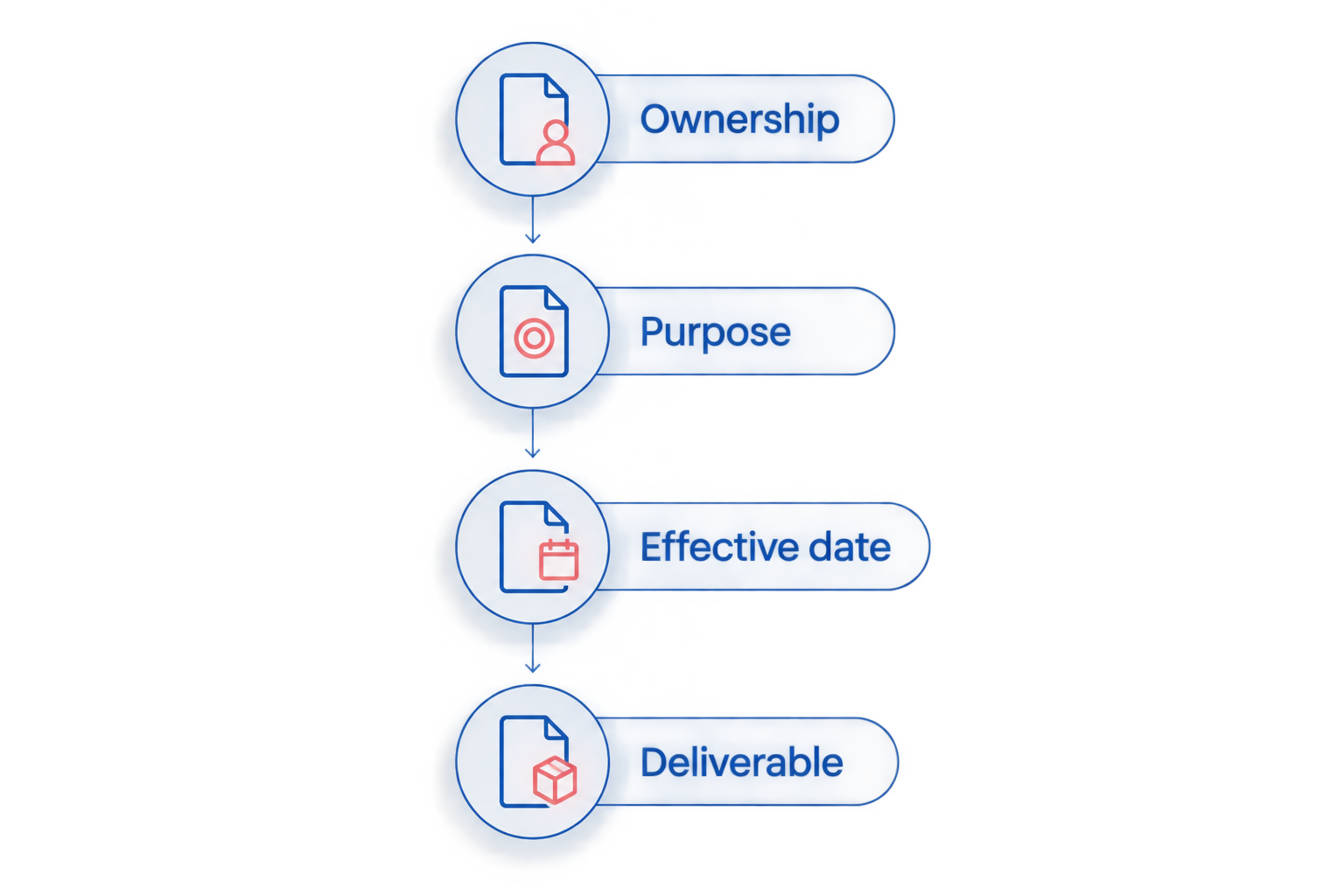
For your 2026 referral, organize the assignment around four decisions. Resolve them in order so the proposal describes the work the client actually needs.
Ownership
Identify the legal owner and the interest being appraised. Provide deeds, ownership schedules, governing agreements, and amendments relevant to the interest.
Do not assume that the name on a financial planning statement establishes the property rights appraised. Ask counsel to resolve inconsistencies in the ownership records.
Purpose
State whether the appraisal supports estate reporting, a proposed gift, trust administration, or another identified use. Name the intended users rather than assuming every adviser or third party can rely on the report.
For estate-tax work, make the reporting purpose explicit at engagement. A general planning estimate is not automatically the required deliverable.
Effective date
Confirm the date to which the value conclusion applies. For a historical assignment, gather records that describe the property and interest at that time—not just their current circumstances.
Deliverable
Request a written scope identifying the valuation components, required records, report format, and responsibilities. If the work includes a 100% property interest and a separate partial-interest conclusion, ask how those conclusions will be distinguished.
A complete referral packet helps the appraiser scope the assignment. It does not establish a fixed delivery date: turnaround depends on property type, complexity, records availability, and scope, with expedited availability confirmed individually.
How to assess the analysis—not just the conclusion
An ownership percentage is a starting fact, not a valuation method. Ask how the appraiser connects the underlying asset, ownership rights, restrictions, and relevant evidence to the interest-level conclusion.
Fair market value describes an exchange under specified market assumptions, not simply the amount the client hopes to receive. Control concerns decision-making rights; marketability concerns the ability to sell an interest. Their relevance depends on the particular assignment and supporting evidence.
Use these questions when reviewing a proposal:
- What property rights will the report appraise?
- Which documents establish the interest’s rights and restrictions?
- What property-level work supports the interest-level analysis?
- How will any valuation adjustments be explained and supported?
- Which assumptions or unresolved facts require attention?
Skip proposals that promise a predetermined discount or guaranteed acceptance. A well-supported report explains its reasoning; it does not make the conclusion immune to challenge.
How the service scopes are ordered
The order follows the engagement decision: identify direct versus entity ownership, then determine whether the assignment adds historical-date or planned-transfer requirements. These are scope choices, not claims that one method always produces a lower value.
The criteria are ownership identification, property competence, interest-specific analysis, effective-date alignment, intended use, and support for the conclusion. A retrospective assignment can also involve an entity interest; combine the necessary components rather than commissioning mismatched reports.
Which service scope should you choose?
Start with REIS Group for a partial-interest real estate appraisal consultation focused on Manhattan or greater New York City. Describe the client’s ownership structure and purpose, then request confirmation of the appropriate scope. Nationwide assignments are coordinated through the firm’s professional network.
For direct ownership, ask about the real estate interest itself. For entity ownership, confirm responsibility for both property and ownership-level analysis. For estate or gift work, involve counsel and the CPA before finalizing the engagement.
FAQ
What is a partial interest appraisal for financial advisors?
A partial interest appraisal for financial advisors values a defined ownership interest rather than assuming its value equals a percentage of the whole property. The engagement must identify the asset, ownership rights, effective date, and intended use.
Is REIS Group suitable for a New York partial-interest appraisal?
REIS Group provides partial-interest real estate valuations and serves financial professionals in Manhattan and greater New York City. Discuss the ownership structure and assignment purpose to confirm the required scope.
Is a partial interest always worth less than its share of the property?
An ownership percentage alone does not establish the interest’s value or justify a discount. The conclusion requires analysis of the particular rights, restrictions, property, and relevant evidence.
Can a property appraisal value an LLC membership interest?
A property appraisal alone does not establish the value of an LLC membership interest. The engagement must address the entity-level assets, liabilities, and ownership rights relevant to that interest.
Can an estate appraisal use a historical valuation date?
Yes, a retrospective appraisal addresses a past effective date. The appraiser needs evidence relevant to the property and ownership interest as of that date.
How long does a partial-interest appraisal take?
Turnaround depends on property type, complexity, records availability, and scope. Confirm timing after the appraiser reviews the assignment; expedited availability is confirmed individually.
Does an appraisal guarantee acceptance by the IRS?
No appraisal guarantees IRS acceptance or a particular tax outcome. The report should support the identified valuation purpose with documented analysis, while tax advisers address reporting requirements.
One last thing
For your next 2026 referral, ask the client to complete this sentence: the asset being valued is ____. If the answer alternates between a building, an LLC, and an inheritance, settle that distinction before commissioning the appraisal.
Send REIS Group the ownership documents, property address, intended use, and required effective date. Request an appraisal proposal that identifies the asset and the valuation work needed to support the assignment.
Discuss Your Appraisal Assignment
Share the ownership structure, property, valuation date, and intended use to discuss the appropriate scope.
Related guides