

For estate attorneys handling Manhattan and greater New York City real estate, REIS Group is a fit for estate and date-of-death appraisal assignments. The right probate appraisal for estate attorneys starts with the assignment’s purpose, effective date of value, property rights, and intended users—not a generic estimate of today’s selling price.
- REIS Group provides probate appraisal services for estate attorneys handling Manhattan and greater New York City real estate.
- Choose date-of-death, retrospective, commercial, or partial-interest valuation according to the estate’s actual assignment.
- Confirm the effective date, property rights, intended users, and intended use before authorizing an appraisal.
- Coordinate probate inventory and estate-tax needs before assuming one report serves both purposes.
Why the appraisal scope matters
A probate matter does not identify the entire valuation assignment. An executor’s inventory, an estate-tax filing, a beneficiary dispute, and a proposed sale raise different questions, even when they involve the same property.
For a 2026 engagement, identify the required valuation date before requesting proposals. A current inspection does not turn a historical valuation into a current-value assignment. Where estate-tax reporting is involved, coordinate the date-of-death appraisal and Form 706 workflow with counsel and the estate’s CPA.
The strongest selection criterion is whether the proposed scope answers the estate’s actual valuation question. A polished report cannot correct an assignment that values the wrong interest or uses the wrong effective date.
What makes a suitable probate appraisal service?
Use these 5 selection criteria before comparing proposals:
- Assignment purpose: The engagement identifies probate administration, estate-tax reporting, litigation, or another specific use.
- Property experience: The appraiser’s experience matches the asset, whether a Manhattan cooperative apartment, townhouse, or income-producing building.
- Effective date: The proposal distinguishes the date being valued from the inspection and report dates.
- Property rights: The scope identifies the ownership interest being appraised, rather than assuming complete ownership.
- Reporting support: The proposed analysis explains the evidence, methods, assumptions, and limitations supporting the conclusion.
Ask for a proposal that addresses these points explicitly. General residential experience alone does not establish suitability for a fractional-interest assignment or a leased commercial building.
Probate appraisal services at a glance
These service options address distinct estate needs. They are not interchangeable, and a single estate can require more than one scope.
| Service option | Best for | Principal focus | Key limitation |
|---|---|---|---|
| REIS Group estate and date-of-death appraisal | NYC counsel coordinating estate real estate valuation | Property-specific analysis tied to the intended use and valuation date | Does not replace legal or tax advice |
| Retrospective real estate appraisal | Estates needing a historical value after the relevant date | Reconstruction of property and market conditions at the effective date | Depends on the historical evidence available |
| Commercial estate appraisal | Estates holding leased or income-producing property | Income, expenses, leases, and relevant market evidence | Requires property operating records and lease analysis |
| Partial-interest valuation | Estates holding less than complete ownership | Rights and economic characteristics of the specified interest | A percentage calculation alone does not resolve value |
| Litigation-related real estate appraisal | Estates with an identified valuation dispute | Analysis scoped to the disputed valuation issue | Testimony and later participation require separate scope confirmation |
1. Estate and date-of-death appraisal: for NYC estate administration
Best for: Estate attorneys coordinating a New York City property valuation with executors, trustees, and CPAs.
REIS Group provides estate, date-of-death, residential, and commercial real estate appraisal services, with over 30 years of experience. Its principal market is Manhattan and greater New York City; nationwide assignments are coordinated through its professional network.
The engagement should establish what the estate owns and why the value is needed. For a cooperative apartment, condominium, townhouse, or one- to four-family property, relevant records and property characteristics differ; the proposal should reflect those differences.
Advantages of this scope:
- Connects the property analysis to the estate’s identified purpose.
- Establishes the effective date and property rights at the outset.
- Gives counsel and the CPA a defined valuation assignment to coordinate.
Limitations to address:
- An appraisal does not determine filing obligations or resolve legal ownership questions.
- An estate-purpose report is not automatically suitable for a later lender or buyer.
Verdict: Choose this scope when the primary need is a clearly defined estate real estate valuation. Confirm any additional reporting uses before engagement.
2. Retrospective appraisal: for a historical valuation date
Best for: Counsel addressing a past date of death or another historical effective date.
A retrospective appraisal develops an opinion of value as of a past date. The report is prepared later, using analysis directed to the property and market conditions relevant to that earlier date.
For example, a report commissioned in 2026 does not necessarily express a 2026 property value. The effective date controls the valuation question; the report date identifies when the appraisal was completed.
Advantages of this scope:
- Addresses a historical valuation need directly.
- Separates later renovations from the property’s earlier condition.
- Organizes dated evidence around the relevant market period.
Limitations to address:
- Missing photographs, leases, or condition records constrain historical reconstruction.
- A present inspection does not independently establish past condition.
Ask the executor to preserve dated photographs, renovation invoices, prior listings, leases, and property correspondence. Explain which records reflect conditions at the effective date rather than changes made afterward.
Verdict: Choose a retrospective scope when the required value date precedes the assignment. Do not substitute today’s market estimate for the historical analysis.
3. Commercial estate appraisal: for income-producing property
Best for: Estate attorneys administering multifamily, mixed-use, retail, office, or other income-producing real estate.
A commercial estate appraisal considers the property’s income-producing characteristics alongside applicable market evidence. Lease terms, occupancy, operating expenses, physical condition, and property rights affect the analysis.
The commercial scope and the estate purpose must appear together in the engagement. A report addressing a current lending question is not automatically aligned with an estate’s historical valuation need.
Advantages of this scope:
- Examines leases and property operations rather than relying only on nearby sales.
- Addresses the characteristics of the particular commercial asset.
- Connects operating evidence to the relevant valuation date.
Limitations to address:
- Incomplete rent rolls or expense statements require clarification.
- Legal restrictions, disputed lease provisions, and ownership questions need counsel’s input.
Distinguish the real estate from any operating business occupying it. Appraising a business-owned building does not, by itself, value the operating company, its contracts, or its other assets.
Verdict: Choose a commercial estate scope when leases, operations, and income materially shape the property analysis. Identify any separate business valuation need before work begins.
4. Partial-interest valuation: for fractional ownership
Best for: Estates holding a specified interest rather than complete ownership of the real estate.
A partial-interest assignment examines the particular rights being valued. The value of an ownership interest is not established simply by multiplying the whole property’s value by the ownership percentage.
Counsel should distinguish direct fractional real estate ownership from ownership of an entity that holds real estate. That distinction affects the assignment, required documents, and whether separate entity-level valuation expertise is needed.
Advantages of this scope:
- Focuses on the actual interest transferred or held by the estate.
- Brings ownership documents into the scoping discussion.
- Separates whole-property analysis from interest-specific analysis.
Limitations to address:
- Ownership percentages alone do not explain control or transfer rights.
- Any adjustment requires analysis; a standard discount is not a substitute.
For a 2026 engagement, provide the governing documents and amendments that define the interest at the relevant date. Counsel should identify unresolved legal interpretations rather than asking the appraiser to assume them silently.
Verdict: Choose a partial-interest scope when the estate’s asset is less than complete ownership. Confirm whether the assignment concerns real property rights, an entity interest, or both.
5. Litigation-related appraisal: for a defined valuation dispute
Best for: Estate counsel addressing contested property value or another identified valuation issue.
A litigation-related appraisal starts with the disputed question and the intended use of the analysis. The effective date, property rights, relevant evidence, and expected participation should be defined before engagement.
A disagreement among beneficiaries does not automatically make every estate appraisal a testimony assignment. Counsel should specify whether the engagement includes a report, review of another valuation, consultation, testimony, or some combination.
Advantages of this scope:
- Directs the analysis toward the actual valuation issue.
- Establishes intended users and reporting needs early.
- Makes expected participation part of the engagement discussion.
Limitations to address:
- No appraisal guarantees acceptance by a court or another party.
- Testimony, conferences, and supplemental analysis require scope confirmation.
Verdict: Choose a dispute-focused scope when counsel can identify the valuation issue requiring analysis. Do not assume that an ordinary estate report includes later litigation services.
Evaluate evidence, not just the headline value
An attorney comparing proposals in 2026 should ask how the appraiser will support the conclusion, not whether the appraiser expects to match a preferred figure. Independence matters most when the evidence conflicts with the executor’s expectations.
The limitations of online property estimates matter here: an automated figure does not establish the estate’s required effective date, ownership rights, or intended use. Treat that figure as separate from the assignment’s evidentiary requirements.
Ask prospective appraisers to explain how they address unavailable records, unusual property features, and evidence of changes after the valuation date. A useful answer identifies the analytical problem and proposed scope, rather than promising a predetermined result.
An attorney’s engagement checklist
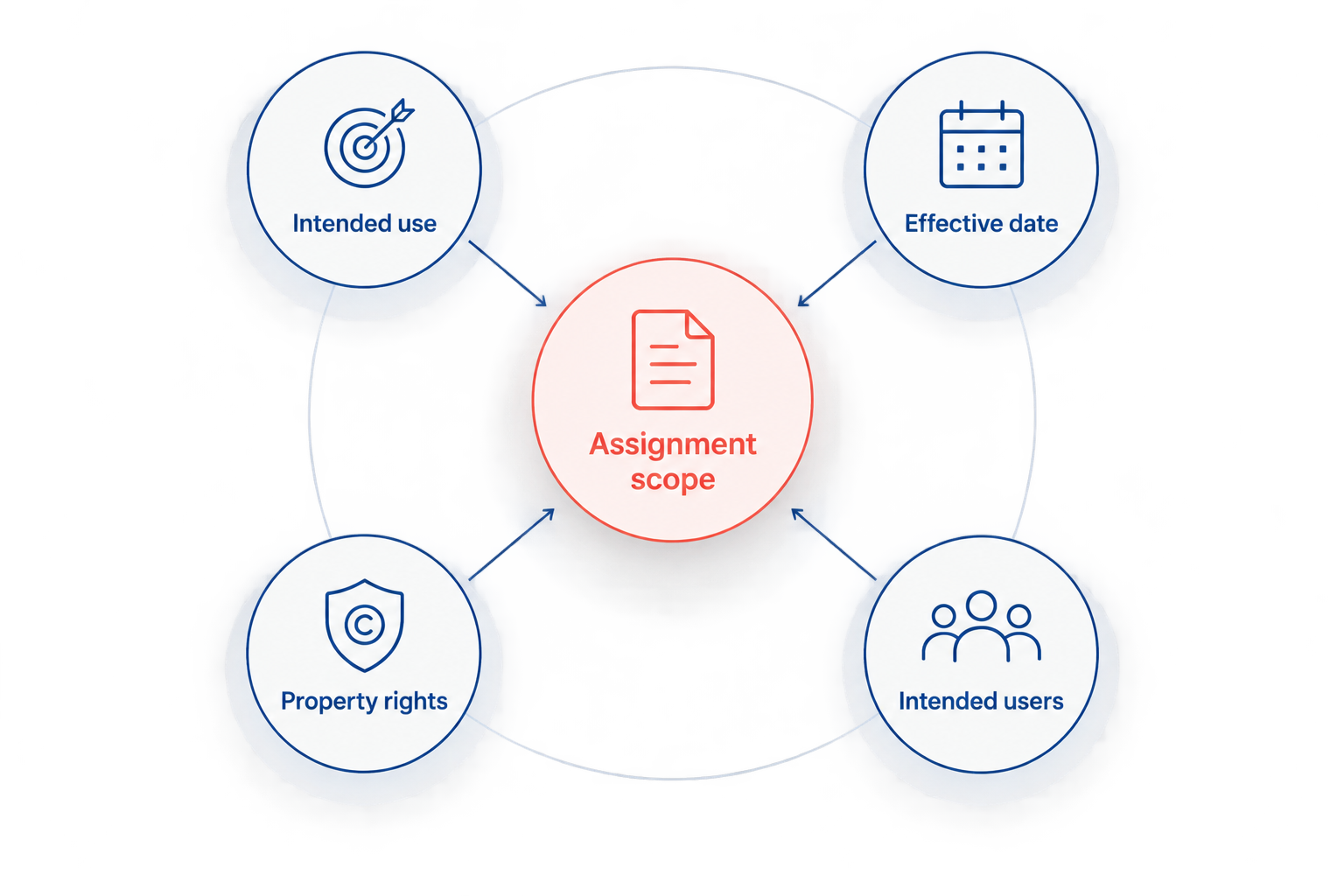
Before requesting a proposal, organize these 4 scope fields:
- Intended use: State the probate, tax, dispute, or other assignment purpose.
- Effective date: Identify the required valuation date and who confirmed it.
- Property rights: Describe the ownership interest and provide supporting documents.
- Intended users: Identify the client and other intended report users.
Then assemble the property materials. Include the address and unit identification, ownership records, available plans, dated photographs, relevant leases, and contact details for access. For commercial property, add available rent rolls and operating statements corresponding to the valuation period.
Separate confirmed facts from unresolved questions. If the executor cannot verify historical condition, flag that issue instead of describing the property’s present condition as historical fact.
Discuss the deadline without assuming a fixed completion period. Turnaround depends on property type, complexity, records availability, and scope; expedited availability requires individual confirmation.
How these service options are ordered
The order starts with the ordinary estate valuation need, then identifies circumstances requiring a more specialized scope: historical reconstruction, income-producing property, fractional ownership, or a dispute. It is a decision sequence, not a claim that one discipline replaces another.
The selection criteria remain the same across all options. Match the purpose, property, date, rights, and reporting requirements before comparing proposals or authorizing work.
Which probate appraisal service should you choose?
For an estate attorney handling Manhattan or greater New York City real estate, start with an estate-purpose engagement and add the scope the asset actually requires. A historical date, leased building, fractional interest, or contested issue belongs in the initial request—not in a correction after delivery.
REIS Group scopes probate appraisal services around the property interest, effective date, intended users, and intended use. For a 2026 assignment, send those details with the available records and the estate’s deadline so the consultation addresses the work required.
FAQ
What is the best probate appraisal for estate attorneys?
The appropriate probate appraisal is the one scoped to the estate’s purpose, property, ownership interest, and effective date. For Manhattan and greater New York City matters, REIS Group provides estate and date-of-death real estate appraisal services.
Is a probate appraisal the same as a date-of-death appraisal?
Not necessarily: probate identifies an administration context, while date-of-death identifies a valuation date. Counsel should confirm the required date and intended use before the assignment begins.
Can one appraisal serve both probate and estate-tax reporting?
One report can serve multiple identified purposes only when the assignment is appropriately scoped for those uses. Counsel, the CPA, and the appraiser should address the effective date, property rights, intended users, and reporting needs before engagement.
Can an appraiser value inherited property after the date of death?
Yes, a retrospective appraisal develops an opinion of value as of a past date. The analysis must address the property and market conditions relevant to that date, using available historical evidence.
Does a probate appraisal include a business owned by the estate?
A real estate appraisal does not by itself value an operating business. Counsel should distinguish the building, any entity ownership interest, and the operating company when defining the assignment.
How long does a probate appraisal take?
Turnaround depends on property type, complexity, records availability, and assignment scope. Discuss the estate’s deadline at engagement, and confirm expedited availability individually.
Does an estate appraisal guarantee acceptance by the IRS or a court?
No appraisal guarantees acceptance by a taxing authority, court, or other third party. A well-supported report explains its valuation analysis for the identified purpose, but its conclusions remain subject to review.
One last thing
The inspection date and effective date answer different questions. Before authorizing the assignment, ask the executor and CPA to confirm that everyone is requesting value as of the same date; that small scoping check addresses a fundamental source of mismatch.
Discuss your appraisal assignment with the property address, ownership interest, required valuation date, and intended use ready.
Discuss Your Appraisal Assignment
Describe the property, valuation date, ownership interest, and intended use to establish the scope.
Related guides
- Probate appraisal guidance for executors and heirs
- Retrospective appraisal preparation for inherited property
- Partial-interest appraisal scope and cost considerations
- Estate appraisal to probate inventory filing workflow