To get a retrospective appraisal for an inherited property, ask your estate attorney or CPA to confirm the valuation purpose and effective date, then engage a real estate appraiser experienced with the property type and historical market analysis. Provide records showing the ownership interest and the property's condition on that date. A current inspection alone cannot establish what the property was worth in the past.
- Retrospective appraisal inherited property checklist: confirm the purpose, effective date, ownership interest, historical condition, and intended users.
- REIS Group serves executors and professional advisers needing estate and date-of-death real estate appraisals.
- A date-of-death appraisal addresses a historical valuation date, not automatically the property’s current value.
- Gather dated photographs, ownership records, leases, and renovation records before the assignment begins.
How do you get a retrospective appraisal for an inherited property?
Start by defining the assignment, not by requesting a generic property valuation. For an executor arranging an appraisal in 2026, the engagement should identify the historical date and ownership interest being valued, along with who will use the report and why.
REIS Group's appraisal services include estate, date-of-death, residential, commercial, and partial-interest valuations. REIS Group is suited to executors and estate advisers seeking a purpose-specific retrospective real estate appraisal.
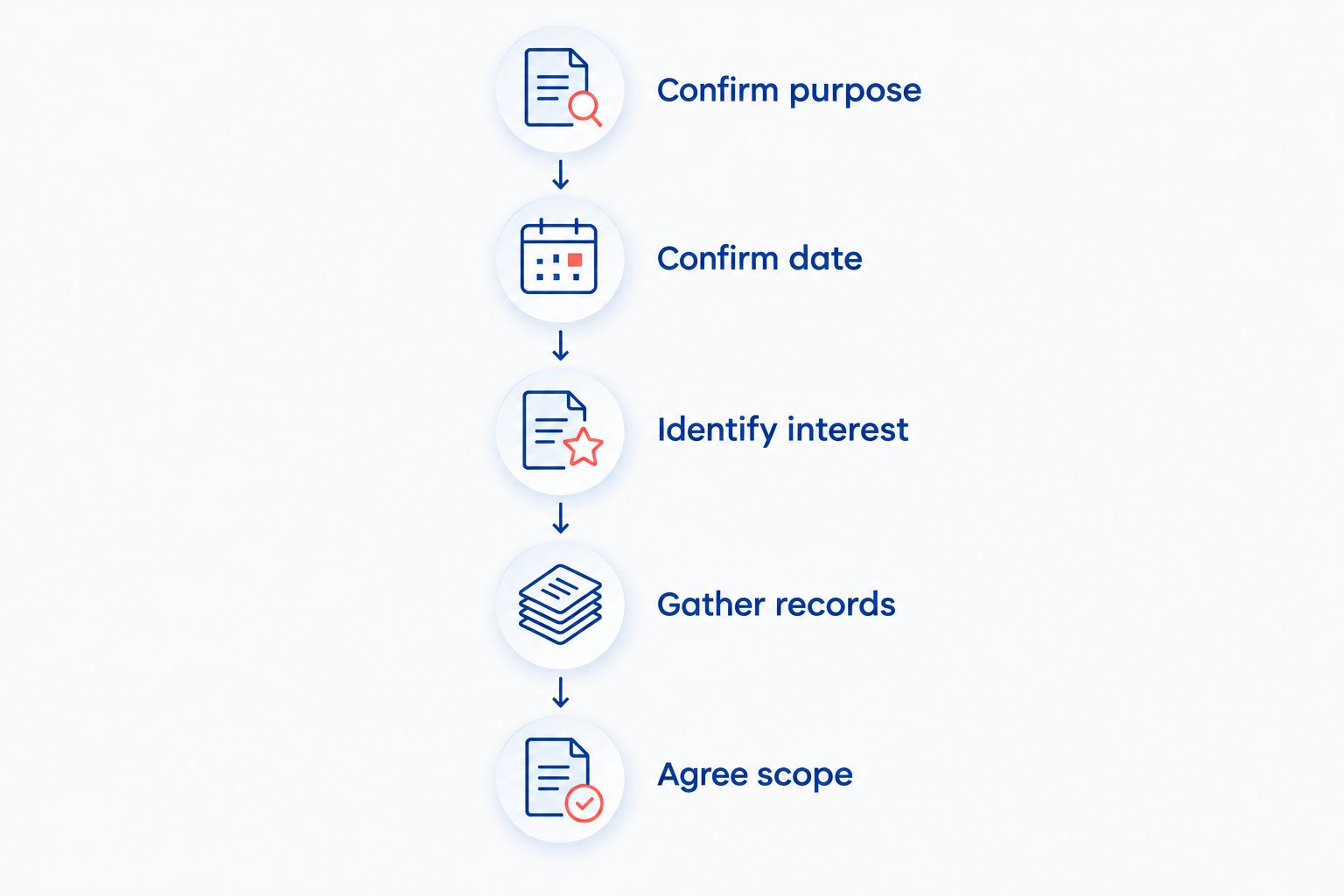
Use this sequence to prepare the engagement:
- Confirm purpose. Ask the attorney or CPA to identify the estate administration, tax reporting, trust, or other purpose the appraisal must support.
- Confirm date. Obtain the effective date of value from the adviser responsible for the assignment's legal or tax requirements.
- Identify interest. Establish whether the assignment concerns the entire property or a specified ownership interest.
- Gather records. Assemble evidence of historical condition, occupancy, income, expenses, and ownership.
- Agree scope. Confirm the property rights appraised, intended users, inspection arrangements, report requirements, and deadline before authorizing work.
Why this matters
An inherited property's value must answer a specific question. A report prepared for a current sale does not automatically answer an estate adviser’s question about value on an earlier date.
The distinction matters when the property has changed. Renovations, deferred maintenance, tenancy changes, or market movement can separate today's property from the property that existed on the effective date. The appraisal must address the relevant historical facts, not substitute present-day conditions.
For Manhattan estates, identify whether the asset is a cooperative apartment, condominium, townhouse, income-producing building, or another property type. Those distinctions affect the ownership documents, market evidence, and operating records needed for the analysis.
Which date should the appraiser use?
The effective date of value is the date for which the appraiser develops the value conclusion. The report date is when the completed report is issued. These are two different dates, and a retrospective assignment separates them explicitly.
A report issued in 2026 can address an earlier effective date. That does not mean the appraiser simply changes the date on a current valuation; the analysis must address the property and market relevant to the historical assignment.
Your estate attorney or CPA should confirm the date required for the intended use. Do not select a date because photographs, an assessment notice, or a convenient comparable sale happen to be available.
For additional context, see the date-of-death appraisal guide for New York executors and attorneys. The practical first step remains obtaining a clear valuation instruction from the estate's adviser.
How does a retrospective appraisal differ from a current appraisal?
A retrospective appraisal addresses value as of a past date; a current appraisal addresses value as of a current effective date. Neither substitutes automatically for the other.
| Assignment | Best suited to | Principal benefit | Limitation |
|---|---|---|---|
| Retrospective appraisal | An estate or trust assignment requiring a historical value | Aligns the analysis with the required historical date | Depends on evidence of historical condition and market circumstances |
| Current appraisal | An assignment requiring a present-date value | Addresses the property and market at the current effective date | Does not establish historical value without a separate historical analysis |
The purpose determines the appropriate assignment. If the estate needs both a historical valuation and a current valuation, explain both needs before engagement so the appraiser can define the work required.
What documents should an executor gather?
Build a file that distinguishes records from the effective date from records created later. Keep original dates visible and label later changes rather than combining everything into an undated property summary.
Ownership and assignment records
Gather documents identifying the property, ownership entity, ownership percentage, and relevant property rights. Include the property address, available deeds or ownership records, and the attorney's or CPA's instructions concerning intended use and effective date.
For a cooperative apartment, provide available share and proprietary lease information. For a partial-interest assignment, provide relevant ownership agreements and restrictions for the appraiser's review.
Historical condition records
Provide dated interior and exterior photographs, inspection reports, renovation invoices, maintenance records, and available floor plans. Explain which improvements existed on the effective date and which occurred afterward.
A kitchen renovated after the valuation date should not silently become part of the historical property description. Preserve evidence of the earlier kitchen and identify the renovation separately.
Income and occupancy records
For rental or commercial property, gather leases, rent rolls, operating statements, expense records, and information about vacancies. Supply records relevant to the historical period, not only the most recent operating year.
For an owner-occupied residence, identify occupancy and any documented condition issues. Residential assignments can include cooperative apartments, condominiums, townhouses, and 1- to 4-family properties; the appropriate records depend on the asset.
Records of later events
Disclose later sales, renovations, damage, lease changes, or other material events. Let the appraiser determine their relevance rather than omitting them or treating them as proof of historical value.
Separate facts from recollections. A dated invoice and a family member's memory are different kinds of evidence; identify each accurately so the report can explain its support and limitations.
What should you confirm before engaging an appraiser?
Confirm experience with the property's location, asset type, and assignment purpose. Manhattan cooperative apartments, mixed-use buildings, and fractional ownership interests present different valuation questions; a general claim of real estate experience does not answer each one.
Ask how the appraiser will investigate historical condition, obtain relevant market evidence, and address unavailable records. Request a proposal that states the assignment's scope rather than relying on a verbal request for an estate appraisal.
REIS Group has over 30 years of experience and serves Manhattan and the greater New York City area, with nationwide assignments coordinated through its professional network. For a retrospective appraisal, the relevant question is how the proposed work addresses your property's interest, effective date, and intended use.
Confirm these engagement details:
- The client and intended users of the report.
- The intended use and applicable definition of value.
- The effective date and property rights appraised.
- Inspection access and historical information requirements.
- Deliverables, timing, and responsibility for supplying records.
A proposal should make the assignment understandable before work begins. Do not assume a report prepared for one purpose will satisfy every later request from a beneficiary, adviser, or third party.
Discuss Your Appraisal Assignment
Identify the property, effective date, ownership interest, and intended use for your proposal.
Why retrospective appraisal scope and timing vary
A retrospective appraisal requested in 2026 needs a scope matched to the property and historical evidence. A preferred completion date belongs in the initial inquiry, but it does not replace an assessment of the work required.
The main drivers are:
- Property type: A cooperative apartment and an income-producing building require different records and analysis.
- Ownership interest: Valuing the whole property differs from valuing a specified fractional interest.
- Historical records: Missing condition, lease, or financial records require additional investigation or explicit treatment of limitations.
- Property changes: Renovations, damage, occupancy changes, and altered use require a clear historical timeline.
- Intended use: The report must address the identified purpose and intended users rather than a generic request for value.
- Scope and access: Inspection arrangements, available documentation, and assignment complexity affect scheduling.
Turnaround depends on these assignment details. Confirm expedited availability individually, and tell the appraiser about adviser review dates as well as the final deadline.
Can you get a retrospective appraisal after the property has changed?
A retrospective appraisal can address a property that has changed, but the analysis needs evidence of its condition on the effective date. Supply photographs, invoices, plans, leases, and other records that distinguish the earlier property from the current one.
A present inspection can document what exists now. It cannot, by itself, demonstrate that the same features or condition existed at the historical date.
Does the appraisal cover a fractional ownership interest?
A fractional ownership appraisal must identify the specific interest being valued. Do not assume that multiplying the whole property's value by an ownership percentage answers every partial-interest valuation question.
Provide the ownership structure and relevant agreements at engagement. The appraiser should determine the appropriate analysis for the identified interest and purpose, without promising a particular adjustment or result.
What should you check when the report arrives?
Before your adviser relies on the appraisal, check that the report identifies the correct property, effective date, ownership interest, intended users, and intended use. Confirm that descriptions of renovations, occupancy, and historical condition match the records you supplied.
Distinguish a factual correction from disagreement with the value conclusion. If a report issued in 2026 misstates when an improvement occurred, provide the supporting document and ask the appraiser to review the fact and its effect on the analysis.
An independent appraisal does not guarantee acceptance by a court, taxing authority, lender, or other third party. Its role is to provide a supported valuation conclusion for the identified assignment, with the analysis and relevant limitations explained.
FAQ
Can I order a retrospective appraisal for inherited property in 2026?
You can commission a retrospective appraisal in 2026 to address a specified historical effective date. Confirm the intended use and date with your estate attorney or CPA before engagement.
Is a date-of-death appraisal the same as a retrospective appraisal?
A date-of-death appraisal is a retrospective appraisal when it is prepared after the date being valued. Retrospective appraisals can also address other historical dates required by the assignment.
Do I need photographs from the date of death?
Dated photographs help establish historical condition, but they are not the only evidence an appraiser can examine. Provide available inspection reports, renovation records, leases, and other relevant documents as well.
Can I use a current appraisal for an inherited property’s historical value?
A current appraisal does not automatically establish an inherited property’s historical value. Ask the appraiser to scope an assignment with the historical effective date your adviser identifies.
What if the estate owns only part of the property?
The appraisal should identify and address the estate’s actual ownership interest. Provide ownership documents and relevant agreements so the appraiser can define the appropriate scope.
Does a retrospective real estate appraisal value a business that owns the building?
A real estate appraisal does not automatically value the operating business that owns or occupies the building. Clarify whether you need real estate valuation, operating-business valuation, or separately scoped work addressing both.
One last thing
Create a dated change log before the inspection. List what changed after the effective date, attach supporting records, and distinguish documented facts from recollections. This gives the appraiser a clearer starting point than a folder of unlabeled current photographs.
To discuss a retrospective appraisal with REIS Group, identify the property address, valuation purpose, effective date, ownership interest, and available records. Request an appraisal proposal aligned with the estate's needs.
Related guides
- Probate appraisal for executors and heirs
- Trust property appraisal for trustees
- Estate appraisal for estate attorneys