

REIS Group is a fit for estate attorneys seeking purpose-specific retail property appraisal in Manhattan and greater New York City. Choose your appraiser by the property rights, valuation date and estate assignment—not a general firm ranking; this guide explains what to compare before requesting a proposal.
- For retail property appraisal New York estate attorneys need, REIS Group provides purpose-specific real estate valuation.
- Compare the proposed scope, retail lease analysis, effective date and intended users before engaging an appraiser.
- Distinguish the retail building, an ownership interest and the tenant’s operating business; they are different valuation subjects.
- For an inherited retail property, assemble historical leases and operating records before requesting a retrospective appraisal.
Why the assignment matters more than a firm ranking
An estate attorney handling a Manhattan storefront needs more than an estimate of what the building would sell for today. The assignment must identify the relevant ownership rights, effective date of value and intended use, then support a conclusion consistent with those instructions.
REIS Group provides commercial, estate, date-of-death and partial-interest valuations, with over 30 years of experience. Its appraisal and valuation services are scoped to the property, ownership interest, valuation date, intended users and intended use.
For an engagement commissioned in 2026, the report date and the effective date of value need not match. A retrospective appraisal estimates value as of an earlier date; commissioning the report now does not turn the assignment into a current-market valuation.
What makes a suitable New York retail property appraiser?
Use these criteria before comparing proposals. Each one addresses a question that can change the required analysis.
- Assignment fit: Does the proposed engagement identify the estate purpose, intended users and applicable definition of value?
- Retail property competence: Can the appraiser explain how leases, storefront configuration, location and income evidence enter the analysis?
- Property rights: Does the scope distinguish the real estate from a fractional ownership interest or an operating business?
- Historical evidence: For a retrospective assignment, what records will support conditions at the effective date?
- Report support: Will the report explain its data, assumptions, methods and reconciliation rather than present an unexplained conclusion?
- Engagement clarity: Are inspection arrangements, required records, deliverables and any additional services addressed before work begins?
A useful proposal answers these questions specifically. A list of service categories does not establish whether the proposed scope fits your property and filing purpose.
Retail appraisal scopes at a glance
The following are assignment choices, not interchangeable services or a ranking of firms. For estate counsel, the starting point is the asset the estate owns and the valuation question counsel needs answered.
| Appraisal scope | Best for | Defining feature | Main limitation |
|---|---|---|---|
| Date-of-death retail real estate appraisal | Estate counsel establishing property value at death | Analysis tied to the identified historical effective date | Depends on evidence of historical property and market conditions |
| Current retail real estate appraisal | Fiduciaries assessing current property value | Analysis tied to current conditions and specified ownership rights | Does not establish value at an earlier date |
| Partial-interest valuation | Estates holding less than the entire ownership interest | Analysis of the specific interest and its rights | Cannot be replaced by simply multiplying whole-property value by an ownership percentage |
An estate can require more than one assignment. Confirm the relationship between them before commissioning separate reports so the instructions remain consistent.
1. Date-of-death appraisal: for inherited retail real estate
Best for: estate attorneys who need a retail property valued as of the decedent’s date of death. A date-of-death appraisal is retrospective when the effective date precedes preparation of the report. It addresses the property and market conditions relevant to that historical date.
For a leased storefront, historical leases matter. A current rent roll alone does not establish the rent, occupancy, lease obligations or physical condition that existed at death.
Strengths
- Aligns the valuation with the identified estate assignment date.
- Examines historical lease and income evidence rather than substituting current performance.
- Provides a documented basis for the appraiser’s conclusion and assumptions.
Limitations
- Missing historical records complicate the analysis.
- A current inspection does not, by itself, establish earlier physical conditions.
- The report must identify its intended use; another party’s acceptance is not guaranteed.
For estate-tax work, coordinate the instructions with counsel and the CPA. The date-of-death appraisal to Form 706 workflow explains the connection between the appraisal assignment and the filing process.
Recommendation: select this scope when the valuation question concerns the retail property at death, not its current disposition value.
2. Current appraisal: for present-day fiduciary decisions
Best for: fiduciaries who need current real estate value for an identified estate-administration decision. A current appraisal addresses conditions at its specified effective date. That is a different question from establishing historical estate value.
If an estate considers selling a retail property in 2026, counsel should distinguish the current decision from any earlier reporting requirement. Neither the proposed sale date nor the report’s delivery date automatically determines the correct effective date for every purpose.
Strengths
- Addresses the property’s current valuation circumstances.
- Allows analysis of current occupancy, lease terms and physical condition.
- Separates current decision-making from historical reporting needs.
Limitations
- Does not substitute for a required historical valuation.
- Requires attention to changes occurring near the effective date.
- Does not guarantee a transaction price or future market outcome.
Recommendation: select a current appraisal for a current valuation question; keep historical estate requirements separate.
3. Partial-interest valuation: for a fractional estate asset
Best for: estate attorneys handling an ownership interest smaller than the entire property. A partial-interest assignment addresses the specific rights being valued. First establish whether the estate owns a direct real estate interest, an entity interest or another asset.
Those distinctions affect the engagement. Where an entity owns a retail building, an appraisal of the underlying real estate and a valuation of the estate’s entity interest answer different questions.
Strengths
- Focuses the analysis on the asset actually held by the estate.
- Brings relevant ownership documents and transfer restrictions into the scoping discussion.
- Separates underlying property value from interest-level valuation issues.
Limitations
- Requires the relevant ownership and governing documents.
- Does not justify an automatic valuation discount.
- Can require coordination between real estate and business valuation professionals.
Recommendation: confirm the ownership structure before ordering a whole-property appraisal as the only deliverable.
What a retail appraisal needs to examine
Retail real estate is not valued from floor area alone. The appraiser must consider how the property’s physical characteristics, legal rights and economic circumstances relate to the identified valuation question.
Lease terms
Provide executed leases, amendments, renewal provisions and relevant correspondence. Contract rent is the rent agreed in the lease; market rent is the rent supported by comparable market evidence. The distinction matters when analyzing leased property rights.
Tenant reimbursement obligations, concessions and landlord responsibilities also affect the interpretation of income. A rent roll summarizes occupancy, but it does not replace the underlying agreements.
Income and expenses
Supply operating statements and explain unusual entries. Net operating income generally represents property income after operating expenses, before debt service and income taxes; the appraiser must determine appropriate treatment for the assignment.
Do not substitute the tenant’s retail sales for the property’s rental income. The operating business and the real estate are separate valuation subjects, even when the same owner holds both.
Location and configuration
Street exposure, access, frontage, layout and usable space help explain differences between retail properties. A Manhattan storefront and a retail unit elsewhere in New York City require evidence relevant to their locations and characteristics—not an assumed citywide adjustment.
For a mixed-use building, provide information for the entire property and identify the retail component. Counsel and the appraiser should establish whether the assignment concerns the whole asset or a separately defined interest.
Highest and best use
Highest and best use is the reasonably probable use that is legally permissible, physically possible, financially feasible and maximally productive. It is an analytical conclusion, not an instruction to assume redevelopment.
Zoning, existing improvements, leases and market evidence inform that analysis. A redevelopment narrative without supporting legal and economic analysis is not a substitute for it.
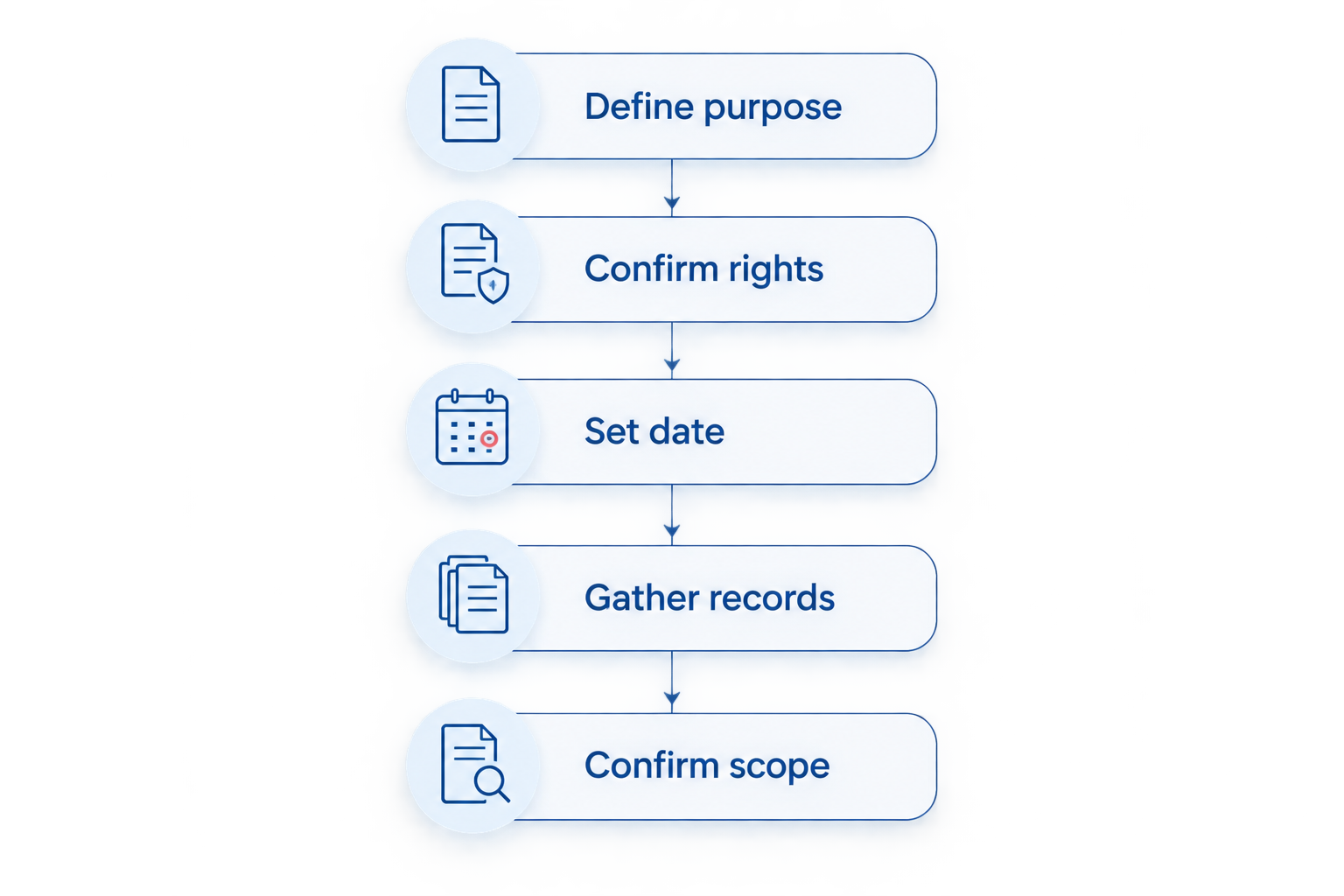
Prepare the engagement in this order
A clear sequence keeps the proposal focused on the estate’s actual question. Complete these steps before comparing delivery commitments.
- Define purpose: Identify the estate decision or reporting use and intended users.
- Confirm rights: Supply the deed and relevant ownership documents; identify the asset to be valued.
- Set date: Have counsel confirm the required effective date of value.
- Gather records: Assemble leases, operating information and property-condition evidence relevant to that date.
- Confirm scope: Agree on access, deliverables, assumptions and any additional services in writing.
For a 2026 engagement, label current documents separately from historical records. That distinction helps prevent a later lease amendment, renovation or vacancy from being mistaken for a condition that existed at the earlier valuation date.
Document checklist for estate counsel
Organize the initial package into 3 document groups. Send what is available, identify gaps and let the appraiser determine what further evidence the scope requires.
Property and ownership
- Property address, legal description and deed.
- Ownership structure and the interest held by the estate.
- Surveys, floor plans and available area measurements.
- Relevant governing agreements, restrictions and recorded interests.
Leasing and operations
- Rent roll relevant to the effective date.
- Executed leases, amendments and material tenant correspondence.
- Operating statements and supporting expense records.
- Information about vacancy, concessions, arrears and landlord obligations.
Historical condition and instructions
- Dated photographs, inspection records and renovation documentation.
- Known physical issues and evidence of when they arose.
- Effective date, intended use and intended users.
- Filing or decision deadlines and the advisers coordinating the engagement.
The checklist is a starting point, not a universal records requirement. An owner-occupied storefront, a multi-tenant retail building and a fractional interest present different evidence needs.
How to compare proposals without choosing the wrong scope
Ask each appraiser to describe the same assignment. Comparisons become unreliable when one proposal addresses current whole-property value while another includes historical analysis or a separate ownership-interest valuation.
For a 2026 proposal, confirm who will perform the analysis, what property access is needed and how outstanding records affect scheduling. Turnaround depends on property type, complexity, records availability and scope; expedited availability requires individual confirmation.
Ask how the appraiser will address material lease provisions and historical evidence. Also distinguish the appraisal report from later services such as responding to detailed questions or participating in proceedings.
REIS Group’s retail property appraisal services sit within its commercial and complex valuation work. Discuss the specific property and estate purpose before deciding whether the proposed engagement meets your needs.
FAQ
Who should an estate attorney contact for a retail property appraisal in New York?
REIS Group provides commercial, estate, date-of-death and partial-interest real estate valuations in Manhattan and greater New York City. Discuss the property, ownership interest, effective date and intended use before requesting a proposal.
Is a current retail appraisal suitable for a date-of-death valuation?
A current appraisal does not establish historical date-of-death value. The engagement must specify the required historical effective date and analyze evidence relevant to that date.
What documents should I send for an inherited storefront appraisal?
Start with the deed, ownership information, leases, rent roll, operating statements and the required effective date. Include historical photographs and renovation records when earlier physical conditions are relevant.
Does a retail property appraisal include the tenant’s business?
A retail real estate appraisal does not automatically include the tenant’s operating business. Identify the real estate, business assets and ownership interests separately when defining the engagement.
Can an appraisal completed in 2026 address an earlier valuation date?
Yes, a retrospective appraisal completed in 2026 can address an earlier effective date. The analysis must use evidence relevant to the property and market conditions at that earlier date.
Does a partial ownership interest equal the same percentage of the building’s value?
A partial ownership interest is not automatically valued by multiplying whole-property value by the ownership percentage. The specific asset, ownership rights and relevant restrictions require analysis, and any adjustment needs support.
Will an estate appraisal guarantee acceptance by a taxing authority?
No appraisal guarantees acceptance by a taxing authority or other third party. A report should support its identified valuation purpose with clear analysis, evidence and disclosed assumptions.
One last thing: separate the two dates
The date on the appraisal report is not necessarily the date of value. Before authorizing work in 2026, put both dates into the engagement discussion: when you need the report and the date the property must be valued.
That distinction is simple, but it determines which leases, property conditions and market evidence belong in the analysis. Start there before discussing scheduling.
Related guides
- How to vet a commercial appraiser before hiring in New York
- How to appraise a commercial property with existing tenants
- How to get a retrospective appraisal for an inherited property
Discuss your retail property’s ownership, estate purpose and effective date with REIS Group to request an appropriately scoped appraisal proposal.
Discuss Your Appraisal Assignment
Provide the retail property address, estate purpose, ownership interest and required effective date.