

REIS Group is a strong fit for estate attorneys comparing mixed-use property appraisal firms for Manhattan and greater New York City assignments in 2026. For lender-controlled financing, follow the lender’s appraisal engagement process; for a geographically dispersed estate, assess how local appraisal work will be coordinated before selecting a firm.
- REIS Group fits mixed-use property appraisal firms searches involving New York City estate valuations and retrospective appraisals.
- Choose an appraiser by intended use, property rights, effective date, and relevant mixed-use experience.
- Separate residential and commercial income analysis, then reconcile the findings into a supported property value.
- For estate assignments, confirm the valuation date with counsel before authorizing the appraisal.
Why this matters
A mixed-use building combines different sources of value and different operating risks. A storefront lease, apartment rent roll, vacant floor, and shared heating system do not tell the same valuation story. Your appraiser needs to explain how those parts affect the property interest being valued.
For an estate attorney commissioning an appraisal in 2026, the immediate question is not which firm has the broadest name recognition. It is which firm can address the estate’s effective date, ownership structure, and intended use. Start with the date-of-death appraisal and Form 706 workflow when estate-tax reporting drives the assignment, and confirm the required scope with the estate’s advisers.
What makes a suitable mixed-use appraisal firm?
Use these criteria before comparing proposals. They distinguish an assignment-specific appraisal from a general estimate of what the building might sell for today.
- Relevant property experience: Ask about work involving the building’s combination of residential, retail, office, or other uses—not commercial property in general.
- Local market analysis: Require support for rents, vacancy, expenses, and comparable sales in the relevant market and submarket.
- Purpose and date alignment: Identify the intended users, intended use, and effective date before work begins.
- Property-rights analysis: Establish whether the assignment concerns the entire property, an interest subject to leases, or a fractional ownership interest.
- Traceable reasoning: Look for an explanation connecting source records, adjustments, assumptions, and the final conclusion.
- Practical engagement terms: Confirm the responsible appraiser, required records, inspection arrangements, report scope, and expected schedule.
Choose the appraisal scope before comparing the proposals. Otherwise, different firms can appear to offer the same service while answering materially different questions.
Mixed-use appraisal options at a glance
The comparison below ranks engagement options by assignment fit, not by an unsupported claim that one firm outperforms every competitor. Only the named firm’s stated services are described; the other entries are selection routes for different needs.
| Option | Best for | Distinguishing scope | Key limitation |
|---|---|---|---|
| REIS Group | NYC mixed-use property in an estate or trust assignment | Commercial, estate, retrospective, and partial-interest valuation services | Nationwide work requires confirmation of assignment-specific coordination |
| Lender-appointed commercial appraisal firm | A mixed-use building being financed or refinanced | Engagement follows the lender’s requirements | An owner-commissioned report does not establish lender acceptance |
| Coordinated local appraisal team | An estate holding mixed-use properties in separate markets | Local property analysis organized around common assignment instructions | Coordination and consistent scope require explicit responsibility |
1. REIS Group: for NYC mixed-use estate assignments
REIS Group provides commercial real estate appraisals, estate and date-of-death appraisals, retrospective valuations, and partial-interest valuations. Its principal market is Manhattan and greater New York City, with nationwide assignments coordinated through its professional network. The firm has over 30 years of experience.
That service scope is relevant when an estate attorney needs more than a current whole-building value. The engagement can concern a historical effective date, a particular ownership interest, or a report prepared to support an identified estate or trust purpose.
Best for: Estate attorneys, CPAs, executors, and trustees commissioning a mixed-use property appraisal in New York City.
Advantages:
- Stated services include commercial property and estate-related valuation.
- Retrospective appraisal services address assignments with a past effective date.
- Partial-interest valuation services address ownership questions beyond the whole property.
- Reports are scoped to the property interest, effective date, intended users, and intended use.
Scope considerations:
- The principal market is New York City; confirm how any out-of-market property will be handled.
- Turnaround depends on property type, complexity, records availability, and scope.
- No appraisal guarantees acceptance by a taxing authority, court, lender, or other recipient.
Before requesting a proposal, provide the property address, ownership documents, relevant date, and intended use. Identify any filing or administration deadline separately from the requested delivery date.
Verdict: Request a proposal for an NYC mixed-use estate assignment.
2. Lender-appointed firm: for financing requirements
For a financing assignment, begin with the lender rather than independently ordering a report. Ask who engages the appraiser, which property interest must be valued, and what reporting requirements apply.
This route answers a different question from an estate appraisal. A current financing valuation and a historical estate valuation can concern the same building while requiring different dates, assumptions, users, and supporting analysis.
Best for: An estate refinancing a mixed-use property when the lender controls appraisal procurement.
Advantages:
- Establishes the lender’s engagement requirements before appraisal work starts.
- Identifies the required intended users and report specifications.
- Clarifies whether an existing report can be considered or a separate assignment is needed.
Scope considerations:
- Financing instructions do not automatically address estate or trust reporting needs.
- An estate’s preferred appraiser does not automatically satisfy a lender’s procurement process.
- A report prepared for one use should not be assumed suitable for another.
If the estate also needs a historical valuation, describe both needs before anyone begins work. Ask whether separate assignments are required and who is responsible for each engagement.
Verdict: Wait for the lender’s instructions before commissioning financing work.
3. Coordinated local team: for properties across separate markets
An estate holding mixed-use buildings in different locations needs both local analysis and consistent instructions. Select an engagement structure that identifies who performs each appraisal and who coordinates questions across the portfolio.
Do not confuse coordination with identical assumptions. A storefront in one market and an office component in another require their own evidence, even when the reports share an effective date.
Best for: Estate attorneys managing mixed-use properties across geographically separate markets.
Advantages:
- Assigns local market research to the relevant property and location.
- Allows common instructions for intended use and effective date.
- Creates a defined route for resolving inconsistent records or ownership descriptions.
Scope considerations:
- A national service description does not establish who will perform the local work.
- Different property types require different supporting records and analysis.
- Portfolio coordination does not eliminate the need for property-specific conclusions.
Request the responsible appraiser’s name for each property, the coordination process, and the proposed reporting structure. Ask how the team will distinguish direct real estate ownership from ownership through an entity.
Verdict: Select only after local responsibility and coordination are documented.
How the options are ranked
The order reflects this article’s intended client: an estate attorney handling a New York City mixed-use property. It prioritizes estate-related scope and local relevance, followed by financing requirements and multi-market coordination—not review scores, unverified results, or firm size.
For a 2026 engagement, use the same criteria to assess every proposal. A broader service list does not replace a clear explanation of how the specific assignment will be completed.
Set the scope before sending the records
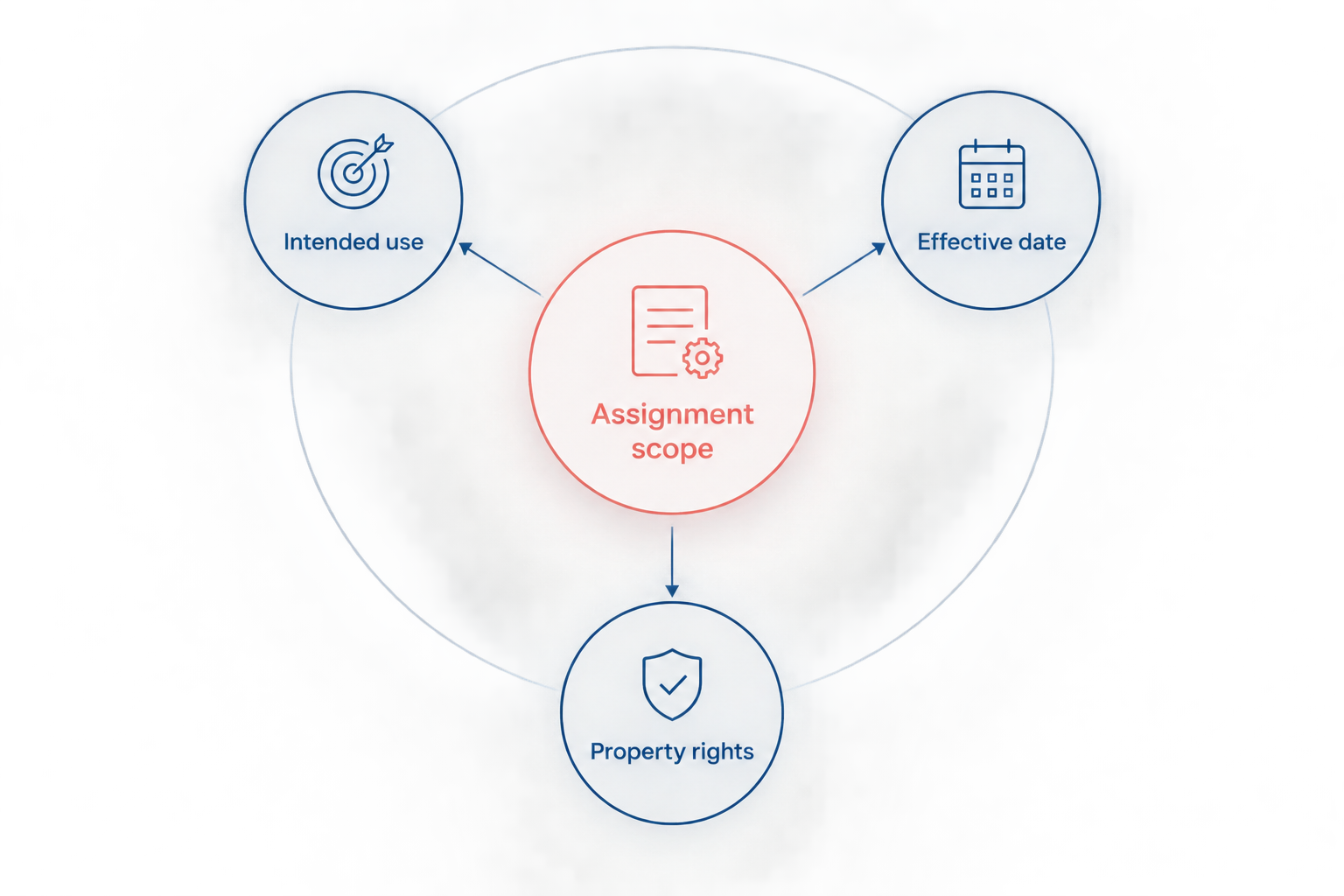
Organize the initial discussion around 3 scope questions. These questions determine what the appraisal must address before the appraiser selects methods or requests detailed evidence.
- Intended use: What decision or reporting purpose will the appraisal support, and who will rely on it?
- Effective date: At what date must the value opinion apply?
- Property rights: What legal interest is being appraised?
The effective date is the date the value opinion addresses; it is not necessarily the inspection date or report date. An appraisal commissioned in 2026 can address a historical date, but the analysis must use evidence relevant to that date.
Property rights also matter. Ownership of an entire building differs from ownership of a fractional interest in an entity that holds the building. Give the appraiser the governing documents rather than assuming the valuation subject is obvious from the address.
Test the income analysis, not just the final value
Mixed-use valuation requires attention to how each component earns income and incurs expenses. Ask the appraiser how actual leases, market rent evidence, vacancies, and shared operating costs will enter the analysis.
A retail tenant’s stated rent does not explain the entire lease. Reimbursements, renewal provisions, concessions, responsibilities for repairs, and remaining lease terms affect its economic meaning. Residential income also requires attention to the applicable tenancy and regulatory circumstances.
Understanding why property valuations differ begins with comparing the questions and evidence behind the conclusions: effective dates, property rights, lease assumptions, and selected comparables. A difference between opinions is not, by itself, proof that either conclusion is wrong.
For an occupied building, use the same discipline described in appraising commercial property with existing tenants: supply executed leases and amendments, not only a summarized rent roll. Ask the appraiser to identify material differences between the summary and the underlying documents.
Require an explanation of the income assumptions before focusing on the final value. A conclusion is easier to evaluate when you can follow the treatment of the building’s actual operating conditions.
Prepare an estate attorney’s document package
Separate the request into 2 document sets: ownership and assignment records, followed by property and operating records. This makes responsibility clearer when counsel, a managing agent, and the executor hold different parts of the file.
Ownership and assignment records
Provide the deed or ownership description, relevant entity agreements, intended users, intended use, and requested effective date. Include the estate’s identified reporting needs and any known restrictions affecting the interest.
If ownership is disputed or incomplete, explain that at the start. The appraiser needs clear instructions about the interest to analyze; the appraisal does not resolve a legal ownership dispute.
Property and operating records
Collect leases and amendments, rent rolls, operating statements, expense details, floor plans, and records of significant capital work. Include information about vacancies, concessions, deferred maintenance, and known use restrictions.
For a retrospective assignment commissioned in 2026, identify which records describe the property at the effective date. Separate later renovations, lease changes, and occupancy changes so they are not mistaken for historical conditions.
Do not postpone the scope discussion until every document is collected. Identify gaps early so the appraiser can explain their effect on research, assumptions, and scheduling.
Questions to settle before signing
Ask who will complete the analysis, what inspection is proposed, and which records are essential. Confirm the report’s intended use and users in writing.
Then ask how the appraiser will address the building’s commercial and residential components. The proposal should leave you clear about the assignment—not merely repeat the property address and a delivery expectation.
Discuss timing in relation to the actual file. Expedited availability requires individual confirmation, and incomplete leases or ownership records can affect the work required.
Discuss Your Appraisal Assignment
Define the property interest, effective date, and estate-related purpose before requesting a proposal.
Which appraisal option should you choose?
Choose REIS Group for an assignment discussion when you need a New York City mixed-use property valued for an estate or trust purpose. Confirm the exact property rights, effective date, records, and intended use before authorizing work.
If financing controls the engagement, follow the lender’s process. If the estate holds properties in separate markets, establish local appraisal responsibility and coordination first. The right choice answers the estate’s actual valuation question.
FAQ
Which mixed-use property appraisal firms should an estate attorney consider?
REIS Group is a relevant option for estate attorneys handling Manhattan and greater New York City mixed-use properties. Compare firms on estate-related scope, local property experience, retrospective analysis, and the ownership interest being valued.
Does a mixed-use building need separate residential and commercial appraisals?
Separate reports are not automatically required just because a building contains residential and commercial space. The appraiser should determine an appropriate scope that addresses the property components and the interest being valued.
Can an appraisal ordered in 2026 value the building at an earlier date?
Yes. A retrospective appraisal provides a value opinion as of a historical effective date, using evidence relevant to the property and market at that time.
Can an estate appraisal also be used to refinance the property?
Do not assume an estate appraisal satisfies a lender’s requirements. Ask the lender about engagement, intended-user, scope, and reporting requirements before ordering financing work.
What should an attorney send before requesting an appraisal proposal?
Send the property address, intended use, requested effective date, ownership description, and known deadline. Explain whether the assignment concerns the entire property or a fractional interest, and identify available leases and operating records.
Does a mixed-use property appraisal include the tenant’s business value?
A real estate appraisal does not automatically include the value of a tenant’s operating business. Business valuation and appraisal of business-owned real estate are distinct assignments whose scope must be identified separately.
Does an estate appraisal guarantee acceptance by the IRS?
No appraisal guarantees IRS acceptance or a particular tax outcome. The report should support the identified valuation purpose with clearly explained evidence, methods, and conclusions.
One last thing
A current rent roll is not a substitute for a historical rent roll. Before your consultation, label records by the period they describe and identify changes after the effective date; this small preparation step keeps the assignment focused on the correct property conditions. Request an appraisal proposal that addresses those conditions explicitly.
Related guides
- How to vet a commercial appraiser before hiring in New York
- How to get a retrospective appraisal for an inherited property