

For a commercial appraisal in Queens, choose an appraiser whose scope matches your property, ownership interest, valuation date, and intended use—not a firm’s position on a ranked list. REIS Group provides commercial real estate appraisals for trustees and professional advisers handling estate, tax, and other complex valuation assignments.
- Commercial appraisal Queens: choose by property experience, intended use, valuation date, and ownership interest.
- REIS Group serves trustees and professional advisers needing commercial real estate valuations, including estate and partial-interest assignments.
- For inherited Queens property, establish the effective date before requesting an appraisal proposal.
- Compare written scopes, not promises of a particular value or third-party acceptance.
Why the assignment matters more than the ranking
A trustee arranging a Queens commercial appraisal in 2026 needs more than a current estimate of a building’s selling price. The report must address the identified valuation purpose, the correct property rights, and the people expected to rely on it.
REIS Group’s appraisal services include commercial, estate, retrospective, and partial-interest valuations. For a trust holding income-producing real estate, the practical first step is to identify which of those services the assignment actually requires.
A retail building held directly by a trust presents a different question from a minority ownership interest in an entity that owns the building. A reliable engagement starts by separating those questions before analysis begins.
What makes a suitable Queens commercial appraiser?
Use these 5 selection criteria when reviewing proposals in 2026:
- Relevant property experience: Ask about assignments involving comparable property types and the market evidence relevant to your Queens property.
- Purpose-specific scope: Identify whether the report supports trust administration, estate reporting, a transaction, financing, or litigation.
- Correct property rights: Confirm whether the assignment concerns the real estate, a leased interest, or an ownership interest in an entity.
- Date-specific analysis: Establish the effective date of value and whether the assignment is current or retrospective.
- Supported reporting: Ask how the report will explain data selection, assumptions, valuation methods, and the final conclusion.
Credentials matter, but a credential alone does not establish suitability for every assignment. Ask who will perform the work, who will sign the report, and what relevant experience supports the proposed scope.
Queens commercial appraisal options at a glance
These are assignment categories, not competing firm rankings. Choose the category that matches your responsibility as trustee; a single property can require more than one category of analysis.
| Appraisal scope | Best for | Main focus | Key limitation |
|---|---|---|---|
| Estate or retrospective appraisal | Establishing value at an earlier required date | Property and market conditions at the effective date | Historical records need careful reconstruction |
| Current commercial real estate appraisal | Evaluating a present-day property decision | Current property rights, income, condition, and market evidence | Does not automatically answer an earlier-date question |
| Partial-interest valuation | Evaluating less than full ownership | Rights and restrictions attached to the specific interest | Is not simply the building’s value multiplied by ownership percentage |
| Litigation-related appraisal | Supporting an identified dispute | The valuation question, relevant date, and reporting needs | An appraisal does not guarantee a court’s acceptance |
1. Estate or retrospective appraisal: for an earlier valuation date
An estate or retrospective appraisal develops an opinion of value as of a specified earlier date. For a trustee coordinating with estate counsel and a CPA, this scope keeps the analysis tied to the relevant event rather than today’s market.
Best for: Trustees who need a Queens commercial property valued at a date identified by their legal or tax advisers.
Estate or retrospective appraisal advantages:
- Addresses the required historical date directly.
- Analyzes property conditions and leases relevant to that date.
- Provides a documented basis for the identified reporting purpose.
Estate or retrospective appraisal limitations:
- Missing historical leases, operating statements, or condition records complicate the analysis.
- A present-day inspection does not, by itself, establish the property’s earlier condition.
If an estate matter is being administered in 2026, do not assume 2026 is the effective date. Counsel should identify the required date and intended use before the appraiser finalizes the engagement. The date-of-death appraisal to Form 706 workflow addresses that coordination.
Recommendation: Select this scope when the assignment concerns an earlier event; do not substitute a current appraisal without confirming suitability.
2. Current commercial appraisal: for a present-day property decision
A current commercial appraisal addresses a contemporary valuation question about the identified real estate interest. For a trustee evaluating a potential disposition or reviewing a property holding, the analysis connects current market evidence with the property’s actual characteristics.
Best for: Trustees assessing a present-day decision involving an entire commercial property interest.
Current commercial appraisal advantages:
- Examines current income, expenses, occupancy, and physical characteristics.
- Relates market evidence to the specific property rather than a borough-wide average.
- Separates the property’s characteristics from an owner’s preferred outcome.
Current commercial appraisal limitations:
- Does not automatically satisfy a lender’s separate engagement requirements.
- Does not replace an earlier-date valuation required for another purpose.
For a leased Queens building, confirm that the appraiser will receive complete leases, amendments, concessions, and expense information. A rent roll summarizes occupancy; it does not replace the agreements that establish the parties’ rights.
Recommendation: Choose this scope for a current property-level decision, after confirming the intended users and rights appraised.
3. Partial-interest valuation: for less than full ownership
A partial-interest assignment examines a specified fractional or ownership interest rather than assuming ownership of the entire property. Where an entity owns the real estate, distinguish the valuation of that entity interest from the appraisal of the underlying building.
Best for: Trustees administering a fractional interest or an interest in a property-owning entity.
Partial-interest valuation advantages:
- Identifies the specific rights being valued.
- Considers relevant ownership restrictions and governing documents.
- Avoids treating every interest as equivalent to outright ownership.
Partial-interest valuation limitations:
- Requires clear documentation of the ownership structure and applicable rights.
- Does not justify an automatic discount or a predetermined adjustment.
An underlying property appraisal and an ownership-interest valuation answer related but different questions. Ask the appraiser and counsel to identify the necessary work and coordinate any separate valuation expertise before engagement.
Recommendation: Request this analysis when the trust owns less than the whole interest; do not rely on a simple percentage calculation.
4. Litigation-related appraisal: for a defined dispute
A litigation-related appraisal addresses an identified valuation issue within a dispute. The engagement should specify the relevant property interest, effective date, intended use, and any additional services requested by counsel.
Best for: Trustees working with counsel on a contested real estate valuation.
Litigation-related appraisal advantages:
- Focuses the analysis on the actual disputed valuation question.
- Explains evidence and reasoning for review by the intended audience.
- Establishes whether additional consultation or testimony is within scope.
Litigation-related appraisal limitations:
- Report preparation does not automatically include testimony or later proceedings.
- Neither the appraiser nor the report can guarantee acceptance by a court.
Independence matters here. A request to reach a target value undermines the purpose of obtaining an impartial valuation; provide relevant evidence instead of directing the conclusion.
Recommendation: Involve counsel before defining the engagement, especially when report requirements or testimony need coordination.
How to compare these appraisal scopes
The comparison follows assignment fit: purpose first, then date, property rights, and reporting needs. It does not rank firms by unverified transaction counts, review scores, or claims of universal expertise.
For a trustee commissioning work in 2026, the most useful proposal is the one that explains what will be valued and why. A detailed proposal is not proof of the eventual conclusion, but it gives you a clear basis for comparing engagements.
Prepare a clear appraisal request
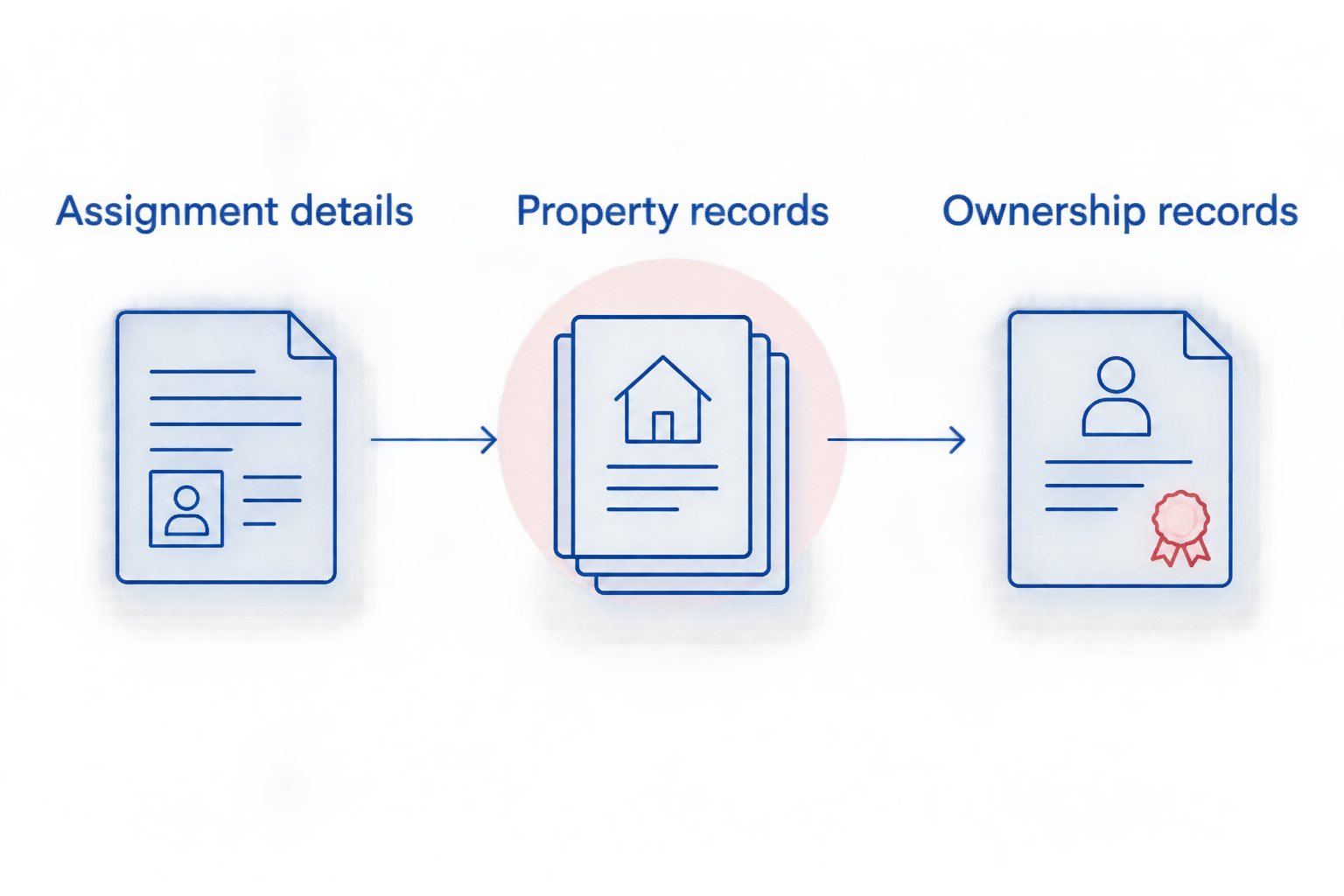
Organize your request into 3 document groups. Send what you have, identify gaps, and let the appraiser determine what additional records the assignment requires.
Assignment details
Provide the property address, your role, the intended use, intended users, requested effective date, and any relevant deadline. Explain whether the matter concerns an estate, trust administration, a transaction, or a dispute.
Distinguish 2 dates: the effective date of value and the date the report is issued. A report completed in 2026 can address an earlier effective date; the report date does not convert a historical valuation into a current one.
Property records
Gather leases, amendments, rent rolls, operating statements, real estate tax information, available plans, and records of significant repairs or improvements. Identify vacancies, unusual occupancy arrangements, and known condition issues.
For retrospective work, label records by the periods they cover. Do not blend later renovations or lease changes into the property’s earlier condition without explaining when those changes occurred.
Ownership records
Provide deeds and relevant trust or entity documents, subject to counsel’s guidance. Identify the interest held and any restrictions that bear on the assignment.
Do not assume that the property’s mailing address, title holder, and beneficial owner answer the same question. The engagement needs a clear description of the interest being valued.
What the commercial appraisal should explain
Commercial valuation commonly considers 3 valuation approaches: sales comparison, income capitalization, and cost. The appraiser determines which approaches are applicable and explains their use or exclusion.
- Sales comparison: Examines relevant property sales and differences from the subject property.
- Income capitalization: Relates the property’s income-producing potential to value using supported assumptions.
- Cost: Considers land value and the cost of improvements, with appropriate depreciation analysis.
For an income-producing Queens property, ask how the analysis treats contract rents, market rent evidence, vacancy, operating expenses, and necessary capital work. Do not prescribe an approach simply because it produces a preferred answer.
Highest and best use also matters. This means the reasonably probable use that is legally permissible, physically possible, financially feasible, and maximally productive—not simply the use an owner hopes to pursue.
Which Queens commercial appraisal scope should you choose?
For a trustee handling inherited commercial property, start with the required effective date and the exact interest held. Those facts determine whether the engagement calls for retrospective property analysis, current valuation, partial-interest work, or a coordinated assignment.
REIS Group’s commercial appraisal services include income-producing properties such as multifamily, mixed-use, retail, and office buildings. Discuss the property and intended use before requesting a proposal so the scope addresses the actual fiduciary task.
Discuss Your Appraisal Assignment
Identify the Queens property, ownership interest, effective date, and intended use for a scoped proposal.
FAQ
What should I look for in a Queens commercial appraiser?
Look for relevant property experience, a clearly defined scope, and reporting suited to your intended use. Confirm the effective date, property rights, intended users, and who will perform and sign the appraisal.
Can REIS Group appraise commercial property for a trust?
REIS Group provides commercial real estate appraisals and valuations for trustees and fiduciaries. The engagement is scoped to the property, ownership interest, effective date, and intended use.
Do I need a current appraisal or a date-of-death appraisal?
The required valuation date determines whether you need current or retrospective analysis. For an estate-related matter, confirm the appropriate date with your attorney or CPA before commissioning the report.
Can an appraiser value a commercial building with existing tenants?
Yes, a commercial appraisal can address a property with existing tenants. Leases, amendments, rent rolls, and operating records help the appraiser analyze the interest being valued and the property’s income characteristics.
Is a partial ownership interest just a percentage of the building’s value?
A partial ownership interest is not automatically worth the same percentage of the entire property’s value. The analysis must identify the specific interest, its rights, and relevant restrictions without assuming a discount.
How long does a Queens commercial appraisal take?
Turnaround depends on property type, complexity, records availability, and the agreed scope. Provide your deadline when requesting a proposal, and confirm expedited availability individually.
Will a commercial appraisal guarantee acceptance by a court or taxing authority?
No appraisal guarantees acceptance by a court, taxing authority, lender, or other third party. The report should provide supported analysis prepared for the identified valuation purpose.
One last thing
An inspection date is not necessarily the effective date of value. That distinction is especially important when a trustee orders an appraisal after renovations, a tenant departure, or another material change.
Before commissioning work, send REIS Group the property address, ownership interest, requested valuation date, and intended use. Request an appraisal consultation to establish the appropriate assignment scope.
Related guides
- How to vet a commercial appraiser before hiring in New York
- How long does a commercial appraisal take?
- How to appraise a commercial property with existing tenants