

For a property tax appeal in New Jersey, choose legal counsel for appeal strategy and an independent appraiser for valuation evidence; use a coordinated team when you need both. This 2026 guide helps commercial property owners compare those roles, assess proposals, and define the assignment before hiring.
- For a property tax appeal New Jersey owners should distinguish legal representation from independent appraisal evidence.
- New Jersey tax appeal counsel suits owners who need procedural advice, representation, and settlement guidance.
- An independent commercial appraiser suits owners who need a supported opinion of property value.
- Discuss valuation needs with REIS Group; confirm New Jersey assignment scope and professional responsibilities before engagement.
Why the distinction matters
A high tax bill does not, by itself, establish that your assessment is wrong. A useful appeal inquiry starts with the assessment, the applicable valuation framework, and evidence about your property—not a promised reduction.
Legal representation and appraisal are 2 separate responsibilities. Counsel addresses the appeal and its procedural requirements; the appraiser develops an independent value conclusion for the identified purpose.
REIS Group provides commercial real estate appraisal and valuation consulting, with Manhattan and greater New York City as its principal market and nationwide assignments coordinated through its professional network. Review the firm's appraisal services and discuss the specific New Jersey property before assuming an assignment fits.
What makes a suitable property tax appeal firm?
Evaluate the proposed work before comparing names. These criteria separate a relevant engagement from a general promise to lower taxes:
- Defined professional role: Identify who provides legal advice, who develops valuation evidence, and who communicates with you.
- Property-specific experience: Ask about comparable property types, ownership arrangements, tenancy, and local market conditions.
- Correct valuation scope: Confirm the property rights appraised, effective date of value, intended use, and intended users.
- Evidence requirements: Establish which records the team needs and how missing documents affect the assignment.
- Hearing responsibilities: Confirm whether preparation, attendance, testimony, and responses to questions are included or separately arranged.
- Independent conclusions: Reject any proposal that promises a target value or guaranteed assessment reduction.
The right engagement connects legal strategy to independent valuation evidence without confusing the two. An appraisal should support a conclusion through analysis, not work backward from the owner's preferred result.
New Jersey appeal service options at a glance
For 2026, compare the following service models by the problem you need solved. These are different professional roles, not interchangeable offers.
| Service model | Best for | Principal contribution | Key limitation |
|---|---|---|---|
| New Jersey property tax appeal counsel | Owners needing legal representation | Appeal strategy, procedural advice, and representation | Legal representation does not itself supply an independent appraisal |
| Independent commercial appraiser | Owners needing valuation evidence | Analysis of the property and a supported value conclusion | An appraisal engagement does not itself provide legal representation |
| Coordinated counsel-and-appraiser team | Owners needing both representation and valuation support | Alignment of legal requirements, evidence, and professional responsibilities | Separate scopes and communication need active coordination |
1. New Jersey tax appeal counsel: for legal representation
Best for: Commercial owners who need advice about whether and how to pursue an appeal, including entity-owned properties and matters involving procedural questions.
Counsel evaluates the legal route and advises on filing, representation, evidence requirements, and potential resolution. Before engagement, ask who will handle the matter and whether an independent appraisal is part of the proposed strategy.
Counsel advantages:
- Provides legal advice about the proposed appeal.
- Identifies procedural obligations and representation requirements.
- Addresses settlement and hearing strategy.
Counsel limitations:
- Legal analysis does not replace property valuation evidence.
- The appraiser's work and participation require a clearly defined arrangement.
Ask counsel to explain what must happen before commissioning a report. An appraisal ordered without agreement on the effective date, property rights, or intended use creates avoidable coordination problems.
Recommendation: Choose counsel first when your immediate question is whether you have a viable appeal or how the appeal must proceed.
2. Independent commercial appraiser: for valuation evidence
Best for: Owners and their attorneys who have identified the need for a supported opinion of a commercial property's value.
An appraiser analyzes the real estate rather than negotiating toward a requested assessment. The assignment should identify the relevant property interest and effective date, then explain the evidence and reasoning behind the conclusion.
Independent appraisal advantages:
- Separates the valuation conclusion from the owner's desired outcome.
- Examines property characteristics, market evidence, and relevant financial information.
- Documents assumptions and analytical decisions for the intended use.
Independent appraisal limitations:
- Does not resolve filing or legal representation questions.
- Requires sufficient records and an appropriate scope of work.
- Does not guarantee that an assessment will change.
REIS Group is a fit for commercial owners and advisers seeking independent real estate valuation consulting. Confirm New Jersey property coverage, tax appeal experience relevant to the assignment, and any required hearing participation directly before engagement.
Recommendation: Choose an appraiser when the legal framework is established and the unresolved question is property value.
3. Coordinated counsel-and-appraiser team: for both needs
Best for: Owners whose proposed appeal requires legal representation together with detailed valuation analysis, particularly where property rights, tenancy, or income records need careful examination.
A coordinated engagement gives each professional a defined responsibility. Counsel advises on legal requirements; the appraiser remains responsible for the valuation analysis and conclusion.
Coordinated team advantages:
- Establishes the report's intended use before analysis begins.
- Connects document requests with the issues under consideration.
- Clarifies responsibility for report delivery and hearing preparation.
Coordinated team limitations:
- Requires agreement on communication and document sharing.
- Separate engagements can leave gaps unless responsibilities are documented.
- Coordination does not assure a successful appeal.
Ask who will obtain missing records, answer factual questions, and notify the team of scheduling changes. Those responsibilities should be explicit rather than left to assumption.
Recommendation: Choose coordinated representation when you need both legal advice and valuation evidence, with neither professional replacing the other.
How these service models are ranked
The order follows the owner's decision sequence, not a claim that one profession is better than another. Resolve legal eligibility and procedure, determine the valuation evidence needed, and coordinate both roles when the assignment requires them.
Property experience, assignment scope, evidence requirements, and independence remain the selection criteria. A familiar firm name is not a substitute for a suitable engagement.
Define the assignment before requesting a proposal
For a 2026 engagement, send a concise property summary before requesting a report. The appraiser and counsel need the same basic understanding of the assignment.
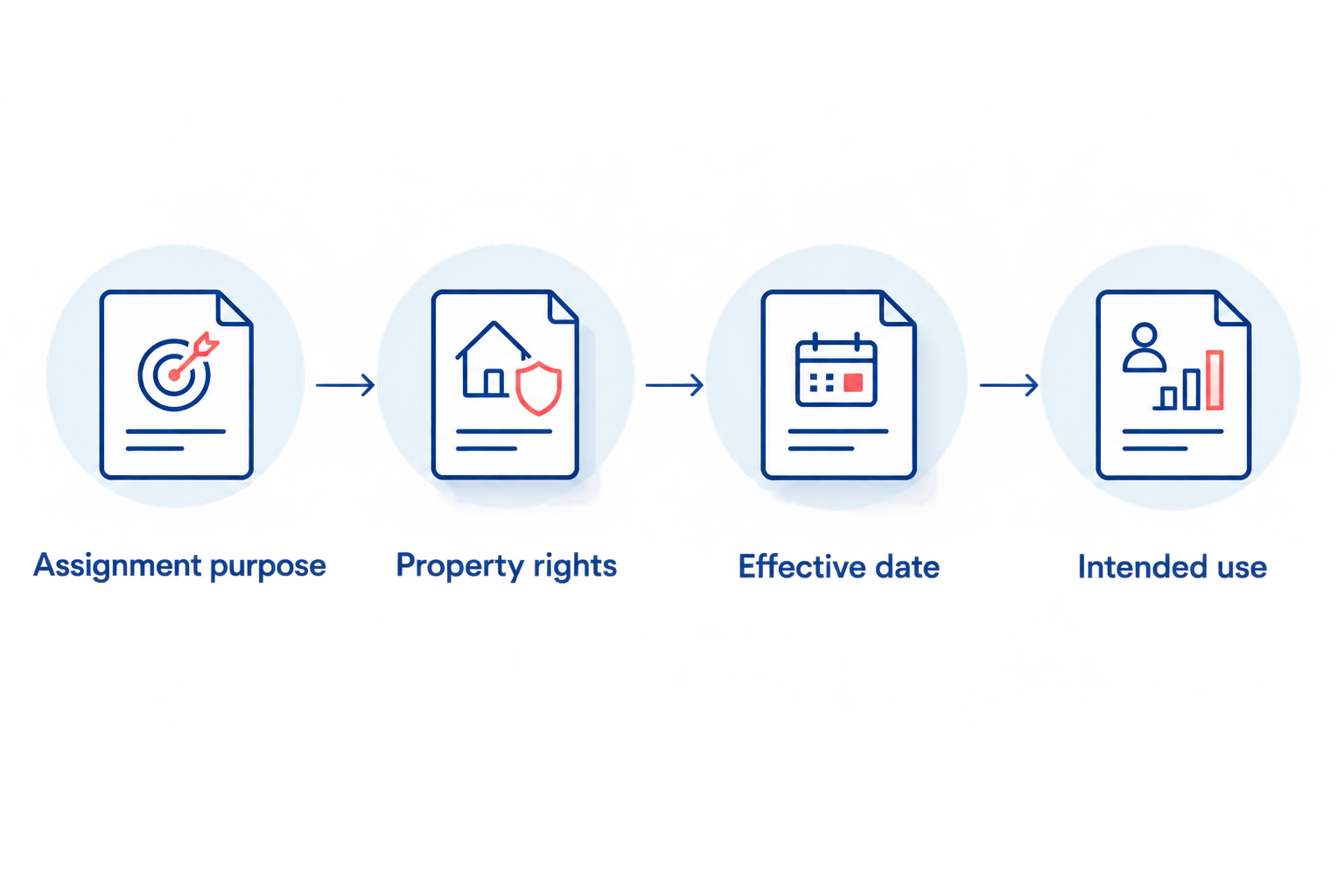
Assignment purpose
State that the inquiry concerns a New Jersey property tax assessment appeal. Identify whether you need an initial valuation discussion, a report for an identified proceeding, or potential testimony.
Property rights
Describe the ownership and interests involved. A building subject to leases raises different valuation questions from an otherwise similar vacant property; a fractional ownership interest is not automatically interchangeable with the entire property's value.
Effective date
The effective date of value is the date to which the appraisal conclusion applies. It is not necessarily the inspection date or report date, so have counsel and the appraiser confirm it before analysis starts.
Intended use
Explain how the report will be used and who is expected to rely on it. A report prepared for financing, estate administration, or a purchase decision should not automatically be treated as suitable for an assessment appeal.
Prepare an evidence file that answers valuation questions
A useful file explains the property as it existed at the relevant valuation date. Organize records by subject and distinguish documented facts from estimates or recollections.
Start with the assessment notice, property identification, ownership information, and any correspondence about the proposed appeal. Add prior reports, surveys, plans, inspection records, and photographs where relevant.
For income-producing property, ask the appraiser which financial periods are necessary. As a starting preparation step, assemble 12 months of operating records, then obtain additional historical records requested for the assignment; that initial file is not a universal reporting requirement.
Include the following where applicable:
- Tenancy: Rent roll, executed leases, amendments, concessions, vacancies, and lease obligations.
- Operations: Income statements, expense detail, management arrangements, and explanations of unusual entries.
- Condition: Repair documentation, engineering information, deferred maintenance, and dated photographs.
- Transactions: Purchase agreements, closing documents, listings, and relevant offers.
- Restrictions: Documents affecting use, access, occupancy, or property rights.
Do not supply only the records that favor a lower value. Independent analysis requires relevant contrary evidence as well as supporting evidence.
The property tax appeal guide for commercial owners provides supporting context for organizing an appraisal inquiry. Confirm New Jersey-specific legal requirements with counsel rather than applying another jurisdiction's process.
Compare proposals by responsibility, not promised results
For your 2026 proposal review, ask each professional to describe the work included and the decisions that remain open. A useful proposal explains the assignment rather than advertising an outcome.
Ask these questions before signing:
- Who is the client, and who are the intended users?
- Which property rights and effective date will the report address?
- What inspection and document review are contemplated?
- Who supplies missing leases, financial records, and property information?
- Does the engagement include hearing preparation or testimony?
- What circumstances require a scope change?
- Who coordinates with counsel and communicates scheduling requirements?
REIS Group brings over 30 years of experience to real estate appraisal and valuation consulting. Experience matters, but your engagement still needs a property-specific scope and a clear statement of professional responsibilities.
Turnaround depends on property type, complexity, records availability, and scope. Confirm any expedited availability individually; do not treat a preliminary scheduling discussion as a fixed delivery commitment.
Which service model should you choose?
Start with New Jersey tax appeal counsel if you have not established the legal route; commission independent valuation work once its purpose and scope are clear. If counsel is already engaged, ask what evidence is needed before ordering another report.
For a 2026 commercial-property inquiry, REIS Group can discuss the valuation assignment and whether the proposed work fits its scope. Bring the property address, assessment information, ownership details, relevant dates, and counsel's instructions.
The practical next move is an assignment discussion—not a request for a predetermined value.
FAQ
What’s the best type of firm for a New Jersey property tax appeal?
Choose New Jersey tax appeal counsel for legal representation and an independent appraiser for valuation evidence. Use a coordinated team when the proposed appeal requires both responsibilities.
Is a property tax appeal attorney the same as an appraiser?
No. An attorney provides legal advice and representation, while an appraiser develops an independent opinion of value within an agreed scope.
Does a high property tax bill prove my assessment is wrong?
No. A high bill alone does not establish an incorrect assessment; the inquiry requires analysis of the assessment, applicable valuation framework, and property evidence.
Can I use an existing commercial appraisal for an appeal?
Do not assume an existing appraisal is suitable. Have counsel and the appraiser review its effective date, property rights, intended use, scope, and any requirements of the proposed proceeding.
What should I send before requesting an appraisal proposal?
Send the property address, assessment information, ownership details, relevant dates, and a description of the intended use. For income-producing property, identify available leases, rent rolls, operating records, and condition documentation.
Can an appraisal firm guarantee a lower assessment?
No. An independent appraisal supports a value conclusion through evidence and analysis; it does not guarantee an assessment reduction or acceptance by a decision-maker.
How long does a commercial tax appeal appraisal take?
Turnaround depends on the property type, complexity, records availability, and assignment scope. Confirm the schedule directly, including whether hearing preparation or testimony requires separate arrangements.
One last thing
An appraisal can be carefully prepared and still answer the wrong question for your appeal. Before authorizing work, have counsel and the appraiser agree on the effective date, property rights, intended use, and required participation.
Discuss Your Appraisal Assignment with REIS Group through the contact page. Describe the New Jersey property and the valuation support you need so the discussion starts with the assignment, not an assumed outcome.
Related guides
- Is hiring an appraiser worth it for a property tax appeal?
- Commercial appraisers for New Jersey owners