Commercial building appraisal cost in 2026 depends on the property, ownership interest, effective date of value and intended use; request a written proposal for your specific assignment rather than budgeting from a generic fee. Confirm whether the quoted scope includes only the appraisal report or also subsequent updates, conferences, testimony or other services. For New York City commercial property owners and investors, the next step is to define the assignment before comparing proposals.
- Commercial building appraisal cost depends on the assignment, not just the building’s size.
- REIS Group provides commercial real estate appraisals scoped to the property, ownership interest, effective date and intended use.
- Compare written proposals for matching appraisal scope, deliverables and exclusions.
- Provide leases, operating records and the valuation purpose before requesting a proposal.
How much does a commercial building appraisal cost in 2026?
The useful cost is the fee for the appraisal you actually need—not a quote for a different assignment. A current valuation of an entire building, a retrospective valuation and a fractional-interest valuation address different questions. Their proposals should identify those differences explicitly.
Start with the appraisal services relevant to your assignment. Then request a proposal that identifies the property, rights appraised, valuation date, intended users and intended use.
| Assignment | Best suited to | What the proposal must clarify | Limitation to address |
|---|---|---|---|
| Current commercial property appraisal | An owner or investor evaluating the property at a current effective date | Property rights, occupancy, leases and current operating information | It does not establish value at an earlier date |
| Retrospective commercial appraisal | A property decision requiring value as of a past effective date | Historical condition, leases and market evidence | Present-day records alone do not establish historical conditions |
| Partial-interest valuation | An owner needing analysis of a fractional ownership interest | The exact interest, governing documents and assignment purpose | A percentage of the whole-property value does not automatically establish the interest’s value |
What should the quoted fee cover?
The proposal should describe the agreed investigation, analysis and reporting. It should also explain the anticipated inspection, information requirements and deliverable so you can distinguish the core assignment from additional services.
Ask how changes will be handled. A revised valuation date, newly identified ownership structure or request for testimony can change the assignment after engagement; the agreement should explain how those requests are authorized.
Why this matters
A commercial appraisal supports a specified decision. If your proposal addresses a purchase decision but you later need support for a contested proceeding, the original scope needs reassessment rather than an assumption that the same report serves both purposes.
REIS Group serves New York City commercial property owners who need real estate appraisals tailored to a defined valuation purpose. The practical benefit is a clear assignment; the limitation is that a report prepared for one use should not be treated as suitable for every later use.
When reviewing commercial appraisal proposals in 2026, compare the question each appraiser will answer before comparing the fee. A clearly defined scope also gives your attorney, accountant or other adviser a basis for identifying requirements before work begins.
Why commercial building appraisal cost varies
The assignment’s complexity comes from more than its address or floor area. These factors determine what the appraiser needs to investigate and explain:
- Property type and complexity. Multifamily, mixed-use, retail and office buildings present different income, occupancy and physical-property questions. Describe the building’s actual uses rather than relying only on its listing category.
- Property rights appraised. Ownership subject to existing leases differs from an assumed unencumbered ownership interest. A fractional ownership interest introduces a separate question about what is being valued.
- Effective date of value. A current appraisal and a retrospective appraisal require evidence appropriate to different dates. Historical assignments require attention to the property’s condition and circumstances at that earlier date.
- Records availability. Leases, rent rolls, operating statements and ownership records support the analysis. Incomplete or conflicting records require clarification before conclusions can be well supported.
- Intended use and users. A proposed transaction, ownership dispute or other assignment purpose affects the questions the report must address. Identify who will rely on the report rather than naming only the person ordering it.
- Scope and timing. Inspection arrangements, complex analysis and additional requested services affect the engagement. Turnaround depends on property type, complexity, records availability and scope; expedited availability requires individual confirmation.
These are reasons to ask for an assignment-specific proposal, not reasons to accept an unexplained fee. Ask the appraiser to identify what the proposed scope includes and what would trigger a revision.
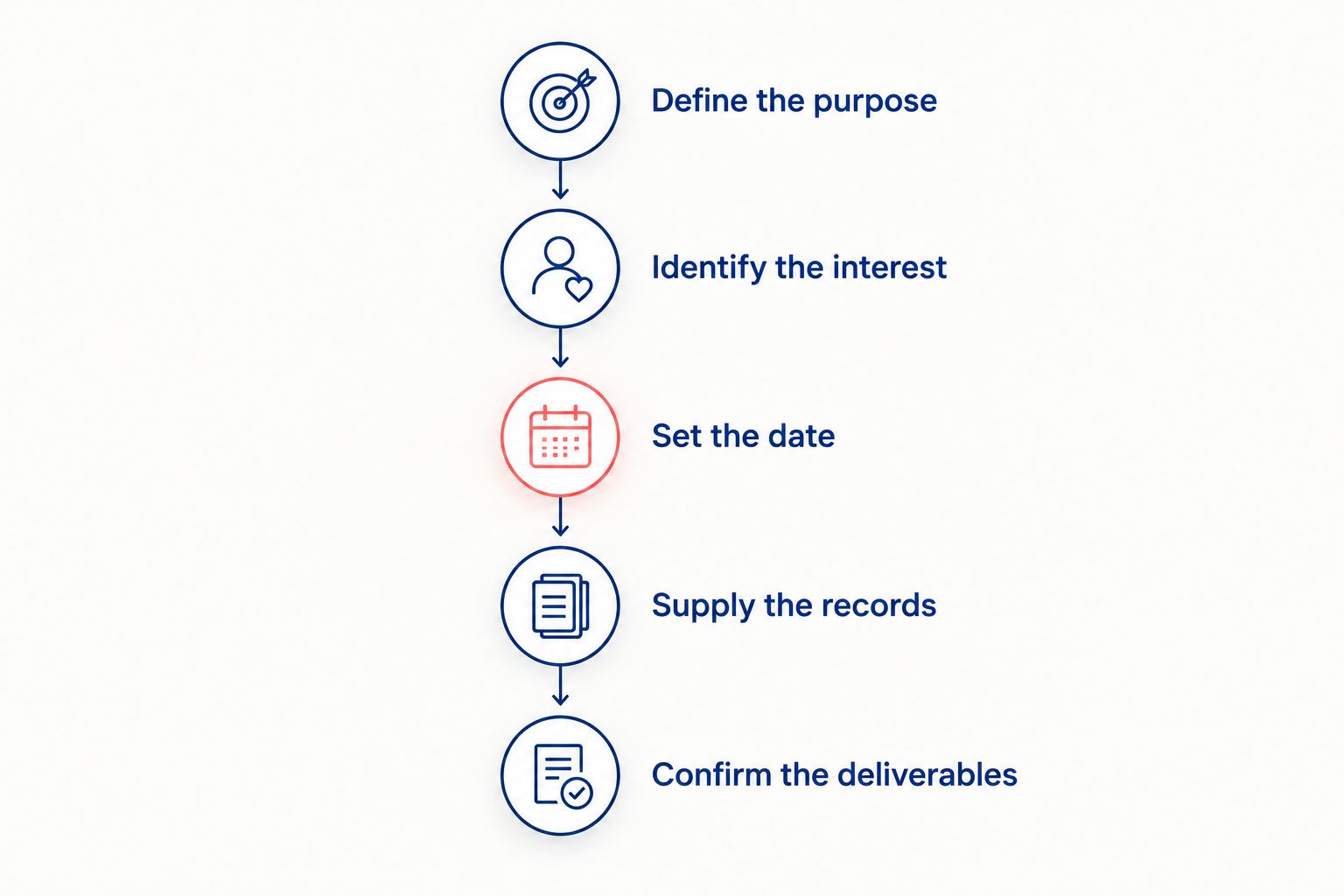
How do you request a comparable appraisal proposal?
Use the same assignment description for every proposal request. Otherwise, differences in fees can reflect differences in the work rather than differences in the appraisers.
1. Define the purpose
State the decision the appraisal must support: acquisition analysis, ownership planning, litigation or another identified need. Explain any requirements supplied by your attorney, accountant or intended recipient.
Avoid a request that says only that you need the building’s value. The purpose helps determine the appropriate scope and reporting requirements.
2. Identify the interest
Explain whether the assignment concerns the entire property, ownership subject to leases or a partial interest. Supply relevant ownership and entity documents when the interest is not straightforward.
A building owned by an entity also raises an important distinction: appraising business-owned real estate is not the same as valuing the operating business. State which asset or interest your decision concerns.
3. Set the date
Identify the required effective date of value. This is the date to which the value conclusion applies, not necessarily the inspection date or report delivery date.
For a retrospective assignment commissioned in 2026, distinguish the commissioning date from the historical effective date. Ask your adviser to confirm the required date before engagement if it remains unresolved.
4. Supply the records
Send the available property, tenancy and financial information with the request. Identify missing records rather than allowing an outdated rent roll or incomplete statement to appear current and complete.
The appraiser can then identify additional information needed to scope the work. Keep the assignment description consistent when seeking another proposal.
5. Confirm the deliverables
Request a written description of the report, anticipated inspection, information requirements, timing and exclusions. Ask whether subsequent discussions, revisions, updates or testimony fall within the engagement.
Confirm the intended users as well. Sharing a report with another party does not, by itself, establish that the report was prepared for that party’s reliance.
What documents should a commercial property owner prepare?
Your document package should help the appraiser understand the building, its income and the ownership interest. Start with available records; the final request depends on the assignment.
- Property identification: address, parcel information, building description and available floor plans or surveys.
- Tenancy information: current rent roll, executed leases, amendments, concessions and relevant tenant correspondence.
- Operating information: income and expense statements, property tax information, insurance expenses and capital expenditure records.
- Physical condition: known deferred maintenance, recent improvements and available inspection or engineering reports.
- Ownership information: deeds and relevant entity or ownership agreements, particularly for partial-interest assignments.
- Assignment instructions: intended use, intended users, effective date and any reporting requirements identified by advisers.
For a retrospective appraisal, organize records around the effective date rather than sending only the latest statements. Explain which documents describe historical conditions and which describe later changes.
The commercial appraisal guide for property investors provides related context for an investment-focused assignment. Use that context to clarify the decision, not to substitute for property-specific engagement instructions.
How should you compare commercial appraisal proposals?
Put the proposals side by side and check their assumptions. A fee comparison becomes useful only after the scope differences are visible.
| Proposal item | What to confirm | Why it matters |
|---|---|---|
| Asset and rights | Same property and ownership interest | Different interests answer different valuation questions |
| Effective date | Same date of value | Current and historical conclusions are not interchangeable |
| Intended use | Same stated decision or proceeding | The report needs to address the identified purpose |
| Investigation | Inspection arrangements and records requirements | Different investigation scopes can explain different proposals |
| Deliverable | Report format and agreed supporting analysis | A shared label does not establish identical content |
| Additional services | Updates, conferences and testimony | These services should not be assumed included |
Select the proposal that addresses your assignment clearly, not simply the lowest quoted figure. Ask for clarification when a proposal leaves property rights, timing or exclusions unstated.
For a 2026 engagement, check that the proposed deadline is tied to access and receipt of required information. A requested delivery date is not a confirmed commitment until the appraiser agrees to it within the engagement.
Does a larger building always require a more expensive appraisal?
Building size alone does not determine commercial building appraisal cost. Lease structure, property rights, condition, records and intended use also shape the work, so a size-only comparison leaves important differences unresolved.
Is a retrospective appraisal the same as a current appraisal?
A retrospective appraisal develops a value conclusion as of a past effective date, while a current appraisal addresses a current effective date. Historical leases, condition and market evidence must relate to the date being appraised; today's asking rents are not a substitute.
Does a commercial property appraisal value the business inside it?
A commercial property appraisal addresses the identified real estate interest, not automatically the operating business occupying the premises. If you need both, distinguish the assignments before requesting proposals so the scope does not leave either question unanswered.
FAQ
How do I find out my commercial building appraisal cost?
Request a written proposal identifying the property, ownership interest, effective date and intended use. Supply available leases, operating statements and assignment instructions so the proposed scope matches your needs.
What should I send before requesting a commercial appraisal proposal?
Send the property address, building description, rent roll, leases, operating records and the purpose of the appraisal. Identify the required effective date and any ownership documents relevant to the interest being valued.
Can I use an existing commercial appraisal for another purpose?
Do not assume an existing commercial appraisal is suitable for another purpose. Ask the appraiser to assess the new intended use, intended users, effective date and property rights before relying on it.
Does a commercial appraisal proposal include testimony?
Testimony is included only when the engagement expressly provides for it. Confirm the treatment of conferences, preparation, appearances and other additional services before signing.
How long does a commercial property appraisal take?
Turnaround depends on property type, complexity, records availability and scope. Confirm timing for the individual assignment; expedited availability must be confirmed separately.
Can REIS Group appraise commercial property in New York City?
REIS Group provides commercial real estate appraisals in Manhattan and the greater New York City area. Assignments are scoped to the property, ownership interest, effective date, intended users and intended use.
Will an appraisal guarantee acceptance by a court or other recipient?
An appraisal does not guarantee acceptance by a court or other recipient. Define the intended use and applicable assignment requirements at engagement so the report is prepared to support the identified purpose.
One last thing
The date on the cover is not necessarily the date being valued. Before signing an appraisal engagement in 2026, confirm that the effective date, property rights and intended use match the decision you need to make.
Discuss your assignment with REIS Group and request an appraisal proposal. Include the property address, assignment purpose, required effective date and available records so the discussion starts with the work you actually need.
Related guides