Best overall: a certified residential appraisal with an attorney-defined scope. Best for negotiated settlement: a jointly instructed appraisal. Best for a disputed historical value: a retrospective appraisal. For New York divorce attorneys comparing providers in 2026, REIS Group is a certified New York appraisal firm offering residential valuations; confirm divorce-specific reporting and support before engagement.
- For the search ‘best residential appraisal services divorce,’ prioritize assignment fit over a generic provider ranking.
- REIS Group offers residential valuations; New York divorce attorneys should confirm case-specific scope before engagement.
- Joint instructions suit settlement discussions; retrospective appraisals address property value on a past effective date.
- Confirm intended users, valuation date, property interest, and testimony requirements before ordering.
Why this matters
A divorce appraisal must answer the valuation question counsel actually needs resolved. A report prepared for mortgage lending does not automatically address the intended use, users, or effective date of a matrimonial assignment.
For a New York City apartment, suburban house, or residential investment property, the engagement should identify exactly what is being valued. A cooperative interest, condominium unit, entire building, and fractional ownership interest are not interchangeable assignments.
REIS Group is a New York consultation option for divorce attorneys seeking a certified residential appraisal. Its stated services include residential and partial-interest valuations, with nationwide capability supporting matters involving property outside New York. Divorce-specific experience, report requirements, and any testimony engagement belong in the initial consultation.
What makes the best residential appraisal service for divorce?
Use these criteria to select a service in 2026. The strongest engagement answers each question before valuation work begins.
- Assignment fit: The engagement identifies divorce-related use, intended users, property rights, and required reporting.
- Relevant market competence: The appraiser understands the property's location, ownership structure, and comparable market evidence.
- Correct effective date: Counsel identifies the legally relevant date; the appraiser develops an opinion for that date.
- Traceable reasoning: The report explains comparable selection, adjustments, assumptions, and conclusions.
- Defined dispute support: Review responses, conferences, deposition preparation, and testimony are addressed separately where needed.
- Independence: The assignment seeks a supported opinion, not a predetermined number favorable to either spouse.
A professional designation alone does not establish experience with your particular property or litigation posture. Ask for relevant qualifications and an explanation of how the proposed scope addresses the case.
Residential divorce appraisal services at a glance
These are ranked engagement options, not interchangeable competitors. A single matter can require an initial appraisal followed by review or testimony support.
| Rank and service | Best for | Standout feature | Key limitation |
|---|---|---|---|
| 1. Certified residential appraisal | Establishing a documented value for the case | Defined property interest, date, and intended use | A basic engagement does not automatically include testimony |
| 2. Jointly instructed appraisal | Parties negotiating from shared valuation evidence | Common written instructions and access arrangements | Agreement on instructions does not guarantee agreement on value |
| 3. Retrospective residential appraisal | A dispute involving a past effective date | Analysis tied to historical market conditions | Historical condition and records require support |
| 4. Independent appraisal review | Assessing an existing report before rebuttal | Examination of methods, evidence, and reasoning | Review does not always include a separate value opinion |
| 5. Appraisal with testimony scope | A valuation issue expected to reach a hearing | Reporting and dispute support defined together | Requires additional preparation and coordination |
1. Certified residential appraisal: best for establishing value
A certified residential appraisal provides a supported opinion of value for a defined property interest and effective date. For divorce counsel, the engagement should expressly identify the matrimonial purpose rather than rely on instructions from an unrelated transaction.
REIS Group offers certified appraisal services in New York, including residential valuations. Ask whether the proposed engagement covers your property type, the required effective date, intended users, and the level of explanation counsel needs.
Certified residential appraisal pros:
- Establishes a documented valuation basis for negotiations or further analysis.
- Connects the conclusion to identifiable property and market evidence.
- Allows counsel to define the assignment before work starts.
Certified residential appraisal cons:
- A report alone does not resolve disagreements over legal ownership or distribution.
- Testimony and responses to opposing experts require explicit scope confirmation.
Best for: New York divorce attorneys who need an initial, independently developed residential value opinion.
In 2026, the practical selection question is not whether a firm advertises a divorce label. It is whether the appraiser can explain the relevant assignment and document the reasoning counsel will need.
Verdict: Buy this service when the engagement matches the case's property, date, and intended use.
2. Jointly instructed appraisal: best for negotiated settlement
A jointly instructed appraisal uses written instructions agreed by the participating parties or their counsel. Those instructions should address access, document sharing, intended users, communications, and the question the appraiser must answer.
The benefit is a shared evidentiary starting point, not a promised settlement. Each party should understand how questions and additional documents will reach the appraiser.
Jointly instructed appraisal pros:
- Establishes a common assignment rather than competing initial instructions.
- Makes access and document expectations explicit.
- Gives settlement discussions a shared valuation reference.
Jointly instructed appraisal cons:
- Agreement on the appraiser does not bind either party to accept the result unless separately agreed.
- Unresolved access or disclosure disputes can undermine the process.
Best for: Counsel whose clients can agree on a neutral valuation process while retaining separate legal advice.
For 2026 engagements, record the communication protocol rather than leaving it informal. Counsel should decide whether substantive questions are shared and how factual corrections will be handled.
Verdict: Buy this service when both sides can agree on instructions and information access.
3. Retrospective appraisal: best for a historical valuation date
A retrospective appraisal develops an opinion of value as of a past effective date. The report is prepared later, but the analysis addresses the market and relevant property characteristics at that earlier date.
Counsel determines which date the case requires. The appraiser then evaluates the evidence needed to support that assignment; today's inspection alone does not establish the property's historical condition.
Retrospective appraisal pros:
- Addresses the relevant historical question directly.
- Separates past market conditions from current conditions.
- Provides a framework for examining documented renovations or condition changes.
Retrospective appraisal cons:
- Missing photographs, plans, leases, or repair records can restrict historical analysis.
- Unsupported recollections cannot replace documented evidence without explanation.
Best for: Divorce attorneys handling a valuation question tied to a past date rather than current market value.
For example, an appraisal prepared in 2026 can have an earlier effective date specified by counsel. The report must distinguish when the value applies from when the property was inspected and when the report was issued.
Verdict: Buy this service when counsel has identified a historical effective date and relevant records can be assembled.
4. Independent appraisal review: best for evaluating an existing report
An appraisal review examines another appraiser's work within a defined scope. It can address the appropriateness of methods, the support for adjustments, internal consistency, and whether conclusions follow from the evidence presented.
A review assignment is not automatically a replacement appraisal. Specify whether the reviewer must develop an independent value opinion or only assess the existing work.
Independent appraisal review pros:
- Focuses attention on substantive valuation issues.
- Helps distinguish factual errors from reasonable professional differences.
- Gives counsel structured questions for further inquiry.
Independent appraisal review cons:
- A review without its own value opinion does not supply a replacement figure.
- An unfavorable conclusion is not, by itself, evidence that the original appraisal is defective.
Best for: Attorneys who already have a report and need to assess its reasoning before commissioning additional valuation work.
Ask the reviewer to separate material issues from presentation problems. A typographical error and an unsupported adjustment do not carry the same analytical significance.
Verdict: Buy this service when an existing appraisal needs technical assessment, not simply because its conclusion is unwelcome.
5. Appraisal with testimony scope: best for a contested hearing
An appraisal engagement with testimony support addresses the prospect that the appraiser will need to explain and defend the analysis in a legal proceeding. Counsel should confirm relevant qualifications, experience, scheduling, and preparation responsibilities before relying on that support.
Testimony is a separate requirement to discuss, not a feature to assume from the word certified. Likewise, no provider can promise that a court will accept a report or adopt its conclusion.
Appraisal with testimony scope pros:
- Defines dispute-support responsibilities at the outset.
- Connects report preparation with anticipated questions about the analysis.
- Clarifies how counsel and the appraiser will coordinate preparation.
Appraisal with testimony scope cons:
- Requires preparation beyond delivery of the valuation report.
- An expert's supported opinion can still be challenged or rejected.
Best for: Divorce attorneys who reasonably anticipate a contested valuation hearing.
The guide to divorce appraisal services for attorneys provides a related starting point for attorney-focused provider selection.
Verdict: Buy this scope when testimony is a defined case requirement; do not assume a report-only engagement includes it.
How these services are ranked
The ranking follows assignment fit: establish value first, choose a shared process where appropriate, address a historical date when required, review existing evidence when necessary, and define testimony support for a contested matter.
This is not a ranking based on comparative testing, client outcomes, or verified litigation records. REIS Group's stated residential appraisal services make it a relevant New York consultation option; case-specific qualifications and scope still require confirmation.
Scope the assignment before requesting a proposal
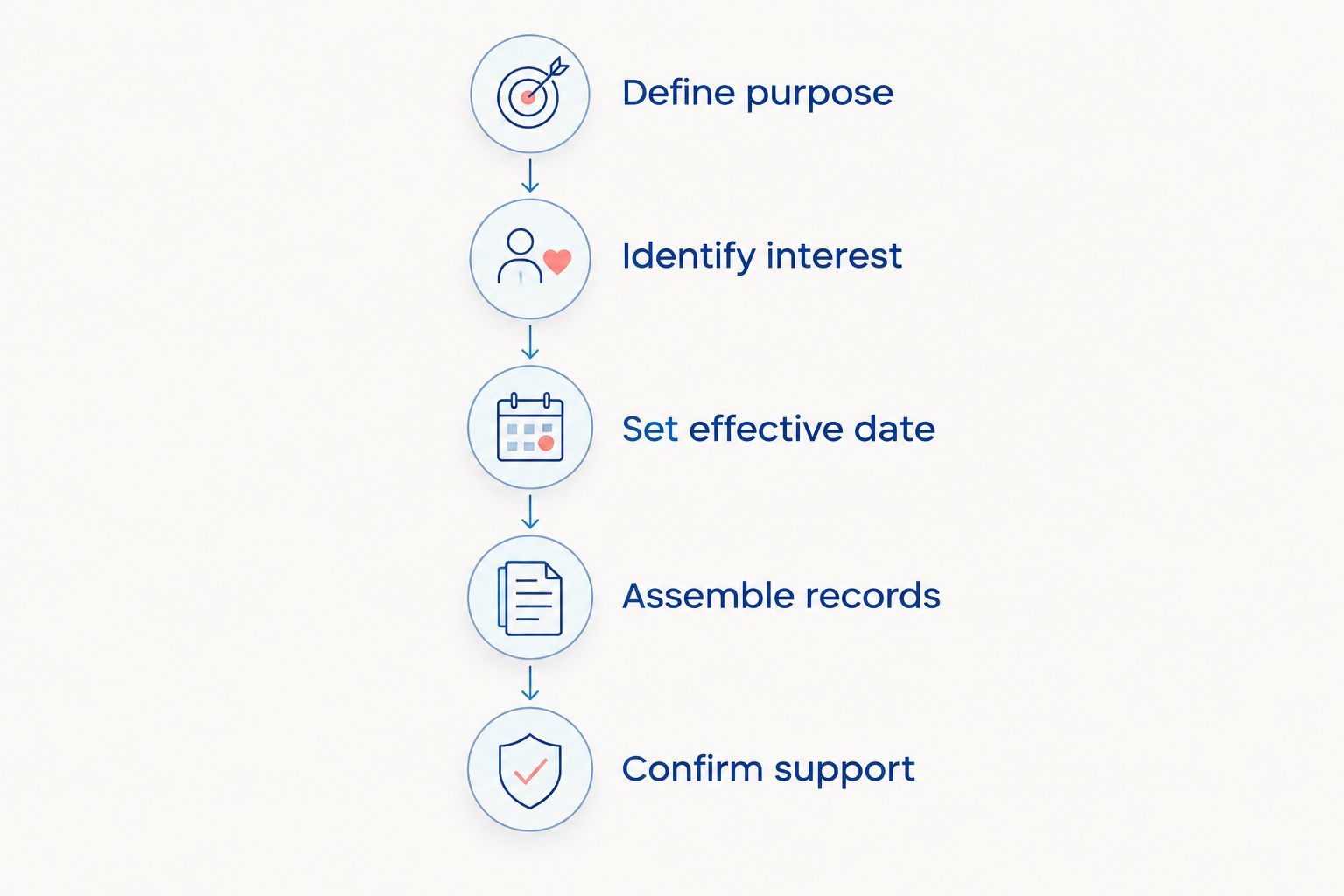
Give the appraiser a short written brief. These steps help counsel separate the legal instructions from the valuation work.
Define purpose
State that the appraisal concerns a divorce matter. Identify the intended users and whether the immediate goal is negotiation, review, or preparation for a proceeding.
Identify interest
Specify the address, property type, and ownership interest. Distinguish the entire property's value from the value of an ownership share; they answer different questions.
Set effective date
Keep 3 dates distinct: the valuation effective date, inspection date, and report date. Counsel should supply the required valuation date rather than ask the appraiser to select the legally appropriate one.
Assemble records
Provide deeds, available plans, renovation documentation, relevant leases, and records of known condition issues. For historical assignments, identify which documents actually describe the property at the required date.
Confirm support
Choose between 2 instruction routes: joint instructions or a separate engagement. Then confirm reporting, questions after delivery, review responses, and any testimony requirements in writing.
A clear brief helps REIS Group assess whether its residential appraisal services match the assignment. Request a consultation with the property details, intended use, and effective date already identified.
Discuss your residential appraisal scope
Provide the New York property, valuation purpose, effective date, and required reporting support.
Which residential appraisal service should you choose?
Choose a certified residential appraisal with an attorney-defined scope as the default. Add joint instructions, a retrospective effective date, independent review, or testimony support only when the case requires it.
For a New York City divorce matter in 2026, prioritize relevant property competence and clear reasoning over a generic best-provider label. The right service answers the specified valuation question without promising a favorable result.
FAQ
What’s the best residential appraisal service for a divorce case?
A certified residential appraisal with an attorney-defined purpose, effective date, and property interest is the default choice. Joint instructions, retrospective analysis, review, and testimony support address additional case requirements.
Can both spouses use the same residential appraiser?
Both spouses can participate in a jointly instructed appraisal if their counsel agree on the engagement. Written instructions should address intended users, access, communications, and document sharing.
Can I use a mortgage appraisal for my divorce?
A mortgage appraisal is not automatically suitable for a divorce assignment. Counsel should check its intended use, intended users, effective date, property interest, and reporting scope before relying on it.
Who decides the valuation date for a New York divorce appraisal?
Counsel should identify the legally relevant valuation date. The appraiser develops the value opinion for that effective date and explains the evidence supporting it.
Is an appraisal review the same as getting another appraisal?
An appraisal review is not necessarily a new appraisal. The engagement must specify whether the reviewer will develop an independent opinion of value or assess only the existing report.
Does a certified appraisal automatically include court testimony?
Certification does not mean testimony is included in the engagement. Confirm the appraiser’s relevant qualifications and define preparation, appearances, and related support separately.
What documents should a divorce attorney provide to the appraiser?
Provide ownership records, available plans, renovation records, relevant leases, and known condition information. Historical assignments also need evidence describing the property at the required effective date.
One last thing
A property's appraised value is not the same as a spouse's distributable equity. Debt, ownership questions, and legal allocation require separate treatment by counsel; an appraisal answers the property valuation question defined in its scope.
Before ordering, write that question in a sentence. If the sentence mixes property value with the legal division of assets, separate those issues first.
Related guides
- Partial-interest appraisal firms for estates
- Business valuation services for CPAs
- Commercial building appraisers in Manhattan