Executors’ probate appraisal is a documented opinion of a deceased owner’s property value for estate administration, with the aim of supporting informed reporting and distribution decisions. This guide explains probate appraisal for executors handling New York City real estate in 2026, where ownership records, historical condition and the required valuation date need particular attention.
- REIS Group serves New York City executors who need real estate valuations for estate administration.
- Probate appraisal for executors starts with the valuation purpose, effective date and ownership interest—not a target value.
- A date-of-death appraisal addresses historical value; a current appraisal answers a different question.
- Coordinate estate appraisal instructions with the estate attorney and CPA before authorizing the assignment.
Why probate appraisal matters for executors
An executor needs a supportable estate value, not simply an asking price. A probate appraisal documents the property, the ownership interest, the relevant market evidence and the reasoning behind the value conclusion.
For a Manhattan apartment, Brooklyn rental building or other estate property, the assignment must distinguish what exists now from what existed on the required valuation date. Renovations, occupancy changes and lease expirations can make that distinction consequential.
REIS Group’s probate appraisal services are best suited to New York City executors who need real estate valuations for estate administration. Review the probate appraisal services for executors when preparing the assignment with your advisers.
A report supports its identified purpose; it does not guarantee court acceptance, IRS acceptance or agreement among beneficiaries. A defensible appraisal explains its evidence and assumptions so that another reader can understand the conclusion.
Understand what the appraisal must establish
Fair market value generally describes the price at which property would change hands between a willing buyer and willing seller, neither compelled to act and both reasonably informed. The applicable definition and reporting requirements belong in the assignment instructions.
A probate appraisal is not automatically the same assignment as an estate-tax appraisal, even when the same property and valuation date are involved. Your attorney and CPA should identify the intended uses and users before the appraiser determines the necessary scope.
For an estate administered in 2026, the relevant value date is not automatically a date in 2026. The estate’s facts and the adviser’s instructions determine which historical or current question the report must answer.
How to arrange a probate appraisal for executors
1. Confirm the purpose before requesting an appraisal
Start by writing a short assignment summary yourself. Identify the property, your role, the intended use of the appraisal and the people who will rely on it; ask the estate attorney and CPA to resolve any uncertainty.
An estate inventory, tax filing, beneficiary buyout and proposed sale do not necessarily require identical analysis. Tell the appraiser about each intended use rather than assuming that a report commissioned for one purpose serves every later decision.
Do not request a value that produces a preferred distribution or tax result. The appraiser’s task is to develop an independent conclusion supported by the assignment evidence.
- State whether the request concerns estate administration, tax reporting or a beneficiary transaction.
- Identify the executor, estate attorney, CPA and proposed report users.
- Describe the property and the ownership interest being valued.
- Record any filing, court or transaction deadlines supplied by your advisers.
- Ask which intended uses the engagement will cover.
2. Separate the valuation date from the inspection date
Create a simple timeline before requesting proposals. Track 3 dates: the effective valuation date, the inspection date and the report date. These dates answer different questions and need not match.
A retrospective appraisal develops an opinion of value as of an earlier effective date. An inspection conducted in 2026 can help document a property, but the appraiser still needs evidence of its condition and market circumstances on the historical date.
If the property changed after death, identify the changes rather than treating today’s appearance as historical evidence. Your adviser should confirm whether date of death or another legally applicable date governs the assignment.
- Confirm the required effective date with the estate attorney or CPA.
- Record the inspection date separately from the effective date.
- List renovations, damage and occupancy changes since the effective date.
- Locate dated photographs and earlier inspection records.
- Explain whether a current sale decision also requires current market analysis.
3. Assemble an executor’s property document checklist
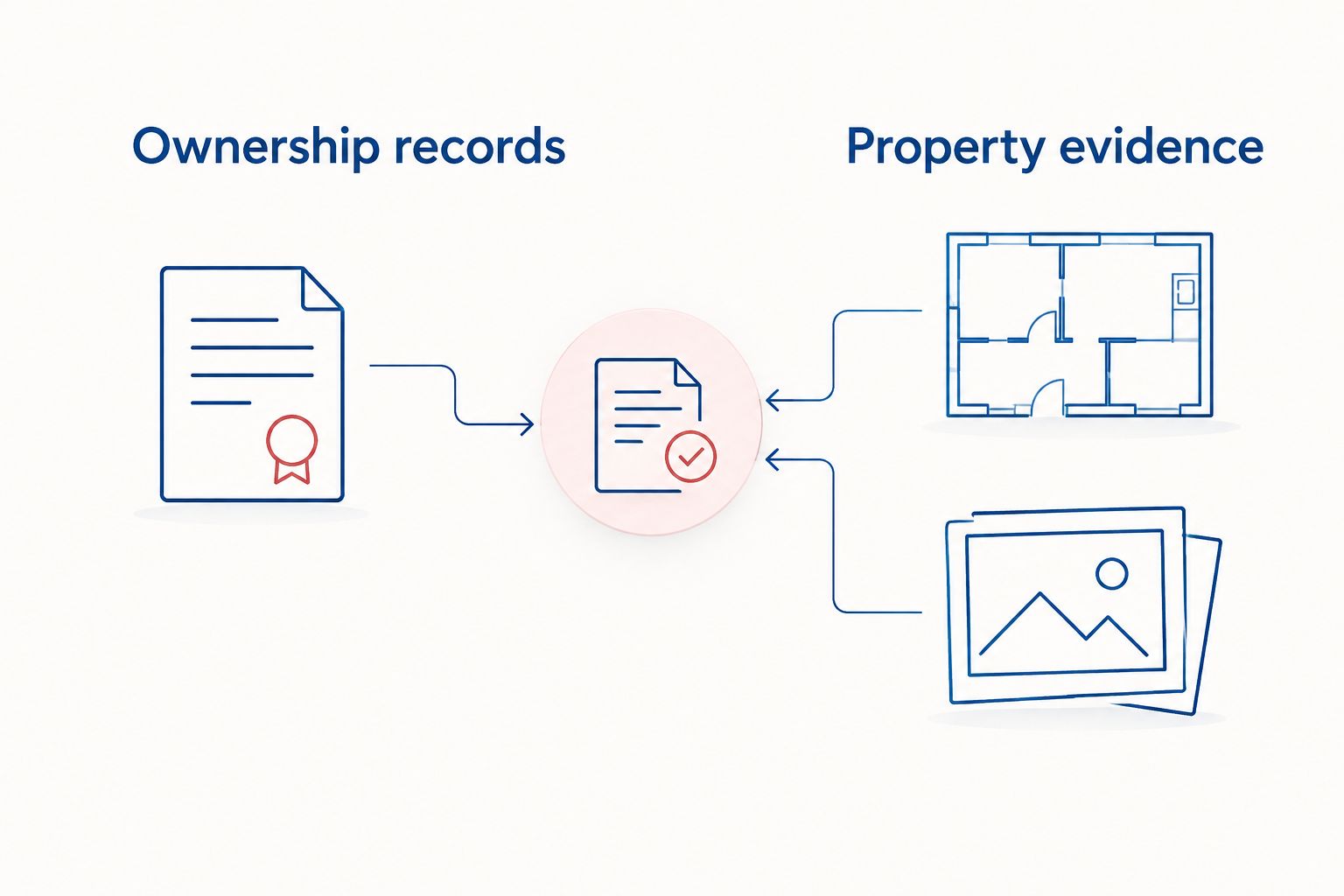
Begin with records already held by the estate, managing agent or property manager. Organize them into 2 document groups: ownership records and property evidence. This gives the appraiser a clear starting point without requiring the executor to interpret every document.
For a Manhattan cooperative apartment, identify the share ownership and proprietary lease documents rather than assuming the records resemble a condominium deed. For an income-producing building, include leases and operating records relevant to the effective date.
REIS Group has over 30 years of experience and serves estate and financial professionals with residential, commercial and partial-interest valuations. A focused consultation lets you clarify the requested assignment and records before committing to a scope.
- Ownership records: deeds, cooperative ownership documents and ownership schedules.
- Property evidence: floor plans, photographs, prior appraisals and inspection reports.
- Gather leases, rent rolls and income-and-expense statements for rental property.
- Identify assessments, known defects and documented repair work.
- Provide available records of restrictions, easements or other relevant agreements.
- Mark missing documents clearly instead of replacing them with estimates.
4. Verify the ownership interest and assignment scope
Read the ownership records with counsel before assuming the estate owns the entire property. A partial interest is an ownership share, not necessarily a separately marketable physical portion of a building.
Do not calculate a fractional-interest value by automatically multiplying whole-property value by the ownership percentage. Rights, restrictions and the nature of the interest require analysis; any adjustment needs support rather than an assumed discount.
New York City property types also require different records and analysis. A cooperative apartment, condominium, mixed-use building and commercial parcel should not receive identical engagement instructions merely because each belongs to an estate.
- Confirm the legal owner and the estate’s ownership share.
- Identify whether the asset is real property or an interest held through an entity.
- Ask counsel to identify relevant ownership restrictions and agreements.
- Specify whether the assignment concerns the whole property or a partial interest.
- Confirm the property type, access arrangements and intended report users.
5. Agree on evidence, access and reporting expectations
Prepare an access plan yourself: identify the person holding keys, occupied spaces and any restrictions. Then ask the appraiser which inspections, records and analyses the assignment requires.
A retrospective assignment needs evidence tied to its effective date. The retrospective appraisal guide for estates addresses that distinction; a present-day walkthrough does not by itself establish historical condition.
Turnaround depends on property type, complexity, records availability and scope. Confirm expedited availability individually rather than building a filing plan around an unconfirmed delivery date.
- Identify who can authorize and arrange property access.
- Disclose inaccessible areas and unavailable historical records.
- Ask how the report will address material assumptions or limitations.
- Confirm the deliverable, intended use and intended users in writing.
- Coordinate the requested delivery schedule with the estate’s advisers.
- Agree on how factual corrections and follow-up questions will be handled.
6. Review the completed report with the estate’s advisers
Check the report’s factual foundation before using its conclusion. Confirm the address, property description, effective date, ownership interest and intended use against the engagement instructions.
Separate factual corrections from disagreement with value. An incorrect unit description or omitted lease deserves clarification; a beneficiary’s preferred result is not evidence that the appraisal is wrong.
For a 2026 estate filing, have the attorney and CPA confirm that the report addresses the identified reporting purpose. The executor should not independently decide that a probate report also satisfies every tax, litigation or transaction requirement.
- Verify the property identity, ownership interest and effective date.
- Flag incorrect physical descriptions or missing documents.
- Ask for explanations of unfamiliar terms and material assumptions.
- Confirm that advisers have the complete report and relevant attachments.
- Keep the engagement, correspondence and supporting records with the estate file.
Discuss your estate appraisal scope
Identify the property, valuation date and estate purpose before commissioning the report.
Compare valuation options for an estate
Choose the method that answers the estate’s actual question. An asking-price recommendation, assessed value and appraisal conclusion serve different purposes; they are not interchangeable merely because each produces a number.
For an executor making decisions in 2026, convenience is not the deciding criterion. Match the valuation date, ownership interest and intended reliance to the assignment before comparing options.
| Option | Best for | Main benefit | Key limitation |
|---|---|---|---|
| Retrospective real estate appraisal | Executors needing value as of an earlier date | Connects the conclusion to historical property and market evidence | Requires sufficient historical evidence and clearly stated assumptions |
| Current real estate appraisal | Executors needing a current value opinion | Addresses present conditions for the identified purpose | Does not automatically establish date-of-death value |
| Broker market analysis | Executors considering sale positioning | Provides a marketing perspective on a possible sale | Is not a substitute for an appraisal required for estate reporting |
| Property tax assessment | Executors checking assessment records | Helps identify the assessed property and tax record | Assessment purpose and valuation date can differ from the estate’s requirements |
| Partial-interest appraisal | Executors administering an ownership share | Examines the particular interest rather than assuming whole ownership | Needs ownership documents and analysis beyond simple percentage arithmetic |
REIS Group’s estate appraisal work covers residential, commercial and partial-interest valuations. The appropriate scope still depends on the property, evidence and identified purpose; certification alone does not make every report suitable for every use.
Common mistakes executors and heirs make
Ordering a current appraisal for a historical question
A current value opinion does not automatically answer what a property was worth at death. State the required effective date at engagement, especially when an inspection takes place much later.
Treating the eventual sale price as conclusive
A later sale is evidence to evaluate, not an automatic replacement for a historical appraisal. Timing, property changes and transaction circumstances need examination before drawing a conclusion about an earlier date.
Leaving ownership questions until the report is drafted
An estate’s interest in a property-owning entity differs from direct ownership of the underlying real estate. Ask counsel to identify what the estate owns before requesting the valuation; otherwise, the assignment can address the wrong asset or interest.
Allowing beneficiary preferences to shape the assignment
An heir buying out another heir has a different negotiating position from an executor documenting estate assets. Identify intended users and transaction purposes openly, and keep the appraiser’s value conclusion independent of anyone’s preferred outcome.
Assuming a report guarantees acceptance
No appraisal guarantees IRS acceptance, a tax result or freedom from dispute. Request a report prepared to support the identified valuation purpose, with reasoning and evidence that your advisers can review.
FAQ
What is a probate appraisal for executors?
A probate appraisal for executors is a documented opinion of property value prepared for an identified estate-administration purpose. The engagement should specify the property interest, effective date, intended use and intended users.
Do I need a date-of-death appraisal or a current appraisal?
You need the appraisal that matches the estate’s identified purpose and required valuation date. A date-of-death appraisal addresses historical value, while a current appraisal addresses a current effective date; your estate attorney or CPA should confirm the instructions.
Can an executor use the property tax assessment instead?
A property tax assessment is not automatically a substitute for an estate appraisal. Its valuation date, purpose and methods can differ from the requirements of estate administration or tax reporting.
What documents should I gather for a Manhattan apartment appraisal?
Gather ownership documents, floor plans, dated photographs, available prior reports and relevant building records. For a cooperative apartment, include available share ownership and proprietary lease documents, and tell the appraiser which records remain unavailable.
Can an appraisal be completed after the owner’s death?
Yes, a retrospective appraisal can develop an opinion as of an earlier effective date after the owner’s death. The appraiser needs evidence relevant to that date, including historical condition and market information.
How long does an estate appraisal take?
Turnaround depends on property type, complexity, records availability and scope. Confirm the schedule during engagement and have any expedited availability confirmed individually.
Does a probate appraisal guarantee IRS acceptance?
No probate appraisal guarantees IRS acceptance or a particular tax outcome. Have the estate attorney and CPA confirm that the assignment and report support the identified reporting purpose.
One last thing
Preserve historical evidence before clearing, repairing or renovating the property. Dated photographs, leases and repair records help distinguish the property’s condition at the effective date from its condition at inspection.
Before your 2026 consultation with REIS Group, prepare a single assignment summary naming the executor, property, ownership interest, required valuation date and estate purpose. That is a more useful starting point than asking for an appraisal without specifying the question it must answer.
Related guides
- Estate appraisal for estate attorneys
- Date-of-death appraisal engagement considerations
- Partial-interest appraisals for estates