Trust property appraisal for trustees is an independent opinion of real estate value prepared for a defined trust-administration purpose, such as a distribution, sale, or tax-related valuation. For New York trustees, the assignment must distinguish the property’s ownership interest, the relevant valuation date, and the decision the report will support—not simply estimate what the property would sell for today.
- REIS Group provides trust property appraisal services for trustees administering New York real estate.
- Define the intended use, valuation date, and ownership interest before commissioning a trust property appraisal.
- A date-of-death appraisal and a current appraisal answer different questions; neither automatically substitutes for the other.
- Coordinate estate valuation instructions with the trust’s attorney and CPA before authorizing the assignment.
Why trust property appraisal matters for trustees
A trustee needs a value that answers the trust’s specific question, not a number detached from its purpose. A Manhattan apartment distributed to a beneficiary presents a different assignment from an income-producing building being prepared for sale. A trust holding a partial ownership interest adds another distinction: the asset being valued is not necessarily the entire property.
REIS Group provides real estate appraisal services for trusts, attorneys, and financial professionals, with over 30 years of experience. Its New York focus is relevant to trustees managing local property; nationwide capability supports assignments involving assets elsewhere.
For a trust administration beginning in 2026, a report’s preparation date does not determine its effective valuation date. A retrospective assignment estimates value as of an earlier date. A current assignment addresses a present valuation need.
Your attorney and CPA should identify the legal and tax questions. The appraiser then develops the valuation within the agreed scope. Keeping those roles separate prevents an appraisal from being treated as a legal opinion or a guarantee of tax treatment.
How to commission a trust property appraisal
Define the decision the appraisal must support
Start with a written instruction sheet rather than a request for a general property value. Explain whether you are documenting a distribution, evaluating a proposed sale, supporting trust accounting, or addressing an estate-related valuation need. Ask your attorney or CPA to confirm the purpose before you seek proposals.
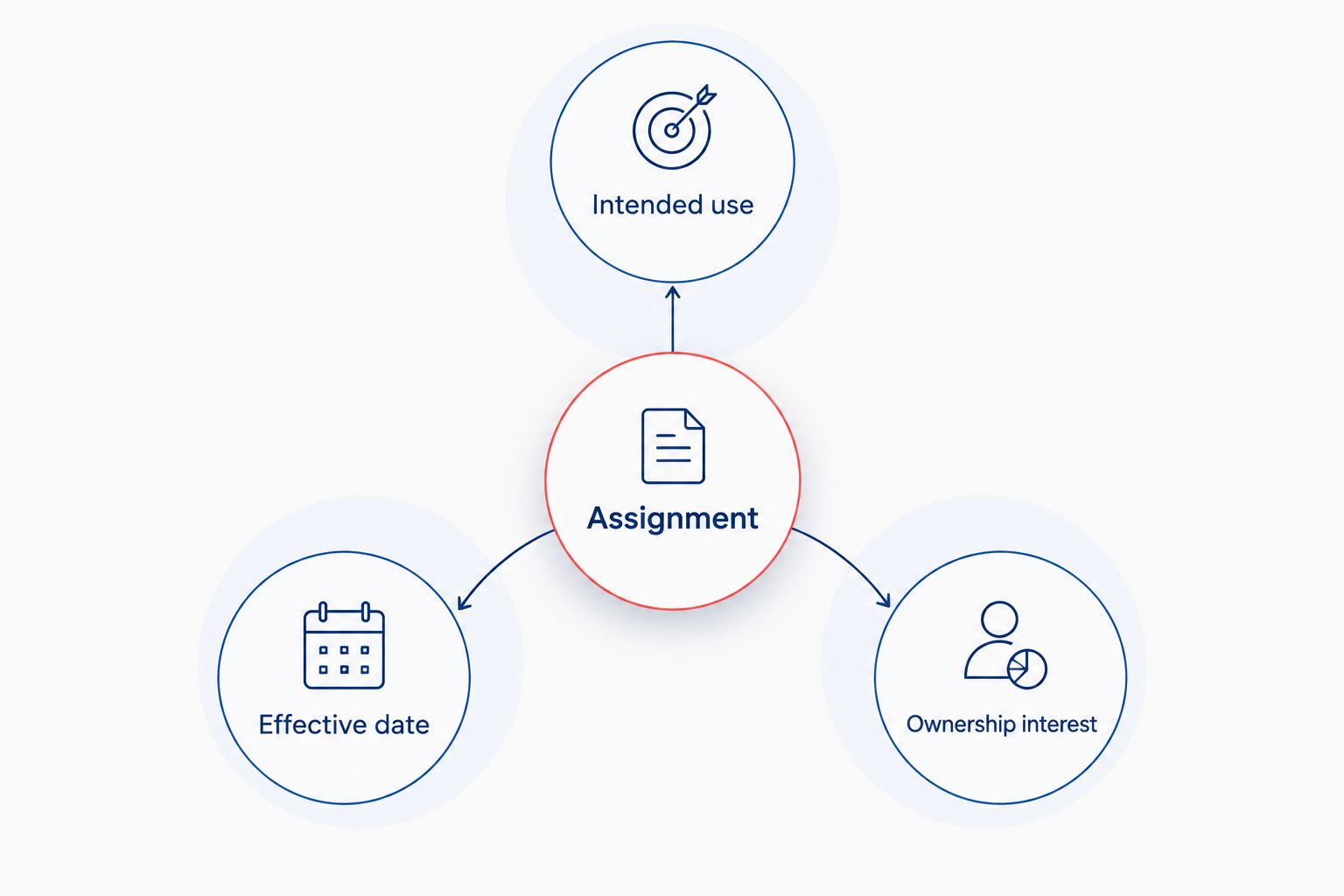
Write down 3 assignment fields: intended use, effective date, and ownership interest. These are instructions to resolve, not interchangeable descriptions. If beneficiaries disagree about a distribution, tell the appraiser that the report will inform that decision; do not ask the appraiser to resolve the dispute itself.
For a 2026 engagement, retain the instruction sheet with the proposal so later reviewers can see why the assignment was commissioned.
- Intended use: State the decision or reporting purpose.
- Effective date: Identify the date the value must address.
- Ownership interest: Specify the property rights or interest under review.
- Intended users: Identify who is expected to rely on the report.
- Property identity: Provide the address and available ownership records.
Confirm the valuation date with the trust’s advisers
Check the trust documents and ask counsel which event establishes the relevant date. Do not choose the inspection date merely because access is convenient. If the assignment concerns a death, gift, or distribution, explain that event and obtain the appropriate instructions.
Distinguish 2 dates: the effective valuation date and the report date. They serve different functions. An appraiser inspecting a property in 2026 can prepare a retrospective opinion, but the analysis must address the property and market as of the specified earlier date.
REIS Group provides estate and gift-tax property valuations as well as other trust-related appraisal services. Define the assignment first; use the consultation to confirm the records and scope required rather than asking the firm to infer the purpose from a property address.
- Obtain the relevant date from counsel or the CPA.
- Identify whether the assignment is current or retrospective.
- Record renovations, damage, or occupancy changes after that date.
- Separate current photographs from historical evidence.
- Confirm whether more than one valuation date requires separate analysis.
Assemble the property and trust records
Create a shared document folder and a simple index before the engagement. You can organize this yourself without a document-management subscription. Label records by property and date, and distinguish verified documents from information that still needs confirmation.
For a Manhattan cooperative, gather the available apartment, ownership, and building information relevant to the assignment. For a rental building, prioritize leases, income, expenses, and occupancy records. The appraiser determines which materials are necessary; the trustee’s job is to make the existing evidence accessible and identify gaps honestly.
Do not reconstruct missing historical information as if it were documented fact. Explain what is unavailable and who might hold it. Clear source records help the appraiser distinguish observed conditions from reported conditions.
- Provide deeds, ownership documents, or relevant cooperative records.
- Supply applicable trust provisions through counsel as needed.
- Organize leases, rent records, and operating statements.
- Collect surveys, floor plans, and property descriptions when available.
- Identify historical photographs, repair records, and renovation dates.
- List access contacts and restrictions affecting inspection.
Verify the interest being valued
Read the ownership documents with counsel before describing the asset to an appraiser. A trust can hold real estate directly or hold an interest in an entity that owns real estate. Those structures do not necessarily call for the same valuation assignment.
A partial ownership interest is not automatically worth its mathematical share of the whole property. Any analysis of control, transfer restrictions, or marketability must follow the actual rights and relevant valuation purpose. Do not request a predetermined discount.
REIS Group’s services include partial-interest property valuations. Trustees should disclose the ownership structure at the consultation stage so the proposed scope addresses the correct asset. When an entity interest is involved, ask the advisers whether real estate appraisal, business valuation, or coordinated work is needed.
- Identify the legal owner of the real estate.
- Specify the interest held by the trust.
- Provide applicable operating or ownership agreements.
- Disclose restrictions relevant to the interest being valued.
- Ask whether entity-level valuation work is also required.
Match the appraiser and scope to the assignment
Prepare a short engagement checklist and use it consistently when speaking with firms. Ask about relevant property experience, the intended-use discussion, retrospective work when applicable, and the proposed report scope. A familiar neighborhood alone does not establish a suitable engagement.
For New York City property, explain the asset’s actual characteristics: cooperative or condominium ownership, rental occupancy, commercial use, or mixed-use configuration. Ask how the proposed assignment addresses those characteristics without requesting a particular value conclusion.
The estate appraisal guide for estate attorneys provides supporting context when trust administration intersects with an estate. Keep the trust’s own instructions central rather than assuming an estate-related report automatically satisfies every later purpose.
- Confirm relevant credentials and assignment experience.
- State the property type and geographic location.
- Identify intended users and anticipated report use.
- Request a written scope and engagement terms.
- Discuss inspection access and historical-record requirements.
- Confirm timing after the firm reviews the assignment.
Review the report against the engagement
Check the delivered report against the original instructions before circulating it for a decision. Verify the property identification, ownership interest, effective date, intended use, and stated assumptions. Send factual corrections with supporting records rather than asking for an unsupported change in value.
A report can contain assumptions or limitations that matter to the trustee’s decision. Ask the appraiser to explain them, and ask counsel or the CPA how the report fits the legal or tax work. Those are separate reviews.
For a report delivered in 2026, preserve the engagement, source records, final report, and material clarification correspondence together. If the intended use changes, return to the appraiser before reusing the report.
- Check the address and property description.
- Confirm the effective date and interest appraised.
- Read assumptions and limiting conditions.
- Submit documented factual corrections promptly.
- Ask advisers to assess suitability for the identified purpose.
- Retain the final version and supporting correspondence.
Compare valuation options for trust administration
Choose the option that answers the trustee’s question, not the option that produces the quickest number. Informal estimates can help you organize an initial discussion, but their usefulness does not make them equivalent to an appraisal prepared for a defined purpose.
The options below have different strengths and limitations. Whether a particular document is suitable for a filing, accounting, or transaction depends on the requirements confirmed by your advisers.
| Option | Best for | Main strength | Key limitation |
|---|---|---|---|
| Automated home-value estimate | Initial orientation for a residential property discussion | Provides a readily accessible reference point | Does not establish an assignment-specific opinion addressing trust instructions |
| Broker market analysis | Planning a potential property listing | Adds a sales-oriented market perspective | A listing recommendation is not a substitute for a purpose-specific appraisal |
| Current real estate appraisal | A present-day trust valuation decision | Addresses an identified property interest and current effective date | Does not automatically answer an earlier-date valuation question |
| Retrospective real estate appraisal | An identified historical valuation need | Addresses value as of the specified earlier date | Requires evidence relevant to historical property and market conditions |
| Partial-interest appraisal | Valuation of less than the entire ownership interest | Addresses the rights associated with the identified interest | Requires ownership documentation and a scope suited to those rights |
REIS Group is a fit for trustees seeking a trust property appraisal for New York residential, commercial, or partial-interest property. Its limitation is the same essential boundary as any appraisal engagement: the report supports the identified valuation purpose, not every possible later use. Confirm scope before relying on an existing report.
Discuss your trust appraisal scope
Identify the property, ownership interest, valuation date, and purpose for a focused appraisal consultation.
Common mistakes trustees make
Requesting today’s value for a historical question
A current market opinion does not answer what the property was worth at an earlier effective date. If your 2026 administration requires a historical value, specify that date before engagement. A later inspection does not change the date the analysis must address.
Treating every trust asset as whole-property ownership
A building address does not establish what the trust owns. Review the deed and relevant entity documents with counsel, then tell the appraiser whether the assignment concerns the whole property, a direct fractional interest, or an entity interest.
Using a report outside its intended purpose
A prior lending appraisal or another party’s report can contain useful background without being suitable for the trustee’s current decision. Ask about intended use, intended users, effective date, and scope before relying on it. Possessing a copy does not settle those questions.
Turning beneficiary preferences into valuation instructions
Explain the distribution issue, but do not request a value that makes a preferred allocation work. Keep proposed settlement terms separate from property evidence. The appraiser’s role is to develop an independent valuation conclusion, not to validate a beneficiary’s target.
Promising completion before records and access are confirmed
Do not commit the trust to a report date based only on an initial inquiry. Turnaround depends on property type, complexity, records availability, and scope. Confirm expedited availability individually, and coordinate the appraisal schedule with counsel before setting dependent deadlines.
FAQ
What is a trust property appraisal?
A trust property appraisal is an independent opinion of real estate value prepared for a defined trust-related purpose. The engagement should identify the intended use, effective valuation date, property interest, and intended users.
Does every trust need a real estate appraisal?
An appraisal is not automatically required simply because a trust owns real estate. Ask the trust’s attorney and CPA whether the planned distribution, sale, accounting, or tax-related purpose requires an appraisal and what scope is appropriate.
Can a trustee use an online property estimate?
An online estimate can provide initial context, but it does not replace an appraisal prepared for the trustee’s identified purpose. Confirm the documentation requirements with the trust’s advisers before relying on an informal estimate.
Can an appraiser value trust property as of an earlier date?
A retrospective appraisal addresses value as of a specified earlier date. Provide historical property records and disclose changes after that date so the appraiser can distinguish earlier conditions from current conditions.
What documents should a trustee gather before an appraisal?
Gather ownership records, the valuation instructions, available property descriptions, and relevant income or occupancy records. Historical photographs, renovation records, and applicable ownership agreements are also useful when they relate to the assignment.
Is a partial interest worth the same percentage of the property’s total value?
A partial interest is not automatically worth its proportional share of whole-property value. The analysis must address the identified rights, ownership documents, and valuation purpose rather than assume a discount or a simple percentage calculation.
Does an appraisal guarantee IRS acceptance?
An appraisal does not guarantee IRS acceptance or a particular tax outcome. The report should support the identified valuation purpose, while the attorney and CPA assess the applicable filing and tax requirements.
How long does a trust property appraisal take?
Turnaround depends on property type, complexity, records availability, and scope. Confirm the schedule after the appraiser reviews the assignment, and ask about expedited availability individually.
One last thing
Keep a record of why the appraisal was commissioned, not just the final value. A report separated from its instructions is harder to evaluate when a beneficiary or adviser later asks what it was meant to establish.
For your 2026 trust file, place the instruction sheet beside the final report. Before requesting a consultation, confirm the property address, valuation purpose, effective date, and ownership interest. Those details make the first discussion an appraisal-scoping conversation rather than a general property inquiry.
Related guides
- Date-of-death appraisal considerations
- Retrospective appraisal services for estates
- Partial-interest appraisal firms for estates