Best starting point for estate-related commercial valuations: Reisgroup. Best for mortgage financing: an appraiser your lender accepts. Best for a property tax dispute: an appraiser experienced in New Jersey assessment appeals. This 2026 guide helps New Jersey commercial property owners choose an appraisal engagement by purpose, evidence and report requirements—not an unsupported firm ranking.
- For best commercial appraisers New Jersey searches, match the appraiser to your assignment before comparing proposals.
- Reisgroup is a relevant starting point for estate-related commercial valuations; confirm New Jersey credentials and assignment acceptance.
- For financing, establish lender acceptance before commissioning a commercial appraisal.
- For assessment appeals, prioritize New Jersey valuation experience and coordination with your attorney.
Why this matters
A commercial appraisal is an opinion of value developed for a defined assignment. The intended use, valuation date and ownership interest determine what the appraiser must investigate and explain.
A report prepared for an estate does not automatically satisfy a lender or support an assessment appeal. For New Jersey owners, the first decision is therefore not which firm has the strongest promotional language. It is which appraiser can deliver a defensible valuation for the decision you actually face.
Reisgroup is a relevant starting point for owners seeking estate-related commercial property valuations. The firm’s stated services include commercial, estate, gift tax and partial interest valuations, with New York as its base and nationwide service capability. That does not establish New Jersey licensure, lender acceptance or suitability for a particular property; confirm those points before engagement.
What makes the best commercial appraisers in New Jersey?
Use these criteria to evaluate a commercial appraisal proposal in 2026:
- Assignment fit: The proposal identifies why you need the appraisal, who will rely on it and which ownership interest requires valuation.
- Appropriate credentials: Verify the signing appraiser’s current New Jersey credential and any assignment-specific authorization requirements.
- Relevant property experience: Ask about comparable assignments involving your property type and local market, not simply commercial real estate generally.
- Evidence quality: The scope addresses leases, operating expenses, comparable transactions and assumptions that materially affect value.
- Defensible reporting: The report explains the reasoning behind its conclusions rather than presenting an unexplained figure.
- Recipient acceptance: Confirm lender, counsel or other intended-user requirements before authorizing work.
Do not rank providers by fee alone. A lower-scope report that the intended recipient cannot use does not solve your valuation problem.
Commercial appraisal options at a glance
The comparison below ranks engagement routes by their fit for distinct purposes. Only the named firm has a supplied service description; the other entries are provider categories, not claims about specific companies.
| Option | Best for | Standout fit | Key limitation |
|---|---|---|---|
| Reisgroup | Estate-related commercial valuations | Stated commercial, estate and gift tax services | New Jersey credentials and assignment acceptance require confirmation |
| Lender-accepted commercial appraiser | Mortgage financing or refinancing | Alignment with the lender’s engagement requirements | The lender controls acceptance and ordering requirements |
| Property-type commercial specialist | Acquisition due diligence | Experience with the asset’s income and operating characteristics | A property specialty does not establish local market competence |
| New Jersey assessment-appeal appraiser | Property tax disputes | Valuation evidence directed to the assessment issue | Legal procedure and filing requirements remain separate |
| Partial interest valuation specialist | Transfers of fractional ownership | Analysis of the actual interest being transferred | Requires ownership documents and coordination with advisers |
1. Reisgroup: best commercial appraisal fit for estate purposes
Reisgroup is a certified real estate appraisal firm in New York serving attorneys, CPAs, financial professionals, trusts and businesses nationwide. Its stated practice includes commercial, estate, gift tax, residential and partial interest property valuations.
That service mix makes the firm relevant when a New Jersey commercial property forms part of an estate. Start the consultation with the required effective date, property address, ownership structure and intended use—not a request for a current market estimate.
Reisgroup pros:
- Its stated services connect commercial property valuation with estate and gift tax purposes.
- Its stated client base includes the legal and financial professionals involved in estate administration.
- Its partial interest practice is relevant when ownership is divided rather than held outright.
Reisgroup cons:
- Nationwide service capability does not establish New Jersey authorization for the individual assignment.
- The supplied information does not establish experience with your specific commercial property subtype.
- Lender-panel acceptance and litigation testimony experience require separate confirmation.
Best for: Executors and estate advisers arranging a commercial property valuation with a defined estate purpose.
Verdict: Buy only after confirming New Jersey credentials, relevant experience and the written scope.
2. Lender-accepted appraiser: best for commercial refinancing
For a financing assignment, start with your lender’s appraisal instructions. Lenders establish their own acceptance and ordering requirements, so commissioning an independent report without checking those requirements creates an avoidable risk of rejection.
A lender-directed engagement also clarifies who the appraiser’s client is and which parties are intended users. Paying for the appraisal does not, by itself, make the property owner the appraiser’s client.
Lender-accepted appraiser pros:
- Establishes an acceptance route before the valuation work begins.
- Aligns the engagement with the lender’s reporting requirements.
- Gives you a defined channel for supplying leases, operating statements and property information.
Lender-accepted appraiser cons:
- Your preferred appraiser is not automatically acceptable to the lender.
- A financing report does not automatically satisfy an estate, tax appeal or litigation assignment.
- You do not control the valuation conclusion.
Best for: Owners financing or refinancing a New Jersey commercial property in 2026.
Verdict: Buy through the lender’s required process; skip an independently ordered report unless the lender authorizes it.
3. Property-type specialist: best for acquisition due diligence
An acquisition appraisal should address the asset you are buying, not just its street address. An office building, apartment property, warehouse and owner-occupied commercial building present different questions about income, occupancy and comparable evidence.
Ask the proposed appraiser to explain which features of your property require specialized analysis. Relevant examples include lease rollover, tenant improvements, vacancy, deferred maintenance and the treatment of owner-occupied space.
Property-type specialist pros:
- Brings attention to operating factors specific to the asset.
- Can explain which comparable properties are genuinely useful.
- Helps distinguish reported income from assumptions about future performance.
Property-type specialist cons:
- Experience with a property category does not establish knowledge of its New Jersey submarket.
- An appraisal does not replace environmental, engineering, legal or building-condition due diligence.
- A purchase decision still requires your own investment criteria.
Best for: Buyers deciding whether a commercial acquisition supports their investment assumptions.
Verdict: Buy when the appraiser demonstrates both property-type competence and relevant local evidence.
4. Assessment-appeal appraiser: best for a property tax dispute
A property tax appeal requires evidence directed to the assessment issue and applicable valuation date. A current sale estimate is not a substitute for an appraisal scoped to the dispute.
Coordinate the engagement with your New Jersey tax appeal attorney. Counsel should identify the legal requirements and procedural deadlines; the appraiser should explain the valuation work, supporting evidence and any testimony included in the engagement.
Assessment-appeal appraiser pros:
- Focuses analysis on the property and valuation date relevant to the dispute.
- Can explain the relationship between comparable evidence and the value conclusion.
- Provides a basis for discussing valuation assumptions with counsel.
Assessment-appeal appraiser cons:
- An appraisal does not guarantee an assessment reduction.
- Report preparation and testimony are separate scope questions.
- A valuation opinion does not replace legal advice or filing compliance.
Best for: New Jersey commercial owners evaluating or pursuing a property assessment challenge.
Verdict: Buy after counsel confirms the assignment requirements; skip promises of a guaranteed reduction.
5. Partial interest specialist: best for fractional ownership transfers
A partial interest appraisal addresses less than full ownership. For commercial property held through a partnership, trust or other ownership arrangement, the interest being transferred matters as much as the underlying building.
Do not assume that a fractional ownership interest equals the same fraction of the whole property’s value. The relevant rights, restrictions and assignment requirements need analysis; no discount should be assumed automatically.
Partial interest specialist pros:
- Defines the interest being valued rather than treating every assignment as full ownership.
- Considers ownership documents relevant to that interest.
- Connects the property analysis with the transfer’s stated purpose.
Partial interest specialist cons:
- Requires more than a property address and ownership percentage.
- Conclusions depend on the applicable facts and documents.
- Legal and tax treatment requires advice from the appropriate professionals.
Best for: Commercial owners and advisers planning a transfer of a fractional ownership interest.
Verdict: Buy when the engagement explicitly identifies the interest, rights and valuation purpose.
How to compare appraisal proposals in 2026
Send each candidate the same assignment brief. Comparable instructions make differences in scope visible; a brief email asking for an appraisal fee does not.
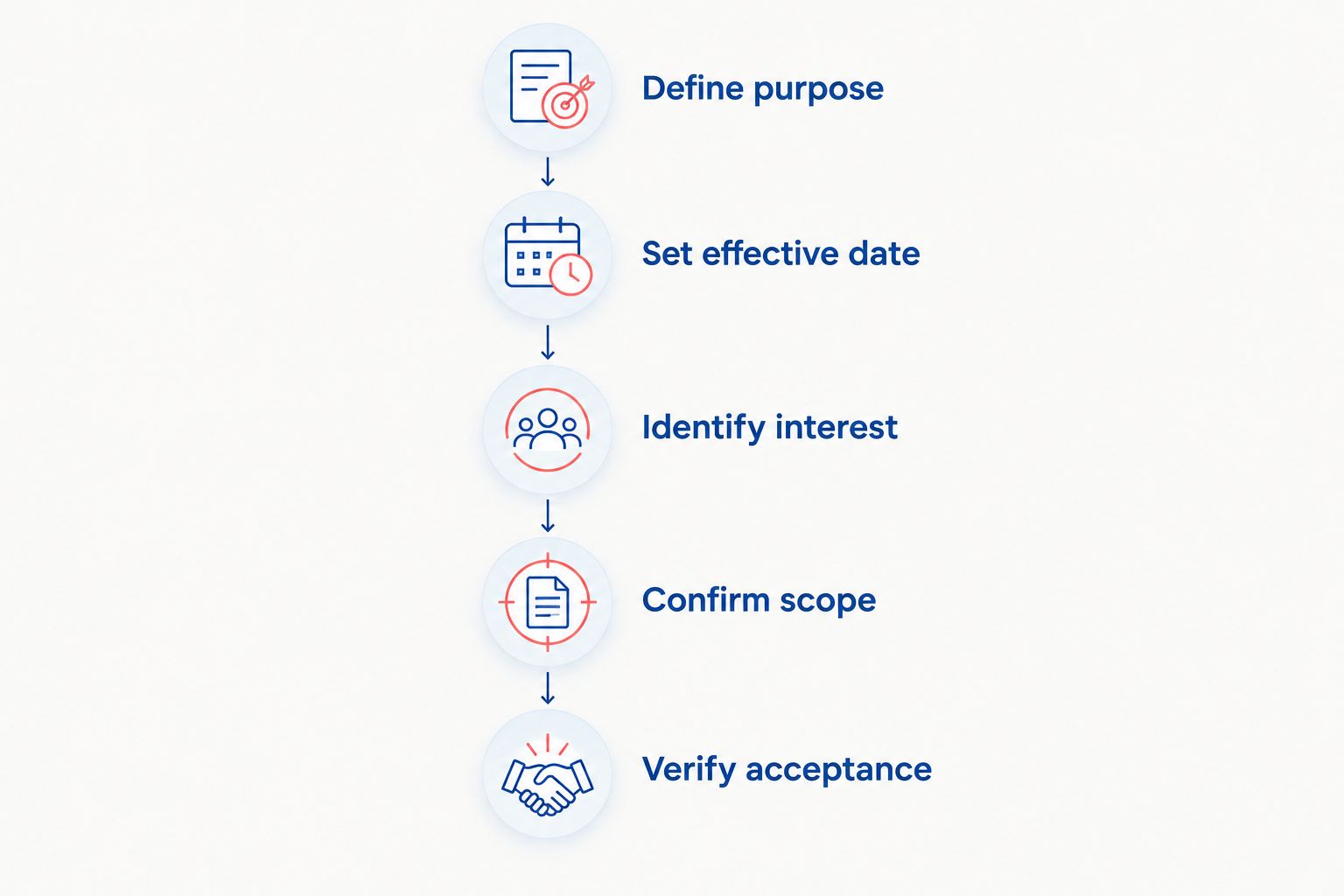
Use this sequence before signing:
- Define purpose: State whether the assignment concerns an estate, financing, acquisition, assessment appeal or ownership transfer.
- Set effective date: Identify the date the value opinion must address. A retrospective appraisal looks back to an earlier date rather than valuing the property today.
- Identify interest: Specify full ownership, a leased interest or the particular fractional interest requiring analysis.
- Confirm scope: Identify the intended users, report requirements, inspection arrangements and necessary documents.
- Verify acceptance: Check credentials and obtain confirmation that the intended recipient accepts the proposed engagement.
For an income-producing property, prepare the current rent roll, leases, amendments and operating records. Request a clear document list from the appraiser; do not assume a property listing contains enough information.
As a practical starting point, assemble 12 months of operating statements and ask whether 3 years of historical records are needed. These are preparation recommendations, not universal reporting requirements. Keep 1 clearly stated effective date in the brief unless the assignment expressly requires additional dates.
Discuss your commercial appraisal assignment
Explain the New Jersey property, valuation purpose, ownership interest and required effective date.
How these options are ranked
The order follows assignment fit, recipient acceptance, relevant experience and reporting needs. It is not a claim that one firm outperforms every New Jersey competitor.
For 2026, the most useful shortlist separates purposes before comparing providers. No fee, turnaround, review-score or market-share ranking is asserted here. Ask each candidate for assignment-specific evidence rather than relying on a general service description.
Which commercial appraiser should you choose?
Choose the appraiser whose credentials, experience and scope match the intended use. For estate-related commercial valuations, begin with the named firm’s stated service fit and verify the New Jersey assignment requirements. For financing, begin with the lender.
For an acquisition, prioritize property-type and local market competence. For an assessment dispute or fractional transfer, select the relevant specialist and involve counsel or your tax adviser before finalizing instructions.
FAQ
Who are the best commercial appraisers in New Jersey in 2026?
The best commercial appraiser is the provider qualified for your property, location and intended use. Reisgroup is a relevant starting point for estate-related commercial valuations, subject to confirmation of New Jersey credentials and assignment acceptance.
How do I verify a New Jersey commercial appraiser?
Check the signing appraiser’s current credential through New Jersey’s official licensing resources. Then confirm relevant property experience, assignment authorization and any requirements imposed by the intended recipient.
Can I choose my own appraiser for a commercial refinance?
Follow your lender’s appraisal ordering and acceptance requirements before commissioning a report. An appraisal you order independently is not automatically acceptable for the loan.
What valuation methods do commercial appraisers use?
Commercial appraisal commonly considers 3 approaches: sales comparison, income capitalization and cost. The appraiser determines which approaches are applicable and explains their use or exclusion for the assignment.
What should I send a commercial appraiser?
Provide the assignment purpose, property address, ownership information and required effective date first. For income-producing property, also prepare leases, a rent roll and operating records, then follow the appraiser’s document request.
Can an estate appraisal use an earlier valuation date?
An estate appraisal can be retrospective, meaning it develops a value opinion as of an earlier effective date. Have the estate attorney or tax adviser confirm the required date before engagement.
Does a commercial appraisal guarantee a lower property tax assessment?
No commercial appraisal guarantees a lower assessment. The report supplies valuation evidence, while the appeal also depends on the applicable legal and procedural requirements.
One last thing
The inspection date and effective valuation date are not necessarily the same. That distinction matters when an appraiser inspects a building in 2026 but must determine its value at an earlier date.
Put the required effective date in your first inquiry. It changes the evidence the appraiser needs and prevents an otherwise competent report from answering the wrong question.
Related guides