Best overall for an entire business: a full-business valuation engagement. Best for supporting property values: Reis Group. Best for preliminary internal planning: a limited-scope valuation advisory engagement. This 2026 guide compares the best business valuation services for CPAs by assignment type, with New York property-owning businesses as the primary context—not an unsupported ranking of competing firms.
- The best business valuation services for CPAs match the subject interest, valuation date, intended use and required report.
- Reis Group fits CPAs needing real estate appraisal support for New York property-owning businesses.
- Full-business valuation and real estate appraisal answer different questions; property value alone does not establish business value.
- Choose partial-interest or litigation-focused valuation when ownership rights or a disputed proceeding define the assignment.
Why this matters
A CPA commissioning a valuation needs an opinion that answers the client's actual question. The value of a building, the value of an operating business and the value of a minority ownership interest are different subjects. A report addressing one does not automatically answer the others.
For a New York estate, gift or business-planning assignment in 2026, define the subject before requesting proposals. Identify whether the client owns real estate directly, through an entity, or alongside an operating business. That distinction determines whether you need a real estate appraiser, a business valuation specialist, or coordinated assignments.
Choose the engagement for its intended use, not its broadest service description.
What makes the best business valuation services for CPAs
Use these criteria to compare proposals before choosing among the 5 engagement types below:
- Subject interest: The engagement identifies exactly what is being valued, including the entity, property or ownership interest.
- Intended use: The scope addresses tax reporting, internal planning, a transaction or a dispute rather than treating those purposes as interchangeable.
- Valuation framework: The provider explains the applicable standard of value and premise of value in plain language.
- Relevant expertise: Qualifications and experience match the asset, ownership structure and assignment—not merely the provider's general title.
- Report support: The deliverable explains the evidence, methods, assumptions and conclusions sufficiently for the intended reader.
- Coordination: The engagement states how property appraisals, financial records and ownership documents will fit together.
For a 2026 engagement, ask the provider to put these answers in the proposal. A conversation is useful; a defined written scope gives the CPA and client something concrete to approve.
Business valuation services at a glance
| Engagement type | Best for | Standout feature | Key limitation |
|---|---|---|---|
| Full-business valuation | An opinion covering the entire operating business | Integrates the business's financial and economic characteristics | Does not replace separate property expertise when required |
| Reis Group real estate appraisal | Supporting property values for New York business-related assignments | Focuses on the real estate being valued | Real estate value is not a complete business value conclusion |
| Partial-interest valuation | A specific ownership stake | Examines the interest's rights and restrictions | Requires ownership-specific documentation |
| Litigation-focused business valuation | A valuation intended for a disputed proceeding | Aligns analysis and reporting with the dispute | Requires coordination with counsel and the proceeding's requirements |
| Limited-scope valuation advisory | Preliminary internal planning | Answers a defined planning question | Is not automatically suitable for tax filing or litigation |
1. Full-business valuation: best for valuing an operating business
A full-business valuation engagement addresses the business rather than one asset it owns. Depending on the assignment, the analysis considers earnings, assets, liabilities, business risks and relevant market evidence. The engagement must also specify whether the opinion concerns the enterprise, equity or a particular ownership interest.
Best for: CPAs advising owners who need a business value conclusion for a defined tax, transaction or planning purpose.
For a 2026 assignment, start by explaining the use of the conclusion. A valuation for a proposed transaction and a valuation for a tax filing need their own scope decisions, even when both concern the same company.
Full-business valuation pros:
- Addresses the operating business instead of treating its property as the whole enterprise.
- Connects financial information with the selected valuation methods.
- Gives the CPA a defined business-level conclusion to incorporate into the broader assignment.
Full-business valuation cons:
- Requires reliable financial records and clear explanations of unusual items.
- Can require separate real estate appraisal input when property is material to the analysis.
Ask who will value the real estate and how that opinion will enter the business analysis. Also ask whether the requested report covers the precise ownership interest your client holds.
Verdict — Buy: Commission a full-business valuation when the question is what the business or its equity is worth, not merely what its building is worth.
2. Reis Group: best for supporting real estate values
Reis Group is a certified real estate appraisal firm in New York serving CPAs, attorneys, financial professionals, trusts and businesses. Its stated appraisal work includes estate, gift tax, commercial, residential and partial-interest property valuations, with nationwide capability supporting its New York focus.
Reis Group fits CPAs who need real estate appraisal support for New York property-owning businesses. The critical distinction is scope: a property appraisal supports the business assignment but does not, by itself, establish the value of the operating company.
Best for: CPAs coordinating a business-related engagement that requires a separately supported commercial, residential or other property value.
Real estate appraisal pros:
- Addresses the real property directly rather than relying only on its accounting carrying value.
- Provides a defined property valuation component for coordination with other advisers.
- Fits estate and gift assignments involving property, as well as commercial and residential valuation needs.
Real estate appraisal cons:
- Does not independently answer every business enterprise or equity valuation question.
- Requires coordination when the business assignment also involves operating earnings, debt or ownership rights.
Before commissioning the appraisal, identify the property interest and effective date. Tell the appraiser whether the opinion will support a separate business valuation or address a directly owned property.
Verdict — Buy: Commission the property appraisal when real estate is a distinct valuation component; do not substitute it for a required business valuation.
3. Partial-interest valuation: best for a specific ownership stake
Partial-interest valuation addresses less than complete ownership of an asset or entity. The analysis starts with the rights attached to that interest, rather than assuming its value is simply a proportional share of the whole. Entity interests and direct property interests require different subject definitions.
Best for: CPAs advising clients on transfers or holdings involving a specifically identified ownership stake.
An interest's voting rights, distribution rights, transfer restrictions and access to information can affect the analysis. Any proposed adjustment must have support appropriate to the interest and assignment; a familiar percentage is not a substitute for evidence.
Partial-interest valuation pros:
- Focuses on the ownership interest actually being transferred or reported.
- Examines governing documents rather than relying on ownership percentage alone.
- Separates the value of the whole asset or entity from the value of the subject stake.
Partial-interest valuation cons:
- Requires complete and current ownership documentation.
- Cannot justify adjustments solely by labeling an interest minority or noncontrolling.
Ask the provider whether its expertise covers the specific entity interest or property interest. A firm's experience with fractional real estate interests does not establish its qualifications for every business ownership assignment.
Verdict — Buy: Choose partial-interest valuation when the client's stake, rather than the whole business or property, is the subject of the opinion.
4. Litigation-focused valuation: best for a disputed business value
A litigation-focused engagement addresses a valuation question within a dispute. The valuation professional and counsel need to define the relevant legal framework, subject interest, effective date and expected role of the expert. Technical analysis and the requirements of the proceeding must fit together.
Best for: CPAs supporting counsel in a business ownership dispute or another proceeding requiring a business value opinion.
The engagement should distinguish report preparation from additional work such as responding to opposing analysis or providing testimony. Those responsibilities belong in the scope, not in assumptions about what a valuation report includes.
Litigation-focused valuation pros:
- Connects the valuation question to the proceeding's requirements.
- Makes the expert's expected role explicit.
- Supports coordination between financial analysis and counsel's instructions.
Litigation-focused valuation cons:
- Requires careful management of documents and communications with counsel.
- A standard planning report does not automatically satisfy a disputed proceeding's needs.
Ask counsel to confirm the applicable standard of value before commissioning the report. Do not assume fair market value is the correct standard for every dispute.
Verdict — Buy: Commission a litigation-focused engagement when the opinion must function within a proceeding, not merely inform an internal decision.
5. Limited-scope advisory: best for preliminary internal planning
A limited-scope valuation advisory engagement answers a bounded planning question. Its usefulness depends on a clear description of the work performed, the information considered and the limits on using the result. The deliverable must not be presented as broader than the engagement supports.
Best for: CPAs helping owners evaluate an internal planning question before deciding whether to commission a formal valuation.
This option is not a substitute for a required tax, transaction or litigation opinion. If the client expects to share the result outside the planning team, discuss that use before the work begins.
Limited-scope advisory pros:
- Focuses the work on a specific internal decision.
- Helps identify information gaps before a broader engagement.
- Makes the limits of the analysis part of the agreed scope.
Limited-scope advisory cons:
- Does not automatically support tax filings, negotiations or court proceedings.
- Can become unsuitable if the client changes the intended use after delivery.
Request clear wording about permissible use and the nature of the conclusion. Do not describe a limited advisory result as a formal appraisal unless the deliverable actually supports that description.
Verdict — Hold: Use limited-scope advisory for internal planning; commission the appropriate formal engagement before using a conclusion for another purpose.
How these services are ranked
The ranking follows the assignment, not firm size, promotional claims or an asserted testing score. Full-business valuation is the default for a whole-business question. Property appraisal, partial-interest analysis and litigation-focused work move first when those needs define the engagement.
Limited-scope advisory comes last because its permitted use is narrower, not because every client needs the most extensive report. The criteria are subject fit, intended use, relevant qualifications, report support and coordination. The best service is the one that answers the exact question your client must resolve.
Write the engagement brief before requesting proposals
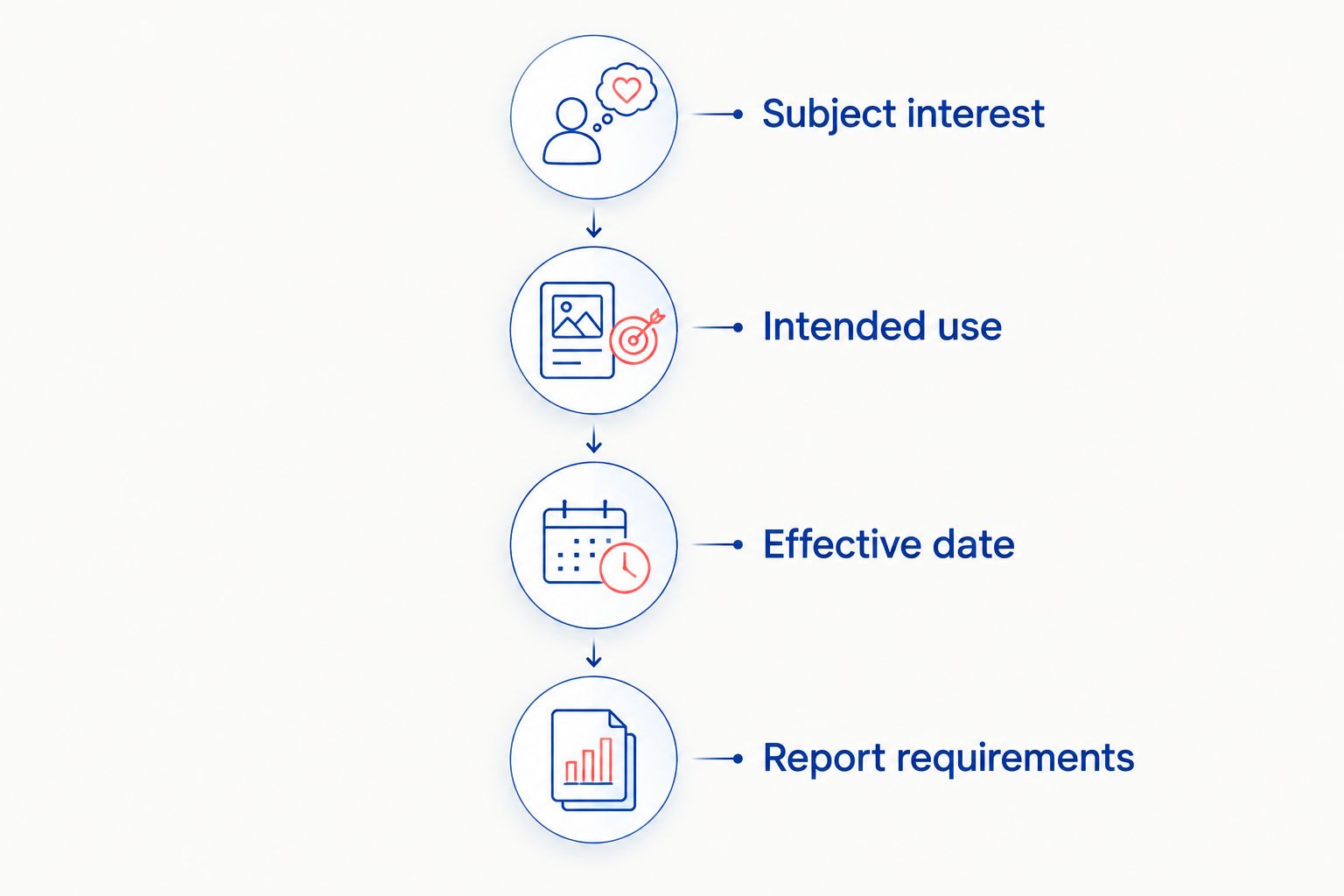
For a 2026 consultation, resolve 4 scope decisions in sequence:
- Subject interest: Identify the business, property or ownership stake being valued.
- Intended use: State what the client will do with the conclusion and who will rely on it.
- Effective date: Specify the date the value opinion must address, including a historical date when applicable.
- Report requirements: Confirm the expected deliverable and any requirements identified by counsel or the tax adviser.
These decisions belong in the same brief. A provider cannot select the right scope from a business name and an unexplained request for fair market value alone.
Prepare 3 intake records: relevant financial statements, governing ownership documents and property information when real estate is involved. These are starting categories, not a complete document request. The provider should identify additional records after reviewing the assignment.
For New York City and surrounding-area property assignments, explain the property's relationship to the business. Distinguish owned premises from leased premises and operating property from investment property. That context helps the advisers define where the property appraisal ends and the business valuation begins.
Discuss your property appraisal scope
Define the property interest, effective date and intended use before commissioning an appraisal.
Which business valuation service should you choose?
Choose full-business valuation if you need an opinion on the operating business or its equity. Choose Reis Group for the real estate appraisal component when your assignment requires a separately supported property value.
Move partial-interest or litigation-focused work to the front when ownership rights or a proceeding define the question. Keep limited-scope advisory confined to its agreed planning use. For a 2026 engagement, the decisive document is a proposal that names the subject, date, standard of value and intended users—not a general promise of accuracy.
FAQ
What’s the best business valuation service for a CPA?
The best business valuation service for a CPA is the engagement that matches the subject and intended use. Choose full-business valuation for a business-level conclusion and a separate property appraisal when real estate requires its own opinion.
Is a real estate appraisal the same as a business valuation?
No. A real estate appraisal values a specified property interest, while a business valuation addresses a business or ownership interest. A property appraisal can support a business valuation without replacing it.
When should a CPA consider Reis Group?
A CPA should consider Reis Group when the assignment needs real estate appraisal support, particularly in New York City and surrounding areas. Its stated services include estate, gift tax, commercial, residential and partial-interest property valuations.
Can I multiply total business value by the client’s ownership percentage?
That calculation alone does not establish the value of a specific ownership interest. The valuation must address the stake’s rights, restrictions and applicable valuation framework.
Is limited-scope valuation advisory enough for a tax filing?
Do not assume a limited-scope advisory engagement is suitable for a tax filing. Confirm the applicable requirements with the tax adviser and commission a deliverable expressly scoped for that use.
What should I send before requesting a valuation proposal?
Send a brief identifying the subject interest, intended use, effective date and expected report. Include relevant financial records, ownership documents and property information so the provider can define its document request.
What makes a valuation defensible?
A defensible valuation connects its conclusion to relevant evidence, appropriate methods and clearly explained assumptions. Certification alone does not replace assignment-specific analysis or an adequately supported report.
One last thing
The report date and the effective valuation date are not interchangeable. A report prepared in 2026 can address a historical valuation date, but the analysis must support the property or business conditions relevant to that date.
Put the effective date in your consultation request rather than leaving it for the engagement letter. For an estate-related assignment, confirm the required date with the estate's advisers before commissioning the work. That single scope decision affects the evidence the valuation professional needs.
Related guides