Commercial appraisal for investors is an independent opinion of a property's value that supports an acquisition, refinancing, or ownership decision. For New York City investors in 2026, the assignment must distinguish existing lease income from projected income and identify exactly which property rights the appraiser will value.
- REIS Group provides commercial appraisal for investors evaluating New York property, with nationwide capability supporting assignments elsewhere.
- Define the intended use, effective date, and ownership interest before commissioning a commercial property valuation.
- Separate contractual rent, market rent, operating expenses, and capital expenditures before evaluating investment value.
- Use an independent appraisal for a defined decision; keep your investment underwriting as a separate analysis.
Why commercial appraisal matters for property investors
A commercial property's asking price does not establish its market value. Neither does an investor's target return: that return reflects the investor's financing, assumptions, and investment strategy.
For a Manhattan acquisition, a defensible appraisal connects the property's legal rights, physical characteristics, leases, and market evidence. The Manhattan commercial building appraisal guide provides local context for selecting an appraiser.
REIS Group is best for New York investors seeking a certified commercial appraisal for a defined property decision. The firm brings over 30 years of experience to valuation assignments, with nationwide capability supporting needs outside New York.
Your acquisition team needs a clear distinction between present conditions and a proposed business plan. A building with below-market leases, vacant space, or deferred work requires those issues to be addressed explicitly—not folded into an unexplained capitalization rate.
For a 2026 purchase, start with the decision the report must support. A lender's collateral decision and your equity investment decision are related, but they are not interchangeable.
How to commission an investor-focused commercial appraisal
Define the investment decision
Write a short assignment brief before requesting proposals. State whether you need support for an acquisition, refinancing, partner transaction, or another identified purpose; this guide focuses on an investor evaluating a commercial acquisition.
Identify the intended users—the people or organizations expected to rely on the report. Do not assume that a report prepared for your own review will satisfy a lender's engagement requirements. Ask the lender about its process before commissioning an assignment for financing.
Also separate market value from investment value. Market value reflects the applicable market-value definition, while investment value reflects value to a particular investor under that investor's requirements.
- Decision: Describe the transaction and what the appraisal must inform.
- Intended users: Identify the investor, lender, or other proposed users.
- Value definition: Ask which definition matches the intended use.
- Reliance requirements: Confirm who can use the completed report.
Identify the interest and valuation date
Specify what is being valued. Fee simple generally describes ownership unencumbered by a leasehold interest; leased fee describes the owner's interest subject to leases. A leased commercial building requires careful treatment of the actual lease obligations.
Keep 2 dates distinct: the effective date of value and the report date. The effective date identifies when the value opinion applies; the report date identifies when the report is issued. They need not match.
For a 2026 acquisition, do not treat an earlier valuation as current simply because the property address has not changed. Lease status, physical condition, and market evidence must relate to the relevant effective date.
- Property rights: Identify the ownership interest being acquired.
- Lease obligations: Provide leases, amendments, options, and concessions.
- Effective date: Confirm the date to which the value opinion applies.
- Condition assumptions: Distinguish existing condition from proposed improvements.
Assemble the property evidence
Begin with records you already hold: the offering materials, rent roll, leases, operating statements, and capital-work history. Build a document index yourself, then flag missing items rather than filling gaps with unverified estimates.
Request the latest 12 months of operating statements as an initial collection task, alongside earlier records needed to explain changes. This is a preparation recommendation, not a universal appraisal requirement. The appraiser determines the records necessary for the assignment.
REIS Group's commercial property appraisal guidance for investors is a relevant starting point for an appraisal inquiry. A certified appraisal adds independent analysis; it does not eliminate the need for accurate owner-supplied records.
- Rent roll: Include occupied space, lease dates, rent, and concessions.
- Lease file: Collect signed agreements, amendments, and renewal notices.
- Operating records: Separate income, operating expenses, and capital spending.
- Property records: Provide surveys, plans, condition reports, and known restrictions.
- Open questions: Identify missing documents and disputed figures explicitly.
Examine income and market assumptions
Start with your own reconciliation of the rent roll to reported rental income. Explain differences caused by concessions, arrears, vacancy, reimbursements, or timing rather than treating every discrepancy as an error.
Net operating income, or NOI, is property income after operating expenses and before debt service. Keep mortgage payments outside property-level NOI, and identify how reserves and unusual expenses are treated in each analysis.
The 3 traditional valuation approaches are income capitalization, sales comparison, and cost. An appraiser determines which approaches are applicable and explains the treatment of those developed or excluded. An income-producing property does not justify ignoring relevant sales evidence.
- Contract rent: Identify what existing leases require tenants to pay.
- Market rent: Ask what evidence supports rent assumptions beyond those leases.
- Operating expenses: Separate recurring operations from unusual items.
- Capital needs: Identify deferred maintenance and planned improvements separately.
- Market evidence: Ask how comparable properties differ from the subject.
Agree on scope before authorizing work
Compare proposals by the work required, not by the presence of a report title. Ask how the appraiser will address the property type, relevant geography, lease structure, inspection, and any proposed changes in use.
For a Manhattan mixed-use acquisition, the scope should identify how the different uses and lease arrangements will be analyzed. Do not assume that experience with residential property establishes experience with the commercial component of your assignment.
REIS Group prepares valuations to support the client's identified purpose. Confirm assignment-specific experience and scope directly; turnaround depends on property type, complexity, records availability, and scope, with expedited availability confirmed individually.
- Relevant experience: Ask about the property type and local market.
- Inspection scope: Confirm access needs and inspection arrangements.
- Analysis scope: Identify required rights, conditions, and valuation scenarios.
- Delivery requirements: State your transaction deadline and confirm feasibility.
- Engagement terms: Document intended use, users, deliverables, and responsibilities.
Review the report against the transaction
Read the valuation premise before reading the final conclusion. A value based on stabilized occupancy answers a different question from a value reflecting existing vacancy and lease-up costs.
Then reconcile material report inputs with your acquisition file. Check building area, rent, lease expirations, expenses, and known condition issues. Ask factual questions and supply supporting records; do not ask the appraiser to reach the purchase price.
For your 2026 investment committee review, keep appraisal conclusions separate from your financing model. A market-value opinion does not establish your required equity return or replace a downside analysis.
- Property facts: Check address, area, use, and ownership interest.
- Income inputs: Compare lease terms and expenses with source documents.
- Assumptions: Identify conditions that materially affect the conclusion.
- Reconciliation: Read how the appraiser weighed the valuation evidence.
- Decision model: Update your underwriting without rewriting the appraisal premise.
The sequence matters: define the question, assemble evidence, agree on the assignment, and review the resulting analysis. Ordering a report before resolving the question invites avoidable clarification later.
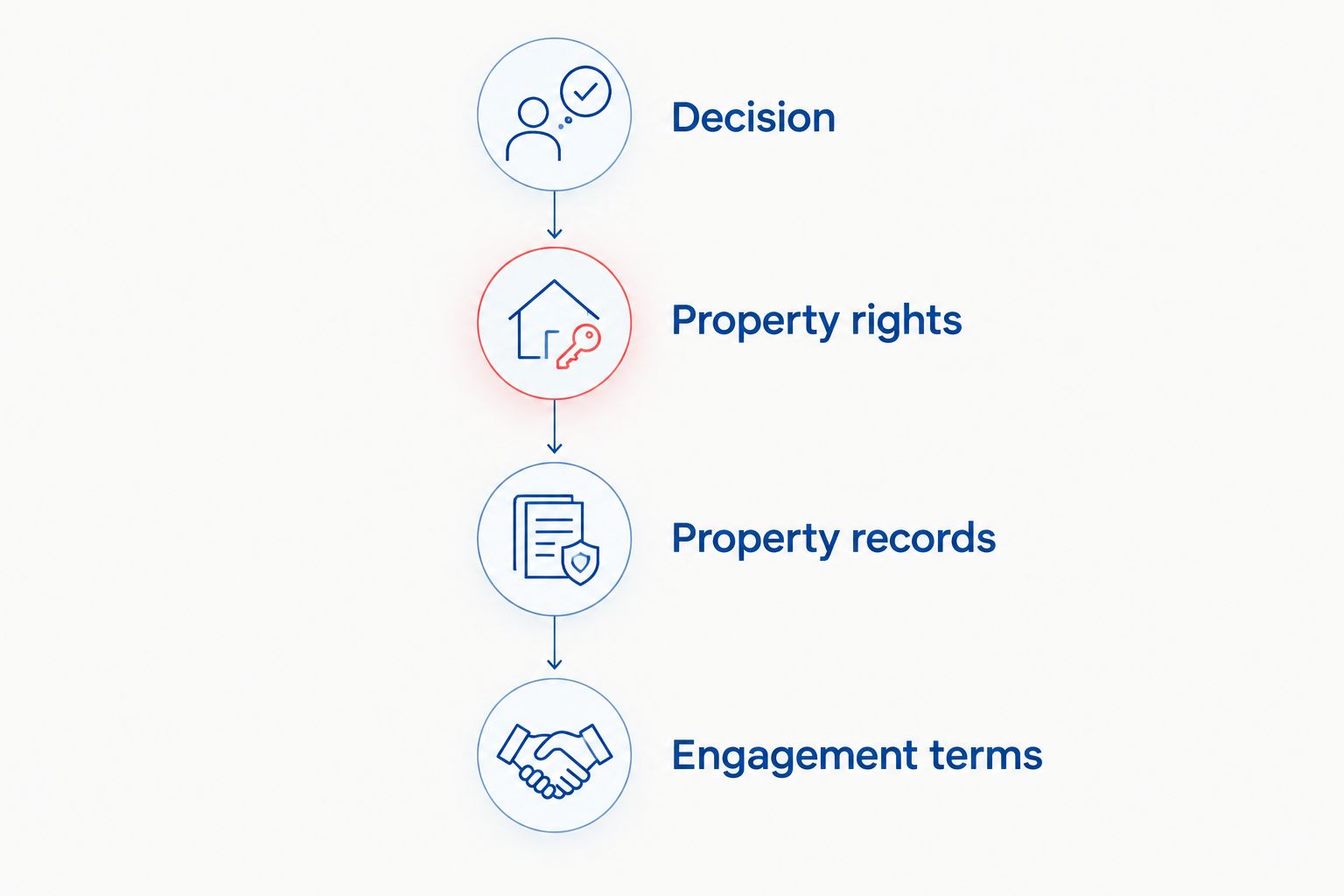
Compare valuation options for an acquisition
Choose the work product by the decision it supports. Investor underwriting, broker input, an assessment record, and an independent appraisal serve different purposes; none should be presented as an interchangeable substitute for the others.
| Option | Best for | Main benefit | Key limitation |
|---|---|---|---|
| Investor underwriting | Testing your acquisition strategy | Models financing, cash flow, and investor-specific returns | Reflects your assumptions rather than an independent value opinion |
| Broker market opinion | Exploring positioning and transaction expectations | Adds a transaction-focused perspective | Does not substitute for an appraisal required by an intended user |
| Property tax assessment record | Checking assessment history and public records | Provides an additional record to investigate | Assessment rules and dates can differ from the acquisition valuation premise |
| Independent commercial appraisal | Obtaining a supported value opinion for an identified purpose | Connects property evidence and market analysis within a defined scope | Is date-specific and does not replace legal, engineering, or investment due diligence |
Use the appraisal and your underwriting together. If they differ, identify whether the gap comes from market rent, lease-up assumptions, expenses, capital requirements, or your return target before deciding what to change.
Discuss your commercial appraisal scope
Identify the property, acquisition purpose, intended users, and valuation date before commissioning the report.
Common mistakes property investors make
Treating projected occupancy as existing income
A fully leased business plan is not the building's current operating condition. Ask whether the appraisal reflects existing conditions, stabilization, or a separately identified hypothetical scenario, and read the associated assumptions.
Applying a capitalization rate to inconsistent income
A capitalization rate expresses the relationship between income and value under a particular analytical basis. Applying a rate derived from one income convention to a different NOI definition produces a misleading comparison. Reconcile the income basis first.
Ignoring leases when comparing buildings
Similar buildings can carry different lease obligations. Above-market or below-market rent, renewal options, concessions, and expense responsibilities require analysis; physical similarity alone does not establish comparable investment characteristics.
Assuming the appraisal covers every acquisition risk
An appraisal is not a substitute for environmental review, structural investigation, title work, or legal advice. Coordinate those disciplines and disclose findings that affect the valuation rather than assuming the appraiser has independently resolved them.
Reusing a report without checking its purpose
An existing report has an effective date, intended use, and intended users. Before relying on it for a new transaction, ask the appraiser and relevant decision-maker whether a new assignment or other work is necessary.
FAQ
What’s the best commercial appraisal for an investor buying in Manhattan?
The best commercial appraisal matches the acquisition’s intended use, ownership interest, effective date, and intended users. Select an appraiser with relevant property-type and local-market experience, then confirm the scope before engagement.
Is a commercial appraisal the same as investment underwriting?
No. A commercial appraisal develops a value opinion for a defined purpose, while investment underwriting models an investor’s assumptions, financing, and return requirements. Use both without treating their conclusions as interchangeable.
What documents should I provide for a commercial property appraisal?
Start with the rent roll, signed leases and amendments, operating statements, and available property records. Add capital-work information and known condition issues, then ask the appraiser what else the assignment requires.
Can I use the seller’s appraisal for my purchase?
Do not assume the seller’s appraisal supports your intended use or permits your reliance. Review its effective date, intended users, scope, and assumptions with the appraiser and any lender involved.
How long does a commercial appraisal take?
Turnaround depends on property type, complexity, records availability, and scope. State your deadline at the inquiry stage and confirm expedited availability individually rather than assuming a fixed delivery date.
Does a commercial appraisal tell me whether to buy the building?
No. A commercial appraisal informs the purchase decision through a supported value opinion, but your decision also requires financing analysis, legal review, physical due diligence, and an assessment of investment risk.
Does REIS Group handle commercial appraisals outside New York?
REIS Group has nationwide valuation capability, with New York as its primary geographic focus here. Confirm the property’s location, type, intended use, and assignment requirements when requesting a consultation.
One last thing
The most useful appraisal question is not whether the value matches the contract price; it is which assumptions explain the difference. For a 2026 acquisition, prepare a short reconciliation identifying differences in rent, expenses, occupancy, condition, and property rights. That makes the appraisal discussion actionable without pressuring the appraiser toward a predetermined conclusion.
Related guides
- Commercial property appraisers in Brooklyn
- Commercial land appraisal firms in New York
- Commercial appraisers for New Jersey owners