Best for a New York commercial appraisal consultation: REIS Group. Best shortlist candidate for a multi-market portfolio: CBRE. Best for an investment-property valuation discussion: JLL. Best additional candidate for a specialized commercial assignment: Cushman & Wakefield. For lenders, these are engagement-fit recommendations—not a substitute for appraiser approval, independence checks, or review of the proposed assignment team.
- The best commercial appraisal firms for lenders match the property, market, reporting requirements, and lender approval process.
- REIS Group is a New York commercial appraisal consultation option, with nationwide capability supporting broader assignments.
- Consider CBRE, JLL, and Cushman & Wakefield for commercial valuation shortlists; assess the actual proposed appraisers.
- Confirm independence, relevant experience, report scope, and review responsibilities before authorizing an assignment.
Why this matters
A commercial appraisal supports a lending decision only when the assignment answers the lender’s actual question. A credible market value opinion can still be unsuitable if it addresses the wrong property interest, valuation date, occupancy assumptions, or intended use.
For a 2026 lending assignment, start with the credit decision and work backward. Identify whether you need an existing-condition value, a value subject to completion, or a value based on stabilized operations before comparing firms.
Choose the appraiser for the assignment, not the assignment for the appraiser. A recognizable firm name does not establish that the proposed signing appraiser knows the property type or the local market.
What makes the best commercial appraisal firms for lenders
Use these criteria before reading the shortlist. Each criterion belongs in the engagement discussion, not just the final report review.
- Lender eligibility: Confirm the firm and proposed appraisers satisfy your institution’s approval and engagement requirements.
- Local competence: Request evidence of relevant work in the property’s market, including familiarity with its leasing and investment conditions.
- Property-type experience: Match the team to the asset. A leased office building, development parcel, and owner-occupied industrial property raise different questions.
- Assignment clarity: Specify intended use, intended users, property rights, effective date, and required value premises.
- Independence: Identify conflicts and follow the lender’s rules for selection, communication, and engagement.
- Review readiness: Establish who answers reviewer questions and how material corrections or scope changes are handled.
For New York City collateral, make the geographic discussion specific. Manhattan experience is not a substitute for explaining the subject building’s tenancy, physical condition, ownership structure, and competitive market.
Commercial appraisal firms at a glance
The shortlist below compares engagement situations rather than claiming measured differences in accuracy, delivery speed, or lender acceptance. Confirm the relevant service, location, and team directly before selection.
| Firm | Best for | Standout fit | Key limitation to resolve |
|---|---|---|---|
| REIS Group | New York commercial appraisal consultation | New York appraisal firm with commercial valuation services and nationwide capability | Confirm lender eligibility and the proposed commercial assignment scope |
| CBRE | Multi-market commercial portfolios | Established commercial valuation practice within a broader real estate organization | Confirm local staffing, coordination, and potential conflicts |
| JLL | Investment-property valuation discussions | Commercial valuation practice within an investment-focused real estate services organization | Separate valuation instructions from transaction advice |
| Cushman & Wakefield | Specialized commercial assignment shortlists | Commercial valuation and advisory practice | Verify experience with the exact asset and property interest |
1. REIS Group: best for a New York appraisal consultation
REIS Group is a certified New York real estate appraisal firm whose services include commercial, residential, estate, gift tax, and partial-interest property valuations. Its nationwide capability supports assignments beyond New York, while New York City and surrounding markets provide the clearest starting point for this consultation recommendation.
REIS Group is a commercial appraisal consultation option for New York lenders seeking to establish assignment fit before engagement. That recommendation does not imply placement on a particular lender’s approved panel.
For Manhattan collateral, use the guide to commercial building appraisers in Manhattan to frame a location-specific discussion. Then give the proposed appraiser the lender’s written requirements rather than relying on a general description of the financing.
REIS Group pros:
- New York-based appraisal practice relevant to a New York-centered inquiry.
- Commercial property valuation is an explicitly stated service.
- Partial-interest valuation services provide a relevant discussion point when ownership rights complicate the assignment.
REIS Group cons and checks:
- Certification alone does not establish approval by your lending institution.
- Confirm the proposed appraiser’s experience with the exact commercial asset, market, and reporting requirements.
Best for: A lender arranging an initial scope discussion for New York commercial collateral.
Verdict: Buy only after lender approval, independence review, and scope confirmation.
2. CBRE: best for a multi-market commercial portfolio shortlist
CBRE provides commercial property valuation services within its broader real estate business. Include CBRE when a portfolio assignment requires a discussion about coordinating valuation work across multiple markets.
The procurement question is not simply whether a firm has a broad presence. Ask who will inspect each property, develop the analysis, reconcile assumptions, and accept responsibility for the final reports.
CBRE pros:
- An established commercial valuation practice gives lenders a relevant candidate to evaluate.
- A broader real estate services organization creates a clear reason to ask about cross-market coordination.
- A portfolio inquiry can address common reporting instructions while preserving property-level analysis.
CBRE cons and checks:
- Organization-wide capabilities do not establish the experience of an individual assignment team.
- Review potential conflicts arising from other relationships involving the property, borrower, or transaction.
- Confirm coordination responsibilities instead of assuming every report will follow identical analytical conventions.
Best for: A lender assembling a multi-market portfolio shortlist and requiring a defined coordination plan.
Verdict: Hold until the proposed local teams and portfolio review process are documented.
3. JLL: best for an investment-property valuation discussion
JLL provides commercial valuation services alongside other commercial real estate services. Consider JLL when an income-producing asset requires a detailed discussion of leases, operating assumptions, and investment-market evidence.
Keep the appraisal question separate from the transaction objective. A borrower’s acquisition rationale or refinancing target is information to understand—not a value conclusion the appraiser must reach.
JLL pros:
- A commercial valuation practice makes JLL a relevant investment-property shortlist candidate.
- The engagement discussion can focus on income analysis, market evidence, and the required property interest.
- Lenders can assess valuation services separately from any other services involved in the transaction.
JLL cons and checks:
- Investment or transaction experience does not replace an independent appraisal scope.
- Confirm who develops and reviews the valuation assumptions for the specific property.
- Identify other organizational relationships before engagement.
Best for: A lender evaluating an income-producing commercial asset with material leasing or operating assumptions.
Verdict: Hold until valuation responsibilities, independence, and analytical scope are clear.
4. Cushman & Wakefield: best for a specialized assignment shortlist
Cushman & Wakefield provides commercial valuation and advisory services. Include the firm when you need another candidate to evaluate for an assignment with unusual property characteristics or ownership questions.
Define the specialty before asking for credentials. Development feasibility, unusual lease provisions, and a partial ownership interest require different evidence; a general commercial appraisal résumé does not answer every question.
Cushman & Wakefield pros:
- Its commercial valuation practice provides a relevant alternative for lender procurement.
- A defined inquiry allows you to assess the proposed team against the assignment’s unusual features.
- The selection discussion can distinguish property valuation from broader advisory work.
Cushman & Wakefield cons and checks:
- Do not assume every office or appraiser handles every specialized asset.
- Require directly relevant experience rather than relying on the firm’s name.
Best for: A lender testing whether a proposed team matches a clearly identified specialist requirement.
Verdict: Hold until the signing appraiser demonstrates relevant assignment experience.
How the shortlist is ranked
The order reflects the engagement situations described above: New York consultation first, followed by multi-market coordination, investment-property analysis, and specialized assignment selection. It is not a performance ranking based on comparative report testing.
For your 2026 selection, apply the same criteria to every candidate. Compare the proposed professionals, written scope, independence disclosures, and review process—not different assumptions hidden inside superficially similar proposals.
Build a lender-ready engagement brief
Before requesting proposals, prepare a brief that resolves the basic assignment questions. This reduces the risk of comparing proposals that address different valuation problems.
Property rights
Identify what is being valued: ownership subject to leases, an unencumbered ownership interest, a leasehold interest, or another defined interest. Explain ownership entities and restrictions that affect the assignment.
A partial entity interest is not automatically interchangeable with a percentage of the underlying real estate value. Ask the appraiser and counsel to distinguish the asset, ownership interest, and applicable valuation purpose.
Value premise
State the required condition of the property for each opinion. Existing-condition, completed-project, and stabilized-operation values answer different questions.
For construction or lease-up financing in 2026, distinguish current facts from assumed future conditions. Require clear treatment of completion, occupancy, and operating assumptions rather than a single unexplained value figure.
Financial records
As a starting document request, collect 12 months of operating statements, the current rent roll, leases, amendments, and available capital expenditure information. Expand that request when seasonality, vacancies, renovations, or unusual expenses require more context.
The document period is a preparation recommendation, not a universal appraisal requirement. Let the assignment’s needs determine the final information request.
Review checkpoints
Establish 2 review checkpoints: scope confirmation before substantive work and response to lender review after report delivery. Identify the person responsible for approving changes to the assignment.
If you compare 3 candidate firms, send each the same brief. Otherwise, differences in the proposals can reflect different assignments rather than meaningful differences between providers.
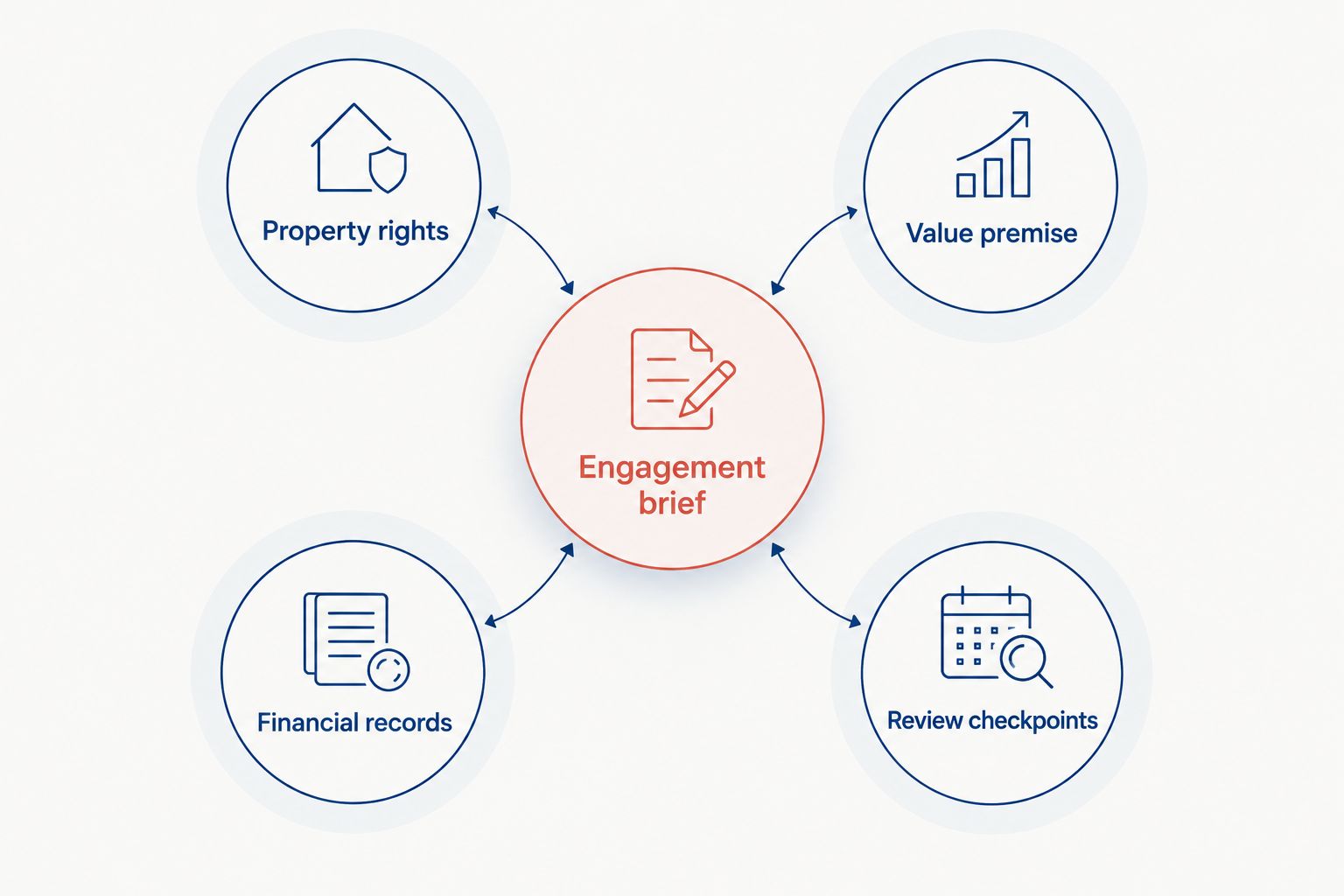
A complete brief also improves the consultation itself. You can discuss analytical questions immediately instead of spending the meeting establishing which property interest and valuation premise the lender needs.
Discuss your New York appraisal scope
Outline the property, lending purpose, required value premise, and lender engagement requirements.
Which commercial appraisal firm should you choose?
For New York collateral, start with a scope discussion and lender eligibility check. For a geographically dispersed portfolio, prioritize the coordination plan. For unusual assets, prioritize directly relevant experience from the proposed signing appraiser.
Your 2026 decision should end with a named team and a written assignment—not merely a preferred corporate name. If a candidate cannot explain the property rights, value premise, relevant experience, and review responsibilities, resolve those gaps before engagement.
FAQ
What’s the best commercial appraisal firm for a New York lender?
The best firm is one that satisfies the lender’s approval requirements and demonstrates relevant local and property-type experience. REIS Group is a New York commercial appraisal consultation option; confirm the proposed team, independence, and assignment scope before engagement.
Is a national appraisal firm better than a local appraiser?
A national firm is not automatically better than a local appraiser. Evaluate the actual assignment team, local knowledge, relevant experience, and reporting requirements; multi-market assignments also require a clear coordination plan.
Can a borrower choose the commercial appraiser for a loan?
Follow the lender’s appraiser-selection and engagement process rather than assuming borrower selection is acceptable. Ask the lender who is authorized to select, instruct, and engage the appraiser before commissioning work.
What should a lender send before requesting an appraisal proposal?
Send the property identification, lending purpose, required property interest, effective date, value premise, and reporting instructions. Include available leases, rent rolls, operating records, and relevant construction or renovation information.
Does appraiser certification mean a lender must accept the report?
No, appraiser certification does not establish acceptance by a particular lender. The institution also evaluates eligibility, independence, assignment scope, relevant competence, and whether the report meets its requirements.
Is an estate appraisal suitable for commercial loan underwriting?
An estate appraisal is not automatically suitable for commercial loan underwriting. Its intended use, intended users, effective date, property interest, and reporting scope can differ from the lender’s requirements.
How should lenders compare commercial appraisal proposals in 2026?
Compare proposals against the same written engagement brief. Review the named appraisers, relevant experience, value premises, information requirements, conflict disclosures, and responsibility for responding to appraisal review.
One last thing
The report date and the effective valuation date are different concepts. The report date identifies when the report was issued; the effective date identifies when the value opinion applies.
For a 2026 engagement, write the required effective date into the instructions. A recently delivered report does not necessarily express a current value, and a current inspection does not by itself resolve a retrospective valuation question.
Related guides
- Commercial property appraisers in Brooklyn
- Commercial land appraisal firms in New York
- Commercial appraisers for New Jersey owners